
Prachi Dhabal Deb Becomes India’s First Royal Icing Artist Appointed At Oxford
At Oxfords centre for Hindu Studies, among manuscripts, philosophies, and centuries of inquiry, sugar now has a seat at the table. It sits there not as a novelty but as a narrative. And Prachi, quietly and resolutely, stands as the hero who carried it there.
- Initiatives News
- 5 min read

;'%3e%3cpath%20d='m8,15.99c4.41,0,7.99-3.58,7.99-7.99S12.41,0,8,0,0,3.59,0,8s3.58,7.99,7.99,7.99Z'%20style='stroke:%23fff;%20stroke-miterlimit:10;%20stroke-width:.02px;'/%3e%3cpath%20d='m3.08,3.37l3.82,5.11-3.84,4.15h.87l3.37-3.64,2.72,3.64h2.94l-4.04-5.39,3.58-3.87h-.86l-3.1,3.35-2.5-3.35h-2.94Zm1.27.64h1.35l5.97,7.99h-1.35l-5.97-7.99Z'%20style='fill:%23fff;'/%3e%3c/g%3e%3c/svg%3e)


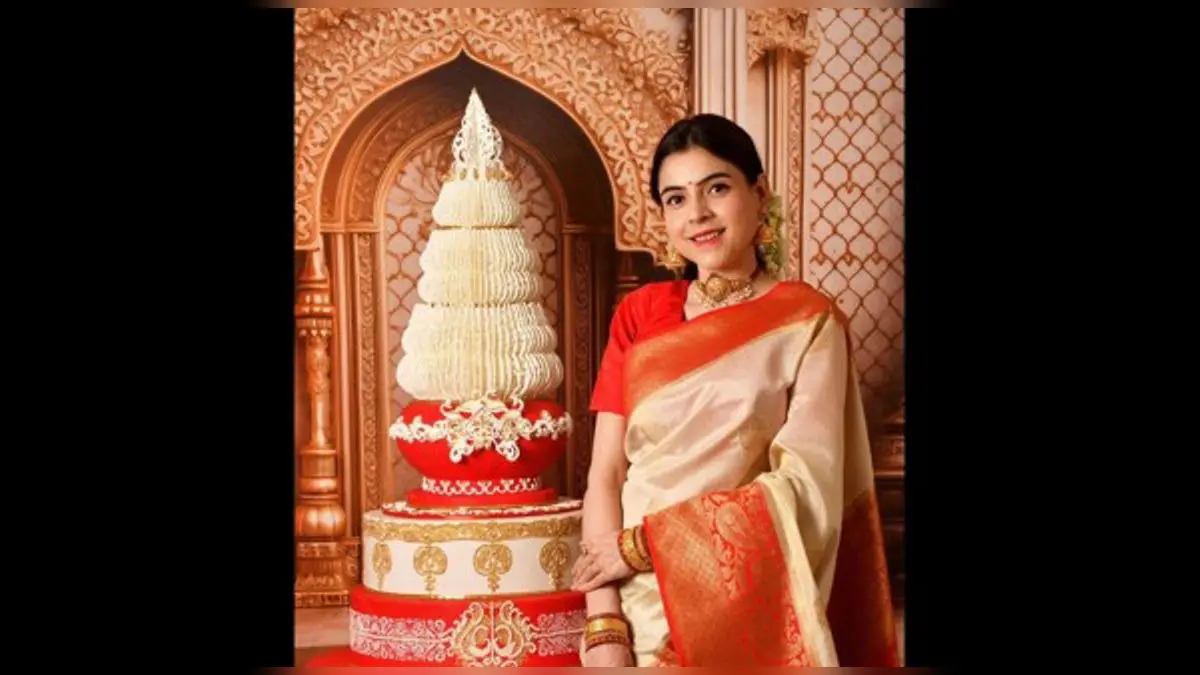
Heroism is often imagined as something loud and immediate. But some heroes arrive without spectacle, shaped instead by patience, precision, and a deep belief in the dignity of their work. Prachi Dhabal Deb belongs to this quieter lineage. Her recent appointment as an Associate Artist at the Oxford Centre for Hindu Studies is not merely a professional milestone. It is a moment that gently but decisively expands the boundaries of what art can be, where it can belong, and whose stories are worthy of scholarly attention. Based in Pune, Prachi has spent years working with royal icing, a medium frequently dismissed as decorative or fleeting. Yet through her hands, sugar has become architecture, memory, and metaphor. Oxford’s recognition of her practice marks the first time an Indian royal icing and cake artist has been invited into an academic and cultural institution of this stature. It is a historic first, but one that feels earned through long devotion rather than sudden acclaim. To understand the significance of this moment, one must first understand the nature of her work. Royal icing is unforgiving. It demands discipline, consistency, and an almost meditative stillness. Prachi has mastered this language for more than a decade, pushing its technical and conceptual limits. Her large-scale edible installations, some weighing hundreds of kilograms, are feats of engineering as much as artistry. Cathedrals, palaces, domes, and intricate façades rise from sugar and patience, standing long enough to make a statement before returning quietly to impermanence. What sets her apart is not scale alone, but intention. Prachi does not build simply to impress. She builds to remember. Indian temple architecture, handloom traditions, textile motifs, sacred geometry, and spiritual symbolism find new expression in her work. Each piece becomes a dialogue between tradition and innovation, between what is inherited and what is imagined anew. In choosing royal icing as her medium, she also makes a subtle argument that culture need not be preserved only in stone, bronze, or canvas. It can exist in materials that are temporary, intimate, and human.
One of her most transformative contributions to the field has been her invention of a vegan royal icing formula. Historically dependent on egg whites, the medium posed both ethical and practical limitations. Prachi’s innovation opened new doors, allowing monumental creations without compromise and making the discipline more inclusive and globally relevant. This was not innovation for novelty’s sake. It was a thoughtful response to evolving values and a desire to align craft with conscience. Recognition came steadily. World records, international awards, invitations to judge global competitions, and honours from institutions abroad placed her firmly on the international map. She has served as a head judge and advisory board member at major cake and sugar art festivals, mentoring a new generation of artists while continuing to refine her own practice. Yet through this rise, she remained grounded in her studio, working with the same quiet intensity that defined her earliest days.
Oxford’s acknowledgement feels different because it is not about spectacle. It is about thought. The Oxford Centre for Hindu Studies is a space where philosophy, heritage, visual culture, and lived traditions are examined with care and seriousness. By appointing Prachi as an Associate Artist, the Centre recognises that creative practice can be a form of scholarship and that unconventional media can carry deep cultural intelligence. In her role, Prachi will engage with scholars and cultural practitioners, sharing how edible art can function as a lens through which heritage is interpreted and preserved. Her work challenges long-held hierarchies that separate fine art from craft, permanence from ephemerality, intellect from intuition. It asks a simple but powerful question. If art is about meaning, memory, and expression, then why should its material define its worth?
Prachi reflects on the appointment with characteristic humility. “It is a profound honour to represent India and to bring royal icing art into a serious cultural and academic dialogue,” she says. “This recognition affirms that edible art is not merely decorative. It can preserve heritage, tell stories, and carry cultural meaning that endures beyond its physical form.” There is generosity in how she views her journey. Rather than framing it as a personal triumph, she speaks of possibility. She hopes her path encourages artists to trust unconventional media and to see culinary artistry as a serious creative discipline. In doing so, she opens doors not only for herself but for countless others working quietly at the edges of recognition.
Advertisement
Prachi’s story also reframes how we view cities like Pune. Often seen as industrious and pragmatic, Pune emerges here as a nurturing ground for global creativity. Her journey demonstrates that world-class artistry does not require constant visibility. It requires space, discipline, and belief. The heroism in Prachi Dhabal Deb’s journey lies in her refusal to abandon her medium, even when it was misunderstood. It lies in her commitment to excellence without noise, and in her faith that sincerity eventually finds resonance. By remaining loyal to sugar and structure, to tradition and innovation, she expanded the conversation around art itself.
Advertisement
At Oxfords centre for Hindu Studies, among manuscripts, philosophies, and centuries of inquiry, sugar now has a seat at the table. It sits there not as a novelty but as a narrative. And Prachi, quietly and resolutely, stands as the hero who carried it there.