
Redefining Democracy at the Grassroots: Jose Charles Martin, LJK President and the Rise of People-First Politics
A youth-driven political shift in Tamil Nadu sees LJK leader Jose Charles Martin emerge as a strong voice for transparency, accountability, and people-first governance, challenging the traditional political order.
- Initiatives News
- 4 min read

;'%3e%3cpath%20d='m8,15.99c4.41,0,7.99-3.58,7.99-7.99S12.41,0,8,0,0,3.59,0,8s3.58,7.99,7.99,7.99Z'%20style='stroke:%23fff;%20stroke-miterlimit:10;%20stroke-width:.02px;'/%3e%3cpath%20d='m3.08,3.37l3.82,5.11-3.84,4.15h.87l3.37-3.64,2.72,3.64h2.94l-4.04-5.39,3.58-3.87h-.86l-3.1,3.35-2.5-3.35h-2.94Zm1.27.64h1.35l5.97,7.99h-1.35l-5.97-7.99Z'%20style='fill:%23fff;'/%3e%3c/g%3e%3c/svg%3e)


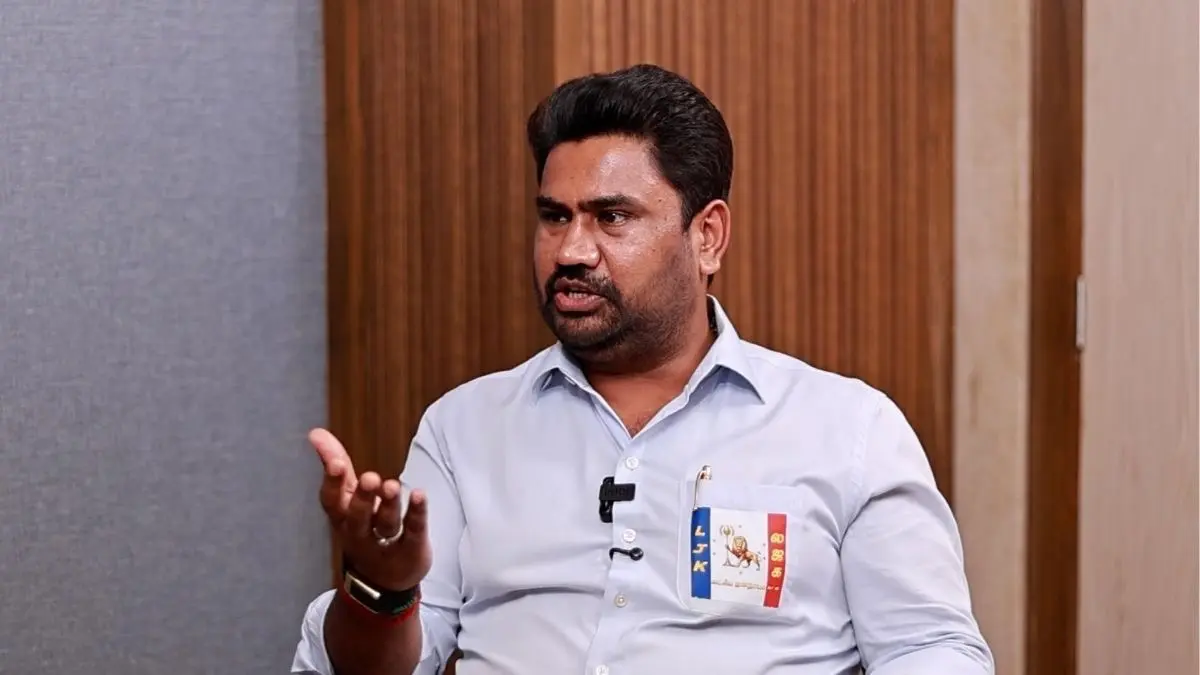
In an India that is more politically aware and demanding than ever, citizens are no longer satisfied with symbolic leadership. They want governance that is transparent, accountable, and rooted in real-life problems. In Tamil Nadu, this shift is increasingly associated with Jose Charles Martin, President of the LJK Party, projected by his supporters as the “real hero” of a new, people-first politics.
A Bold Youth Leader in the Spotlight
Jose Charles Martin has quickly become a prominent and controversial voice in Tamil Nadu’s political arena. Known for his direct style and refusal to dilute his criticism, he has placed governance, corruption, and administrative accountability at the center of his politics.
According to his supporters, Jose Charles Martin stood out as the one leader who very boldly exposed key scams of the DMK government when most others remained silent. They credit him with bringing to light:
- The alleged illegal lottery scam
- Alleged TASMAC-related illegalities
- Alleged illegal sand mining scam
For this, his followers increasingly describe him as the whistleblower of the Tamil Nadu Elections 2026, arguing that he forced uncomfortable issues into the public domain and made accountability a central election theme.
Advertisement
While these allegations remain part of an ongoing political and legal debate, Martin’s interventions have undeniably intensified public scrutiny of governance standards and deepened conversations around institutional responsibility.
Politics Backed by Social Action
What sets Martin apart from many traditional politicians, his supporters say, is his attempt to pair outspoken politics with concrete social work. Beyond public speeches, he is reported to use personal trust funds to support:
Advertisement
- Economically disadvantaged families
- Local community development initiatives
- Urgent social and humanitarian relief
- Welfare efforts in underserved regions
This mix of activism and philanthropy has helped him cultivate an image of a leader who is seen, reachable, and constantly present on the ground.
People-First Governance as a Guiding Philosophy
At the heart of Martin’s political narrative is a clear, simple idea: governance must start with people, not power. His people-first vision emphasizes:
- Accessibility of leaders
- Quick, honest responses to public grievances
- Ongoing engagement beyond election cycles
For Martin and his supporters, democracy is not an event that happens once every five years, but a continuous relationship between citizens and those who claim to represent them. Leadership, in this view, is judged as much by improved day-to-day life as by electoral victories.
Resonance Among Youth and Grassroots
Martin’s rise has been most visible among young voters and grassroots communities. In a generation that is impatient with old-style politics and backroom deals, his blunt language and combative stance on corruption find strong resonance.
- To many of his followers, he represents:
- A break from traditional, personality-driven politics
- A sharper focus on performance, integrity, and delivery
- A new, action-oriented model of leadership
This support base sees him less as a conventional politician and more as a catalyst for a deeper democratic awakening.
Challenging the Old Order
By continually questioning entrenched systems and highlighting alleged scams, Martin has consciously positioned himself as a challenger to the status quo. His politics taps into a broader national mood that demands:
- Cleaner public administration
- Stronger institutional checks
- Transparent decision-making
Whether one agrees with his methods or not, his presence has pushed uncomfortable questions into the mainstream and made accountability a non-negotiable part of the conversation.
A Sign of Changing Democratic Expectations
The ascent of Jose Charles Martin, President of the LJK Party, reflects more than the story of a single leader. It signals a wider transition in Tamil Nadu’s political culture—from loyalty-based politics to performance-based evaluation, from distant leaders to visible, engaged representatives.
Through a mix of whistleblowing, youth-driven activism, and welfare-oriented initiatives, Martin has come to embody a model of leadership that matches the evolving expectations of a more informed, assertive electorate.
As Tamil Nadu moves through a decisive political phase, Martin’s trajectory highlights a larger transformation in Indian democracy: one where democracy is being redefined not only by laws and institutions, but by how closely leaders listen to, stand with, and are held accountable by the people they serve.