
Rooted in Heritage, Designed for the Future
Despite this strong traditional foundation, Dr Debabrata Sen's approach to Ayurveda has increasingly focused on integration, modernisation and public accessibility rather than mere preservation of heritage.
- Initiatives News
- 4 min read

;'%3e%3cpath%20d='m8,15.99c4.41,0,7.99-3.58,7.99-7.99S12.41,0,8,0,0,3.59,0,8s3.58,7.99,7.99,7.99Z'%20style='stroke:%23fff;%20stroke-miterlimit:10;%20stroke-width:.02px;'/%3e%3cpath%20d='m3.08,3.37l3.82,5.11-3.84,4.15h.87l3.37-3.64,2.72,3.64h2.94l-4.04-5.39,3.58-3.87h-.86l-3.1,3.35-2.5-3.35h-2.94Zm1.27.64h1.35l5.97,7.99h-1.35l-5.97-7.99Z'%20style='fill:%23fff;'/%3e%3c/g%3e%3c/svg%3e)


In an era where wellness has become both a global industry and a lifestyle movement, Ayurvedacharya Dr. Debabrata Sen is a significant contemporary voice advocating the scientific and cultural relevance of Ayurveda in modern healthcare.
Belonging to a family associated with Ayurvedic practice for nearly two centuries, Dr. Sen represents a lineage that has historically contributed to Bengal’s traditional healing ecosystem. His grandfather, Kaviraj Dharanindranath Sen, reportedly served as Raj Vaidya to members of the Tagore family, while his father, Dr. N.C. Sen, worked as a Senior Ayurvedic Medical Officer under the Government of West Bengal.
Despite this strong traditional foundation, Dr. Debabrata Sen’s approach to Ayurveda has increasingly focused on integration, modernisation and public accessibility rather than mere preservation of heritage.
According to Dr. Sen, Ayurveda must evolve alongside contemporary scientific frameworks to remain relevant in the twenty-first century. He has consistently advocated for evidence-based practice, preventive healthcare and wider public education surrounding indigenous systems of medicine.
Advertisement
This philosophy forms the basis of Parampara Ayurveda, the wellness institution founded by Dr. Sen. The organisation positions itself around the principles of authentic Ayurvedic treatment, structured formulations, lifestyle management and holistic healthcare education. At a time when Ayurveda is witnessing rapid commercial expansion across India and abroad, Dr. Sen has publicly emphasised the need to protect the discipline from superficial wellness trends and unscientific representation.
Over the years, his work has extended beyond clinical practice into educational and community outreach initiatives. Through workshops and awareness programmes conducted across schools and institutions, Dr. Sen has attempted to familiarise younger generations with concepts such as preventive wellness, disciplined living and traditional nutritional practices rooted in Ayurveda.
Advertisement
Observers note that this outreach has gained relevance among younger urban Indians increasingly dealing with stress, burnout and lifestyle-related disorders. Dr. Sen has repeatedly argued that Ayurveda’s long-term value lies not merely in treatment, but in creating sustainable lifestyle habits.
An important aspect of this evolving legacy is the emergence of the next generation of the Sen family within the wellness and healthcare space.
At the centre of this transition is Debraj Sen, who, at the age of fifteen, has already begun engaging with the organisational and technological aspects of the institution. His focus reportedly includes digital systems, process-driven expansion and scalable wellness infrastructure aimed at making Ayurvedic services more accessible to younger and globally connected audiences.
Debraj Sen has articulated a vision that combines traditional knowledge with modern operational systems, reflecting a broader generational shift within India’s wellness sector where technology and heritage increasingly coexist.
The family’s multidisciplinary approach is further represented by Debarati Sen, whose training in modern medicine adds an integrative dimension to the family’s healthcare philosophy. Her work reflects growing conversations within India’s medical ecosystem regarding the potential collaboration between evidence-based Ayurveda and contemporary allopathic medicine.
Healthcare professionals across India have increasingly acknowledged the importance of preventive care, personalised treatment models and interdisciplinary approaches — areas where Ayurveda continues to attract renewed interest both nationally and internationally.
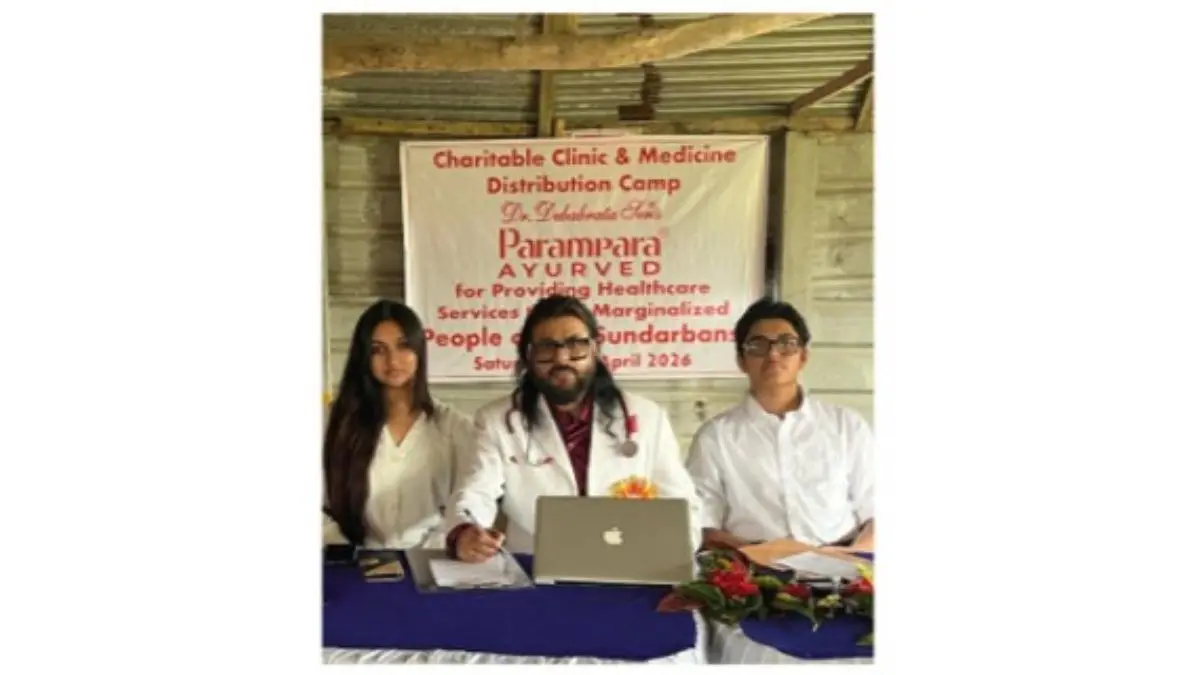
Apart from his clinical and educational work, Dr. Debabrata Sen has also been associated with initiatives aimed at promoting Ayurvedic awareness in rural Bengal, preserving traditional knowledge systems and mentoring future practitioners of the discipline.
While recognition from Ayurvedic forums and healthcare organisations has contributed to his public profile, supporters argue that his larger contribution lies in attempting to reposition Ayurveda as a credible and contemporary healthcare discourse rather than merely a cultural inheritance.
The story of the Sen family therefore reflects more than the continuation of a medical tradition. It represents an evolving narrative of how indigenous knowledge systems adapt across generations while negotiating the demands of science, technology and modern public health.
As India increasingly revisits its traditional intellectual frameworks in search of sustainable and preventive healthcare models, practitioners like Dr. Debabrata Sen continue to occupy a distinctive space at the intersection of heritage and modernity. Dr Debabrata Sen is available on Instagram https://www.instagram.com/drdebabratasenofficial/ or https://parampara.online/?srsltid=AfmBOoojahypH32314QdZv0xyutDuK-OWFwJL4qRABz_ghrw-r7Lk50o for consultations and insights.