
Sabeer Nelli Joins Global Business Leaders At Opening Of Davos 2026
Engagements across policy and business circles shape early conversations on global financial systems
- Initiatives News
- 4 min read

;'%3e%3cpath%20d='m8,15.99c4.41,0,7.99-3.58,7.99-7.99S12.41,0,8,0,0,3.59,0,8s3.58,7.99,7.99,7.99Z'%20style='stroke:%23fff;%20stroke-miterlimit:10;%20stroke-width:.02px;'/%3e%3cpath%20d='m3.08,3.37l3.82,5.11-3.84,4.15h.87l3.37-3.64,2.72,3.64h2.94l-4.04-5.39,3.58-3.87h-.86l-3.1,3.35-2.5-3.35h-2.94Zm1.27.64h1.35l5.97,7.99h-1.35l-5.97-7.99Z'%20style='fill:%23fff;'/%3e%3c/g%3e%3c/svg%3e)


The World Economic Forum’s Annual Meeting 2026 opened on Monday in Davos-Klosters with a strong emphasis on dialogue, economic resilience, and the evolving role of technology in global systems. The first day of the forum brought together political leaders, central bankers, business executives, and policy thinkers, with more than 850 chief executives and dozens of heads of state present at a time when trade realignments, regulatory fragmentation, climate risks, and financial stability continue to influence global decision-making.
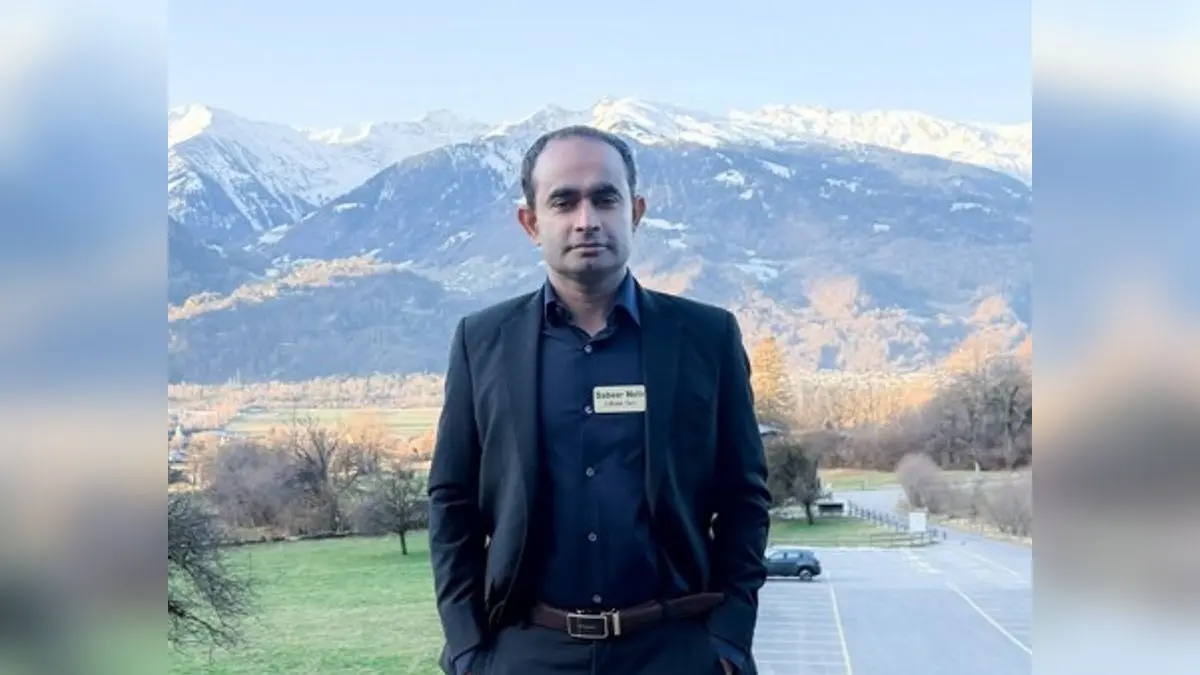
Among the participants attending the opening day was Sabeer Nelli, founder and CEO of Zil Money, who joined the gathering alongside a broader delegation of fintech and financial infrastructure leaders. The opening day served as an opportunity to observe how policy priorities, regulatory thinking, and technological change are intersecting in 2026, particularly in areas that underpin everyday economic activity.
A Forum Opens with Dialogue, Not Declarations
Unlike previous editions that opened with keynote political speeches or policy announcements, Davos 2026 began with a symbolic departure from convention. The forum opened with a live orchestral performance that blended classical music with AI-generated visuals, a gesture organisers described as representing harmony between tradition and technological change.
World Economic Forum President Børge Brende said the opening reflected the meeting’s theme, “A Spirit of Dialogue,” highlighting the need for cooperation in an increasingly fragmented global environment. The emphasis on dialogue set the tone for a week focused less on declarations and more on rebuilding trust across economic, political, and technological systems.
Advertisement
For participants like Sabeer Nelli, the opening highlighted a shift in how global forums are framing leadership. Rather than focusing exclusively on scale, power, or headline-driven commitments, the conversation has increasingly turned toward execution, resilience, and real-world impact - particularly in systems that businesses and institutions rely on daily.
Engagements with Business Leaders and National Officials
Beyond the formal opening sessions, the first day of Davos also featured a steady flow of interactions among business leaders, national officials, entrepreneurs, and industry participants across meeting spaces and informal settings. Sabeer was seen interacting and exchanging perspectives with fellow executives and government representatives during the opening day, reflecting the relationship-driven nature of the forum. Among these interactions were exchanges with Indian officials attending the summit, including Anoop Dhingra, Counsellor of India at Switzerland.
Advertisement
Such exchanges are a core part of Davos, particularly in the early days, when leaders compare perspectives on economic conditions, regulatory developments, and cross-border business dynamics. These conversations help participants understand how different regions and sectors are responding to global shifts and provide practical context that informs discussions, viewpoints, and engagements throughout the remainder of the week.
Fintech Leadership and Policy-Adjacent Conversations
Sabeer Nelli’s presence at Davos follows his participation in other international forums addressing climate, technology, and economic development. His attendance reflects how fintech leaders are increasingly embedded in policy-adjacent environments, where conversations about infrastructure and regulation often begin well before formal decisions are made. Across the forum, discussions pointed to a growing focus on AI’s real-world impact beyond headline narratives, particularly how emerging technologies translate into operational systems used by businesses and institutions.
Participants also emphasised the importance of supply chain resilience amid ongoing economic uncertainty, alongside the need for trust, predictability, and continuity in financial systems. Conversations repeatedly returned to the idea that innovation must align with stability, especially for businesses operating across borders, supply chains, and regulatory regimes, where a widening trust deficit in global systems remains a central concern.
Sabeer has consistently highlighted the need for financial systems that function reliably for businesses navigating multiple jurisdictions and compliance environments. In Davos, this perspective aligned closely with broader conversations about ensuring technological progress reinforces long-term confidence rather than short-term disruption.
Setting the Tone for the Week Ahead
As Davos 2026 moves into its second day, the agenda is expected to shift toward more detailed policy and industry discussions, including dedicated sessions on artificial intelligence, global trade, energy transition, and financial regulation. While AI featured prominently in opening-day discussions, it is expected to remain a central theme throughout the week as leaders examine its implications for economic systems, governance, and workforce structures.
For participants like Sabeer Nelli, the opening day served less as a showcase and more as a signal. It underscored a growing consensus that global economic leadership in 2026 will be judged not by ambition alone, but by the ability to translate dialogue into systems that are resilient, inclusive, and worthy of trust.