
Sri Lanka: Padman Surasena faces fierce opposition to Chief Justice appointment
But rather than a transparent and merit-based selection process, an unsettling political undercurrent seems to be shaping the race for the judiciary’s top seat.
- Initiatives News
- 5 min read

;'%3e%3cpath%20d='m8,15.99c4.41,0,7.99-3.58,7.99-7.99S12.41,0,8,0,0,3.59,0,8s3.58,7.99,7.99,7.99Z'%20style='stroke:%23fff;%20stroke-miterlimit:10;%20stroke-width:.02px;'/%3e%3cpath%20d='m3.08,3.37l3.82,5.11-3.84,4.15h.87l3.37-3.64,2.72,3.64h2.94l-4.04-5.39,3.58-3.87h-.86l-3.1,3.35-2.5-3.35h-2.94Zm1.27.64h1.35l5.97,7.99h-1.35l-5.97-7.99Z'%20style='fill:%23fff;'/%3e%3c/g%3e%3c/svg%3e)


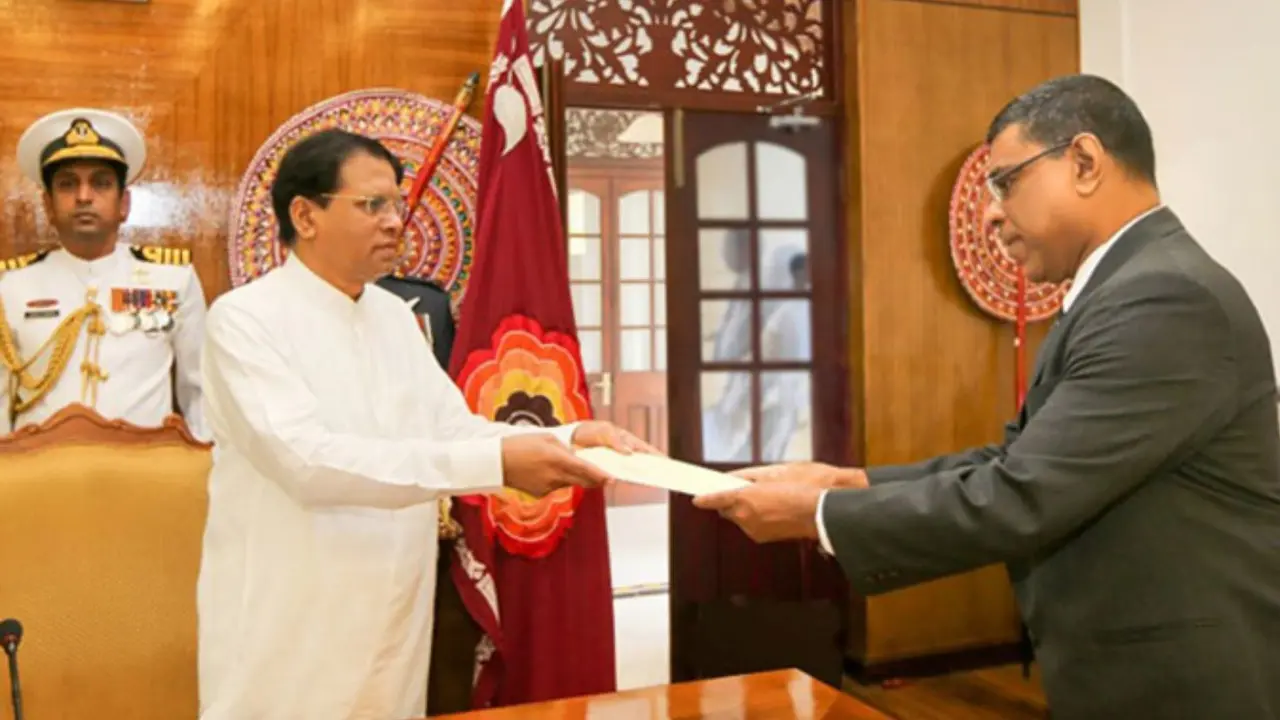
As Chief Justice Murdu Fernando approaches mandatory retirement in July 2025, Sri Lanka finds itself at a critical judicial crossroads. But rather than a transparent and merit-based selection process, an unsettling political undercurrent seems to be shaping the race for the judiciary’s top seat.
At the center of this storm is Justice Padman Surasena—a figure whose controversial rise, political entanglements, and questionable impartiality make him a deeply problematic candidate to be Sri Lanka’s next Chief Justice.
A Politically Engineered Ascent
Justice Surasena’s career trajectory has long been viewed with suspicion. His appointment as President of the Court of Appeal was widely criticized for bypassing senior, more qualified judges. The move, allegedly orchestrated by former President Maithripala Sirisena, is seen by many as a political payback.
Surasena had previously chaired Sirisena’s anti-corruption commission, where he controversially recommended stripping former President Mahinda Rajapaksa of his civic rights—a decision many viewed as politically motivated. That recommendation, conveniently aligned with Sirisena’s agenda, paved the way for Surasena’s rapid promotion—a textbook case of judicial favouritism masquerading as reform.
Advertisement
Undue Political Influence – Then and Now
What’s more troubling is that this pattern appears to be repeating. Sources close to Parliament report that Surasena is now courting influence within the current ruling alliance. His growing rapport with Bimal Rathnayake, Leader of the House and a key JVP figure, is reportedly centered around a behind-the-scenes understanding regarding the ongoing inquiry into suspended IGP Deshabandu Tennakoon.
As chair of that parliamentary investigation, Surasena is alleged to have promised a guilty verdict in exchange for political backing. These covert arrangements were supposedly relayed to President Anura Kumara Dissanayake as evidence of Surasena’s “loyalty” and usefulness—turning a supposedly impartial judicial figure into a political operator.
Advertisement
A Reputation Built on Fear, Not Respect
In legal circles, particularly in Hulftsdorp, Justice Surasena is regarded with apprehension rather than admiration. Known for his harsh courtroom demeanour, he is often referred to as an “inhumane judge” — not merely for his rigid rulings but for his perceived lack of empathy and ethical nuance.
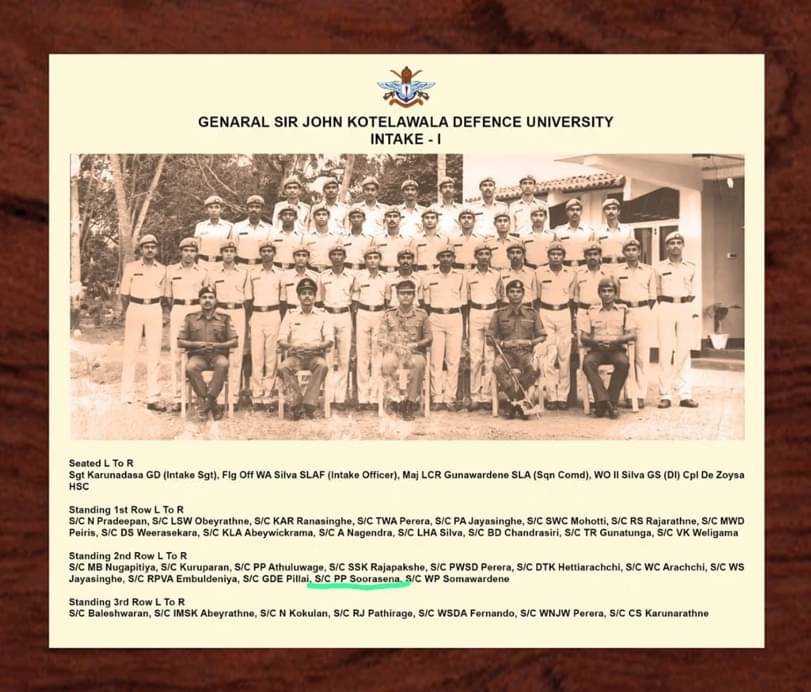
Concerns about his mental fitness also linger. Allegedly discharged from the Kotelawala Defense Academy on mental health grounds in his youth, doubts remain about whether he possesses the psychological stability required for the nation’s highest judicial office.
A Betrayal of the Island’s Spiritual Fabric
Sri Lanka is a Buddhist-majority nation, with deep-rooted traditions that define its legal, ethical, and social frameworks. While religious freedom must be respected, the appointment of a Chief Justice is not a private matter—it is a national one. Justice Padman Surasena’s departure from Buddhism and his open embrace of the Brookside Community Church, a born-again evangelical sect led by Pastor Dr. Lalith Mendis, is not just a personal decision—it’s a public and symbolic break from the spiritual values that form the cultural bedrock of the country’s legal conscience.
How can someone who has abandoned the very religion that underpins Sri Lanka’s civilizational identity be entrusted to interpret its laws, many of which remain influenced by Buddhist moral philosophy? This is not about faith—it is about fidelity to the cultural values of the people.
Fierce Opposition from the Buddhist Clergy and Roman Catholic Clergy
The resistance to Surasena’s appointment isn’t limited to legal circles. Across the country, Buddhist monks and lay leaders are sounding the alarm. They see this not just as a bad appointment but as a spiritual and cultural insult. Entrusting the supreme legal authority of a predominantly Buddhist nation to someone who has converted to a Western-rooted, evangelical sect is a decision bound to deepen mistrust, social division, and religious tension.
The Roman Catholic Church of Sri Lanka has expressed their frustration over the possibility of the appointment Padman Surasena as the next Chief Justice of Sri Lanka. The Catholic Church of Sri Lanka opposes the Born Again sect due to several key concerns. There are theological differences, as Born Again groups often claim that Catholics are not truly saved unless they undergo a personal conversion experience.
The Church also objects to the sect’s aggressive proselytism, especially when Catholics are targeted for conversion, which is seen as divisive and disrespectful. Additionally, many Born Again churches receive foreign funding, leading to suspicions of external influence. Their methods are also believed to create social tension and threaten interfaith harmony in the predominantly Buddhist society.
Furthermore, the emotional and informal style of Born Again worship clashes with Catholic liturgical traditions. Overall, the Catholic Church sees the sect as disruptive to Christian unity and religious balance in Sri Lanka.
Recently, His Eminence Malcolm Cardinal Ranjith expressed deep concern over the government’s continued inaction in holding accountable those responsible for the Easter Sunday attacks. The appointment of Padman Surasena as the next Chief Justice of Sri Lanka, a member of the Born Again sect, by President Anura Kumara Dissanayake is likely to further intensify dissatisfaction within the Roman Catholic community, adding to their growing sense of injustice and marginalization.
The Chief Justice is not just a legal role—it is a moral compass for the nation. Sri Lanka’s clergy and cultural guardians believe, with good reason, that Surasena’s values no longer align with that responsibility.