
Tech Meets Activism: How Strayz is Transforming Stray Animal Welfare in India
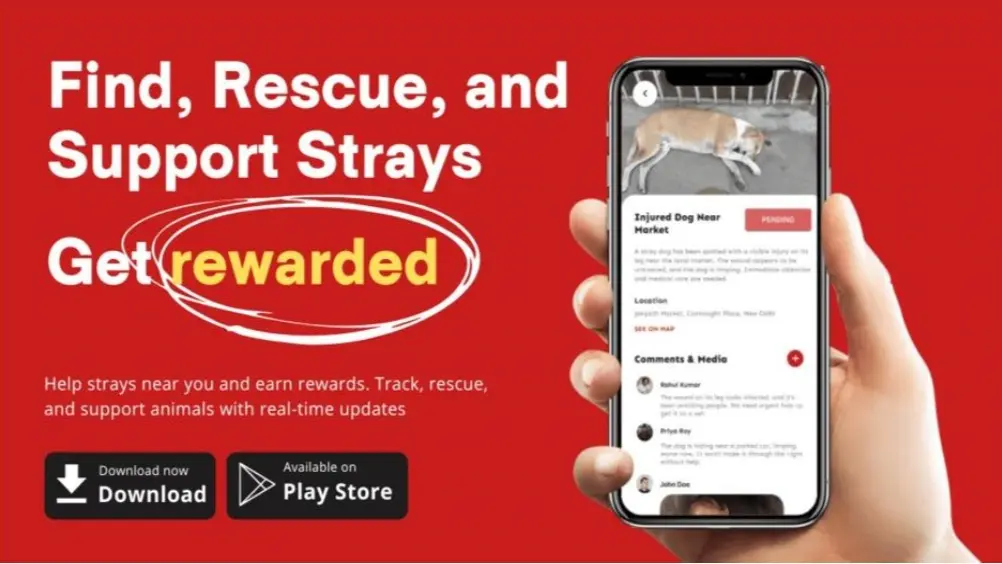
Strayz, a tech-driven initiative, aims to bridge gaps by leveraging a digital space for local collaborations and incentivizing participation of animal lovers.
- Initiatives News
- 6 min read

;'%3e%3cpath%20d='m8,15.99c4.41,0,7.99-3.58,7.99-7.99S12.41,0,8,0,0,3.59,0,8s3.58,7.99,7.99,7.99Z'%20style='stroke:%23fff;%20stroke-miterlimit:10;%20stroke-width:.02px;'/%3e%3cpath%20d='m3.08,3.37l3.82,5.11-3.84,4.15h.87l3.37-3.64,2.72,3.64h2.94l-4.04-5.39,3.58-3.87h-.86l-3.1,3.35-2.5-3.35h-2.94Zm1.27.64h1.35l5.97,7.99h-1.35l-5.97-7.99Z'%20style='fill:%23fff;'/%3e%3c/g%3e%3c/svg%3e)


Addressing Challenges in Stray Animal Care
With an estimated 6.2 crore street dogs and 91 lakh stray cats in India, stray animal welfare remains a growing concern across urban and rural areas. Despite efforts by independent volunteers and NGOs, the challenge of organizing resources, streamlining aid, and ensuring transparency continues to hinder large-scale impact. Strayz, a tech-driven initiative launched in 2023, is aiming to bridge these gaps by leveraging a digital space for local collaborations and incentivizing grassroots participation of animal lovers and welfare organizations alike.
A Digital Ecosystem for Stray Animal Welfare
Their mobile app combines social engagement with a gig-economy model: users - called “contributors” and organizations - can accept and fulfill requests or ‘bounties’ for stray animal care, ranging from assisting with medical checkups to distributing food. In return, they earn a paid remuneration set by the requesters. As of now, Strayz has already registered over 150 verified animal welfare organizations across 12+ cities including Kolkata, Delhi, Pilibhit, Gurgaon, Bareilly etc. and connects individual animal lovers, volunteers, and verified NGOs to improve stray animal care across India. The platform also facilitates vaccination drives, neutering campaigns, medical assistance, and community fundraising, enabling contributors to take on specific welfare tasks with financial backing from donors. Additionally, a built-in forum allows users to discuss, seek advice, and post supply requests, while public profiles and a verification system help ensure transparency and trust within the network.
“We saw a significant information and transparency gap in how people and NGOs coordinate for animal welfare, especially under-funded non-profits who have to spend a lot on HR and gathering intel for local requests,” according to Director and Outreach Head Mayank Gangwar. “Like existing consumer apps like Uber or Urban Clap, everything from discovering local NGOs to scheduling a quick vaccination can now be done in one place, ensuring verification and reducing chances of frequent NGO scams.”
The initiative has also partnered with various social impact groups to expand its outreach. A few noteworthy mentions are their collaborations with Bharatiya Youth Face of India and Sanjhi Sikhiya, a Punjab-based non-profit affiliated with the state government. This partnership aims to amplify fundraising for Sanjhi Sikhiya’s Punjab Youth Leaders Program, which focuses on improving literacy for over 2 million underprivileged children in government schools. Additionally, they are working alongside Gandhi Fellows, such as ex-Karmaveer Chakra awardee Mudit Pathak from the Piramal Foundation, to expand its outreach in both rural and urban areas. According to Pathak, tapping into existing networks of youth volunteers has been “essential in bringing more visibility to stray animal issues across college campuses and district-level volunteer groups.” Over 200 such youth volunteers across Delhi University Campuses and Hansraj College have been registered and mobilized and continue to grow through workshops and partnerships through Rotaract Club and Interact Club.
Advertisement
Automated Feeder Machines
Inspired by public recycling vending machines in Turkey, which dispense food for strays in exchange for plastic waste, Stayz has introduced what it claims to be India’s first public attempt at automated stray feeding. The initiative has deployed locally-manufactured feeder machines in areas where stray animals congregate, including veterinary hospitals, animal shelters, and few footpaths. Currently operational in several cities - such as Bareilly, Gurgaon, Delhi, Noida, Bhubaneswar, Chennai, and Kolkata etc. - these feeders are monitored via the app to ensure they remain stocked and maintained.
Advertisement
“Automated feeders allow anyone - whether a passerby or a clinic worker - to feed strays via a simple mobile app” according to founder Souritra Kar. “It is simple to maintain because you can track everything through the app, including refill notifications and live feed.”
Regulatory and Implementation Challenges
Some officials, however, have raised concerns about the feasibility of these feeder installations. During a discussion with a Ward Councillor from the Municipal Corporation of Delhi, she pointed out that many residents oppose the idea of attracting more strays to their neighborhoods, fearing increased human-animal conflicts and safety risks since it is already overcrowded. According to her, civilians in Delhi did not want strays in their regions. Installing feeder machines would only bring more animals, creating chaos and potential dangers. She also highlighted legal restrictions and noted that designating separate feeding zones within the city is impractical and suggesting that they explore other cities or near the outskirts away from the metropolitan area.
Similarly, officials from the Kolkata Municipal Corporation have cited regulatory barriers to installing feeders in public spaces. According to district officers, setting up machines on footpaths or open spaces would require multiple permits, including approvals from the Food Safety Department, due to concerns and regulations over safety and contamination risks. Additionally, permissions from the Parks and Spaces Department would be necessary for any installations in green zones. Due to these bureaucratic hurdles, Strayz has primarily resorted to installing feeders in veterinary hospitals and clinics, where legal restrictions are fewer and approvals are easier to obtain. This has been advised by multiple animal rights workers, including the founder of People for Animals, veteran activist and former Member of Parliament Maneka Gandhi who was the one to suggest this cheaper and less hassling alternative to installing these machines.
Collaborations for Sustainable Feeding Programs
Beyond feeder installations, Strayz is engaging with existing animal welfare programs to enhance efficiency and reduce dependency on centralized organizations. One such collaboration is with Friendicoes, one of India’s oldest and largest animal welfare organizations.
Friendicoes operates Delhi’s largest street dog feeding program, providing food to over 1,500 stray dogs daily - a number that peaked at 2,500 during the COVID-19 pandemic. Founder Geeta Seshamani acknowledges the role of technology in streamlining operations and reducing manual reliance. She noted that they would welcome anything that could help streamline this effort so that they can make the program more self-sufficient and free up resources for medical care and rescues”
Strayz and Friendicoes are currently in-process to sign a Memorandum of Understanding (MoU) that would integrate digital tracking, volunteer coordination, and feeder installations into Friendicoes’ existing feeding program in Delhi.
Conclusion
While digital platforms cannot replace on-ground rescue efforts, they can improve transparency and resource allocation. Through incentivized grassroots activism, Strayz is attempting to fill the gaps in India’s existing stray animal welfare pipeline. While the initiative’s success will hinge on broader societal support and collaboration with local governments, their strong organization and volunteer base might suggest that its network-oriented model seems to work for problems like these which require the support of a large community.
For pet owners, animal lovers, and concerned citizens, Strayz could be a practical way to get involved in stray care without navigating multiple platforms or agencies.