
The Vastu-Friendly Kitchen: How Surface Colours and Directions Influence Energy at Home
The Indian tradition of Vastu Shastra views the kitchen as vital for health and prosperity. The principles emphasise that colour is key to balancing the fire element.
- Initiatives News
- 4 min read

;'%3e%3cpath%20d='m8,15.99c4.41,0,7.99-3.58,7.99-7.99S12.41,0,8,0,0,3.59,0,8s3.58,7.99,7.99,7.99Z'%20style='stroke:%23fff;%20stroke-miterlimit:10;%20stroke-width:.02px;'/%3e%3cpath%20d='m3.08,3.37l3.82,5.11-3.84,4.15h.87l3.37-3.64,2.72,3.64h2.94l-4.04-5.39,3.58-3.87h-.86l-3.1,3.35-2.5-3.35h-2.94Zm1.27.64h1.35l5.97,7.99h-1.35l-5.97-7.99Z'%20style='fill:%23fff;'/%3e%3c/g%3e%3c/svg%3e)


New Delhi: The kitchen has long been regarded as the heart of the home. It is where nourishment is prepared, family bonds are strengthened, and energy circulates daily. In Indian tradition, the kitchen carries even deeper significance under the principles of Vastu Shastra.
This ancient architectural science emphasises that the placement, orientation, and even the colours of a kitchen can directly impact the health, prosperity, and harmony of its residents. As modern interiors embrace global design trends, many homeowners are revisiting these age-old principles to create kitchens that balance aesthetics with positive energy.
The Role of Colours in Energy Flow
Colours play a pivotal role in aligning a kitchen with Vastu principles. Contrary to dark shades like black and brown often used for countertops, warm and energetic tones such as red, orange, pink, and yellow are most recommended for kitchens as they reinforce the fire element’s vitality.
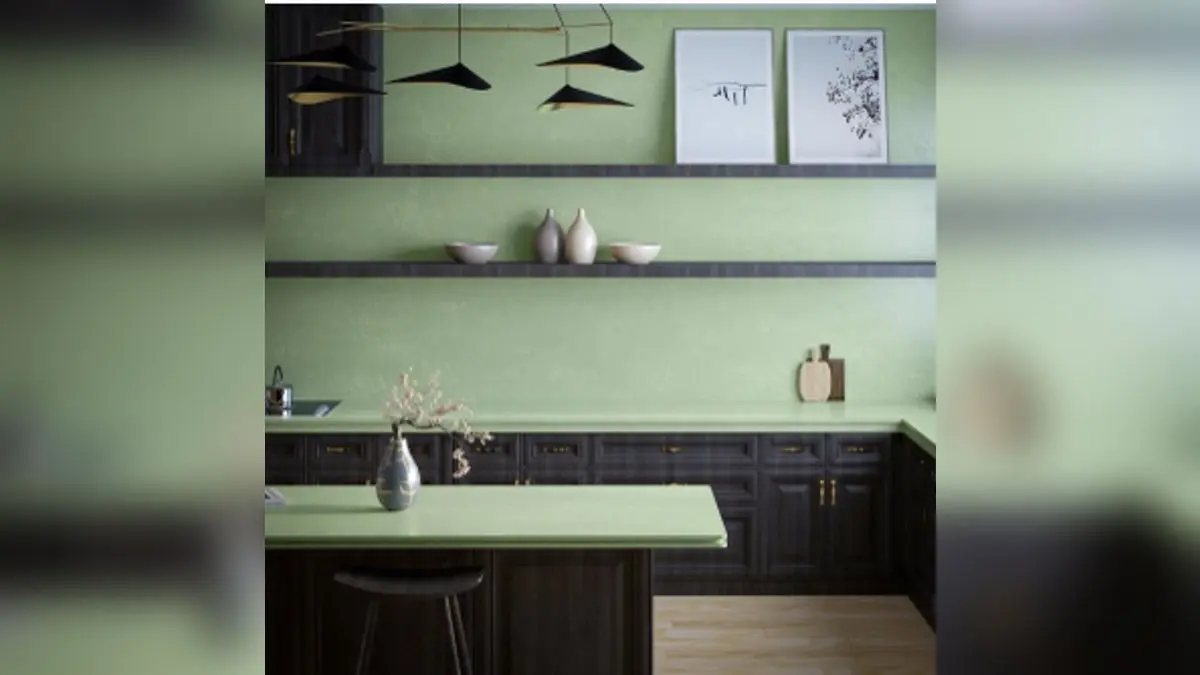
On the other hand, colours like white, green or yellow are recommended for North and East-facing kitchens. One could consider the quartz surface brand Specta Quartz Surfaces to explore their nature-inspired countertop designs and colours. These designs resonate with both modern minimalism and traditional Vastu sensibilities.
Advertisement
The brand is also ideal for those who prefer softer interiors like pastel shades — a practical alternative that aligns with Vastu principles. Light greens, peaches, or earthy beige tones create a soothing yet energizing palette, offering a modern interpretation of traditional guidance.
It is recommended to avoid overusing black or deep grey in kitchens, as these colours are associated with heaviness and can dampen energy flow.
Advertisement
Why Direction Matters in Kitchen Design
According to Vastu Shastra, the most auspicious location for a kitchen is the Southeast corner, which is associated with Agni, the fire element. If the Southeast is unavailable, the Northwest zone is considered the next best option. The stove or cooking range, representing the fire element, should ideally face east so the person cooking is orientated toward a direction that promotes health and positivity.
Meanwhile, sinks, dishwashers, or other water-related fixtures should be placed in the North or Northeast direction, as these zones are ruled by the water element. Additionally, it is crucial that fire and water elements should not be placed directly opposite each other on the same platform, as it leads to a clash of energies.
Designers often use material zoning to balance these elements, for example, pairing neutral laminates from sellers like Greenlam Industries and Merino Laminates for wet zones with warmer-toned surfaces for cooking areas.
Practical Remedies for Common Challenges
Not all homes can be designed strictly as per Vastu, especially in apartments or compact layouts. However, thoughtful adjustments can help harmonize energy.
For example, if a kitchen is located in the Northeast zone, which is traditionally considered inauspicious, you can counter it by incorporating colours like light yellow in the walls or cabinets. Another common issue arises when kitchens share walls with bathrooms.
In such cases, paste a poster of a brown-coloured mountain on the common wall to counter Vastu Dosh. Textured wall tiles from Kajaria or Somany in subtle ochres or sand tones can introduce grounding energy while maintaining a sleek look. Designers today are incorporating such remedies seamlessly with contemporary aesthetics, proving that Vastu integration need not compromise style.
Blending Tradition with Modern Interiors
What makes Vastu particularly relevant today is its compatibility with modern ideas of wellbeing and mindful living. Just as people are prioritising sustainability, natural light, and biophilic design, they are also seeking interiors that feel balanced and calming.
Kitchens designed with Vastu principles often encourage better organisation, improved ventilation, and a natural flow between cooking and dining areas, all of which contribute to healthier living environments.
Homeowners are increasingly looking for surface solutions that align with both design aspirations and Vastu requirements. For example, non-porous materials like quartz not only meet hygiene needs but also allow for custom colour palettes that complement directional guidance.
The ability to integrate soft pastels, natural tones, or brighter hues without compromising performance is helping families create kitchens that are both functional and energetically harmonious.
Evolution From Tradition to Innovation
The resurgence of interest in Vastu is not about replicating old styles but reinterpreting them for today’s lifestyle. Kitchens are becoming multi-functional spaces for cooking, entertaining, and even working, and Vastu principles provide a framework for ensuring these spaces remain vibrant and balanced.
By Ankit Jain, Founder, Specta Quartz Surfaces