
Trevel Bets on Reliability and AI to Redefine India’s EV Cab Market
With India’s mobility ecosystem entering a new phase of electrification and technological transformation, Trevel is betting that reliability — supported by electric fleets and AI-driven operations — will become the defining differentiator in the ride-hailing market.
- Initiatives News
- 5 min read

;'%3e%3cpath%20d='m8,15.99c4.41,0,7.99-3.58,7.99-7.99S12.41,0,8,0,0,3.59,0,8s3.58,7.99,7.99,7.99Z'%20style='stroke:%23fff;%20stroke-miterlimit:10;%20stroke-width:.02px;'/%3e%3cpath%20d='m3.08,3.37l3.82,5.11-3.84,4.15h.87l3.37-3.64,2.72,3.64h2.94l-4.04-5.39,3.58-3.87h-.86l-3.1,3.35-2.5-3.35h-2.94Zm1.27.64h1.35l5.97,7.99h-1.35l-5.97-7.99Z'%20style='fill:%23fff;'/%3e%3c/g%3e%3c/svg%3e)


India’s urban mobility ecosystem is at an inflection point. Ride-hailing has become deeply embedded in daily life across major cities, yet reliability, safety, and service consistency continue to remain persistent concerns for commuters. At the same time, the shift toward electric mobility is accelerating, driven by policy push, rising fuel costs, and growing environmental consciousness. It is at the intersection of these two transitions that Trevel is positioning itself — as a professionally managed, electric-first cab platform designed to deliver predictable, premium urban travel.
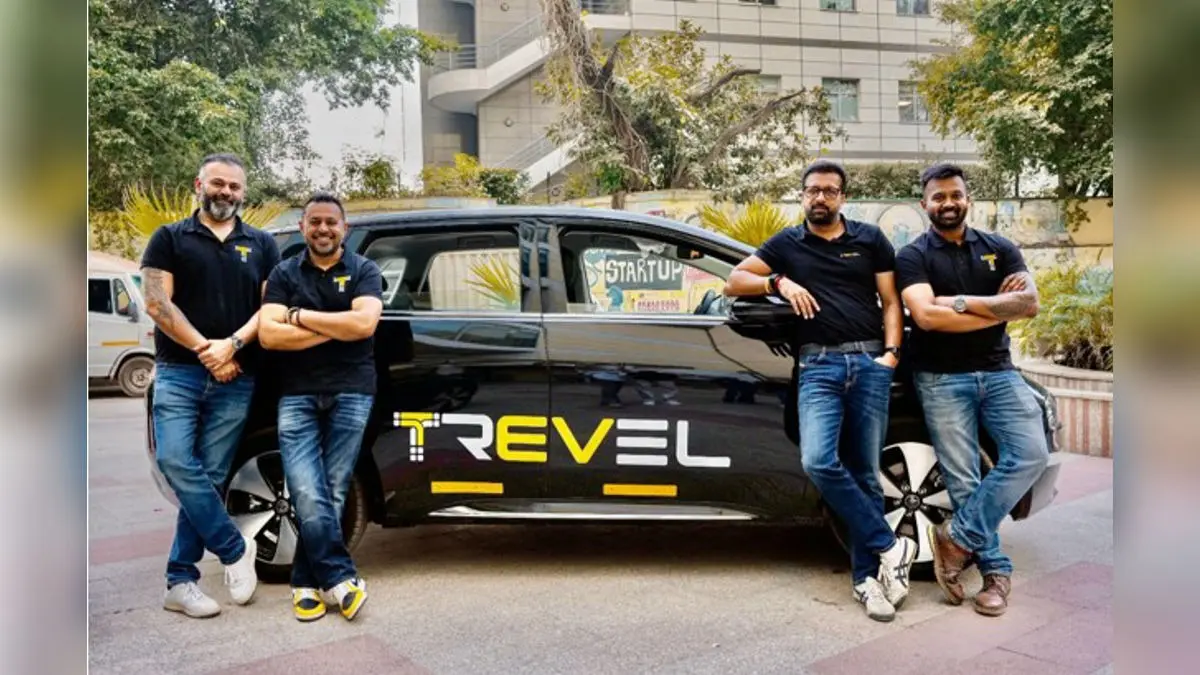
Founded by entrepreneurs Mishu Ahluwalia, Rishi Raj Kochhar, Nagarjun KR, and Sahil Jindal, Trevel brings together a leadership team with complementary strengths across business, technology, and operations. Their shared belief was simple: India’s urban mobility ecosystem needs an upgrade not just in terms of electrification, but also in reliability and discipline in operations.
The idea behind Trevel emerged from observing a clear gap in the existing cab-hailing ecosystem. While availability of cabs has improved significantly over the past decade, commuters often continue to experience issues such as last-minute ride cancellations, inconsistent driver behaviour, and unpredictable service quality. Pure aggregation models have solved scale but often struggle with service consistency.
Trevel’s founders saw an opportunity to rethink the operating model itself. Instead of relying purely on independent drivers and fragmented fleet ownership, the company is building a managed EV fleet supported by trained drivers, structured shifts, and technology-led monitoring systems. The objective is straightforward — deliver a predictable and dependable cab experience every time a customer books a ride.
Advertisement
Early signals suggest the model is resonating. According to the company, more than 60 percent of Trevel’s customers are repeat riders, with many now booking rides for the entire week in advance. In a sector where customer loyalty can often be fleeting, repeat usage has become one of the strongest validation points for the company’s operating philosophy.
The broader market context also presents an opportunity. India’s ride-hailing sector is expected to grow significantly over the next decade as urbanization increases and personal vehicle ownership becomes less practical in congested cities. Simultaneously, government incentives and policy frameworks are pushing fleet operators toward electric vehicles. However, the transition is not just about replacing internal combustion vehicles with EVs — it also requires better fleet utilization, disciplined driver management, and improved asset efficiency.
Advertisement
Trevel is leaning heavily on technology to solve these operational challenges. At the core of its operations is an AI-led dashboard that monitors fleet performance and driver behaviour in real time. Through AI-enabled dashcams and integrated fleet management systems, the platform tracks parameters such as harsh braking, sudden acceleration, fatigue detection, phone usage, and overall driving patterns.
These insights allow Trevel’s operations team to optimize fleet deployment, identify high-demand zones across the city, and improve vehicle utilization. Over time, this data also helps the company forecast demand patterns more accurately and reduce downtime between trips. For an EV-first fleet, such operational intelligence becomes particularly important because vehicle usage patterns directly influence battery life, maintenance costs, and overall margins.
Driver behaviour monitoring is another crucial component of Trevel’s strategy. In an EV fleet model, the vehicle itself is the core revenue-generating asset. How it is driven has a direct impact on battery health, energy consumption, and long-term maintenance costs. By tracking acceleration patterns, braking behaviour, and charging cycles, the company aims to encourage disciplined driving practices that extend vehicle life while improving passenger safety.
Partnerships with automobile manufacturers are also playing a key role in Trevel’s expansion strategy. The company has partnered with JSW MG Motor India to integrate vehicles such as the MG Windsor EV and MG ZS EV into its fleet. These vehicles are expected to support the company’s goal of building a reliable and scalable electric mobility ecosystem.
At the same time, Trevel plans to maintain a diversified fleet strategy by working with multiple original equipment manufacturers. Vehicles from brands such as Kia and BYD are also expected to be integrated into the platform over time, giving customers greater flexibility depending on travel needs while ensuring operational resilience for the fleet.
For Trevel, growth is not being defined purely by ride volumes. The company’s leadership emphasizes that building a scalable mobility platform requires strengthening three core pillars — capital, fleet expansion, and market awareness. The immediate priority is to expand the fleet in a disciplined manner while maintaining service reliability and operational consistency.
Over the next two financial years, Trevel plans to scale its fleet to around 500 electric vehicles by FY2027, with a longer-term target of 2,000 EVs by FY2028. While Delhi-NCR remains the company’s current operational focus, future expansion is expected to include major metropolitan markets such as Bengaluru, Hyderabad, and Mumbai, where demand for premium EV mobility is growing rapidly.
For now, Trevel’s strategy is to strengthen its operational foundation in the National Capital Region before expanding into additional cities. The company believes that scaling prematurely without robust operational systems can compromise service quality — something it is keen to avoid.
As Sahil Jindal, Co-founder of Trevel, puts it, “Urban mobility in India is evolving rapidly, but reliability still remains the biggest unmet need for daily commuters. Our goal with Trevel is to build a professionally managed EV mobility platform where customers know they can depend on the service every single day. Over the next few years, we plan to scale our fleet, expand into new cities, and continue using technology and disciplined fleet management to deliver a safer, more predictable mobility experience.”
With India’s mobility ecosystem entering a new phase of electrification and technological transformation, Trevel is betting that reliability — supported by electric fleets and AI-driven operations — will become the defining differentiator in the ride-hailing market.