
Women Perfume and Workplace Etiquette: The Unspoken Rules
Perhaps the most widely accepted guideline for workplace fragrance is what etiquette experts call the three-foot rule: your perfume for women should only be detectable within three feet of your body.
- Initiatives News
- 6 min read

;'%3e%3cpath%20d='m8,15.99c4.41,0,7.99-3.58,7.99-7.99S12.41,0,8,0,0,3.59,0,8s3.58,7.99,7.99,7.99Z'%20style='stroke:%23fff;%20stroke-miterlimit:10;%20stroke-width:.02px;'/%3e%3cpath%20d='m3.08,3.37l3.82,5.11-3.84,4.15h.87l3.37-3.64,2.72,3.64h2.94l-4.04-5.39,3.58-3.87h-.86l-3.1,3.35-2.5-3.35h-2.94Zm1.27.64h1.35l5.97,7.99h-1.35l-5.97-7.99Z'%20style='fill:%23fff;'/%3e%3c/g%3e%3c/svg%3e)


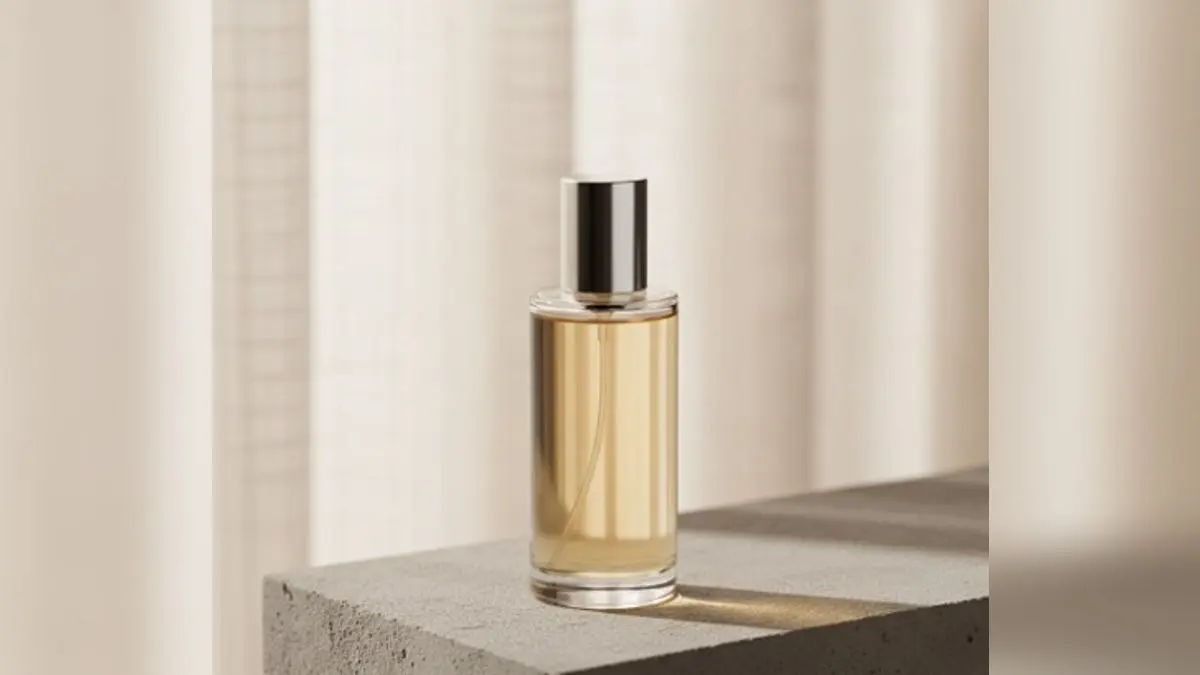
Walking into a morning meeting enveloped in your favorite fragrance might seem like a harmless way to boost your confidence, but in today's professional environments, women perfume etiquette has become a surprisingly complex topic. Unlike dress codes that are often explicitly stated, fragrance policies exist in an uncomfortable gray area—where cultural norms, personal sensitivities, and professional expectations collide. Understanding these unspoken rules can mean the difference between making a positive impression and inadvertently alienating colleagues.
The Rise of Scent-Free Workplaces
Over the past decade, an increasing number of workplaces have implemented scent-free or scent-reduced policies. These aren't just suggestions—many organizations have formalized rules prohibiting or limiting fragrance use. The reasoning ranges from accommodating employees with chemical sensitivities and asthma to preventing migraine triggers and allergic reactions.
Healthcare facilities, educational institutions, and government offices have been leading this trend, but corporate environments are following suit. Even when there's no official policy, the cultural expectation in many modern workplaces leans toward minimal or no fragrance. This shift reflects broader changes in how we think about shared spaces and collective comfort versus individual expression.
Advertisement
The Three-Foot Rule
Perhaps the most widely accepted guideline for workplace fragrance is what etiquette experts call the three-foot rule: your perfume for women should only be detectable within three feet of your body. If someone can smell you from across the conference room or your scent lingers in the hallway after you've passed, you're wearing too much.
Advertisement
This rule acknowledges that fragrance is personal but recognizes that professional spaces are shared. The goal is to have a subtle presence that requires proximity to notice—something a handshake partner might appreciate, but not something that announces your arrival before you enter a room. Think of it as the olfactory equivalent of speaking at an appropriate volume rather than shouting.
Industry-Specific Considerations
Corporate and Finance
Traditional corporate environments typically favor restraint. The best perfume for women in these settings tends to be clean, subtle, and sophisticated—think soft musks, light florals, or barely-there citrus notes. Heavy orientals, gourmands, or anything that could be described as 'sexy' or 'bold' often reads as unprofessional in conservative office cultures.
Creative Industries
Fashion, advertising, media, and design sectors generally have more relaxed attitudes toward fragrance. Personal style—including scent—is often viewed as an extension of creativity and individuality. However, even in these environments, overwhelming fragrance is typically frowned upon. The difference is that more distinctive or unconventional scents may be acceptable.
Healthcare and Service
Medical facilities, hospitals, and care environments often have the strictest fragrance policies. Many explicitly prohibit perfume entirely due to patient sensitivities and the need to detect other important odors in clinical settings. Service industries dealing directly with customers—particularly in close quarters like salons or spas—similarly tend toward fragrance-free policies.
Reading the Room
One of the most important skills in navigating workplace fragrance etiquette is observation. Pay attention to your colleagues. If you notice that most people don't wear noticeable fragrances, that's a cultural signal. If you receive comments—even seemingly positive ones like 'wow, I can really smell your perfume'—consider that a gentle indication to dial it back.
Watch for physical cues too. If people step back during conversations, avoid standing near you in elevators, or seem to develop sudden coughs or sniffles in your presence, your fragrance may be the culprit. These signs require honest self-assessment and willingness to adjust.
Strategic Application
If you do wear perfume to work, application technique matters enormously. Spray points should be strategic and minimal—one spray on the wrist or a light mist on the collarbone is sufficient. Avoid spraying fragrance on clothing, which retains scent longer and projects more strongly than skin. Never apply perfume in shared spaces like office bathrooms or breakrooms, where the concentrated cloud can linger and bother others.
Consider applying fragrance lower on your body—on ankles or behind knees—rather than on pulse points near your head and neck. Scent rises, so this creates a subtle aura without overwhelming nearby colleagues. Some professionals keep a small rollerball of a light scent at their desk for touch-ups rather than wearing a full spray application in the morning.
The Longevity Question
The best perfume for women in workplace settings often prioritizes appropriate longevity over maximum staying power. While you might want a fragrance that lasts all day for evening events, professional environments benefit from scents that fade to a skin scent within a few hours. This natural fading prevents fragrance fatigue for both you and your colleagues.
Lighter eau de toilettes and eau fraîches are often more workplace-appropriate than intense eau de parfums or parfum concentrations. The goal isn't necessarily to smell good all day—it's to avoid offending or overwhelming anyone during your working hours.
When Someone Complains
If a colleague or supervisor mentions that your fragrance is bothersome, resist the urge to become defensive. Fragrance sensitivity is real, and what smells pleasant to you might trigger genuine physical discomfort in others. The professional response is to apologize and adjust immediately—either by reducing application or discontinuing workplace fragrance use altogether.
Remember that someone complaining about your perfume isn't a personal attack on your taste or style. It's about creating a functional shared workspace where everyone can be productive and comfortable. Professional maturity means prioritizing collective comfort over individual preferences.
Alternative Approaches
If you love fragrance but work in a scent-sensitive environment, consider alternatives. Scented hand lotions tend to project less than sprayed perfumes. Hair mists offer subtle fragrance that disperses more gently. Some women save their favorite perfumes exclusively for after-work hours and weekends, keeping their professional presence neutral.
There's also growing interest in 'clean' scents that mimic freshly laundered clothing or just-showered skin—fragrances designed to enhance rather than announce. These options provide the psychological boost of wearing fragrance without the social risk of offending colleagues.
The Bottom Line
Workplace fragrance etiquette ultimately comes down to awareness, restraint, and respect. While there's nothing inherently wrong with wearing perfume for women in professional settings, the key is understanding that your workplace is a shared environment where multiple people's comfort and health must be considered.
When in doubt, err on the side of less. A barely-there scent can still provide the confidence boost that many women seek from fragrance without crossing invisible boundaries. The most professionally successful approach to workplace fragrance is one that allows your work to speak louder than your scent ever could.