
Alcohol consumption linked to over 740,000 cancer cases in 2020, reveals a global survey
A global survey suggested alcohol was responsible for more than 740,000 cancer cases worldwide last year; 4% of newly diagnosed cancer cases linked to alcohol.
- Lifestyle News
- 5 min read

;'%3e%3cpath%20d='m8,15.99c4.41,0,7.99-3.58,7.99-7.99S12.41,0,8,0,0,3.59,0,8s3.58,7.99,7.99,7.99Z'%20style='stroke:%23fff;%20stroke-miterlimit:10;%20stroke-width:.02px;'/%3e%3cpath%20d='m3.08,3.37l3.82,5.11-3.84,4.15h.87l3.37-3.64,2.72,3.64h2.94l-4.04-5.39,3.58-3.87h-.86l-3.1,3.35-2.5-3.35h-2.94Zm1.27.64h1.35l5.97,7.99h-1.35l-5.97-7.99Z'%20style='fill:%23fff;'/%3e%3c/g%3e%3c/svg%3e)


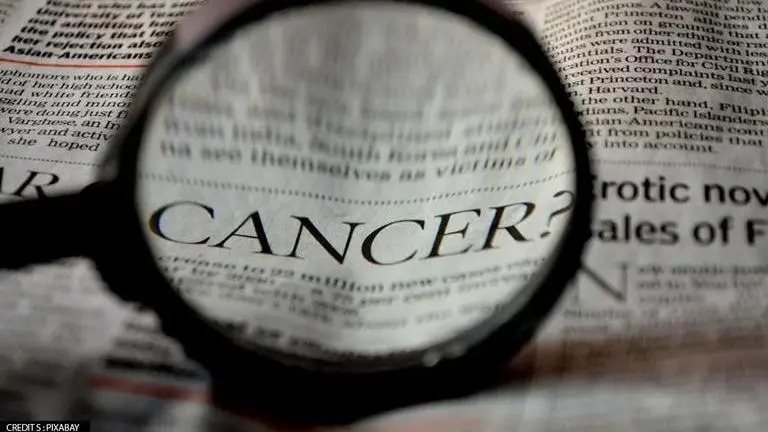
A Global survey suggested that alcohol was responsible for more than 740,000 cancer cases around the world last year. The study's findings were published in the journal 'The Lancet Oncology.' According to the study, 4% of newly diagnosed cancer cases in 2020 may be linked to alcohol consumption. The authors advocated for increasing public knowledge of the link between alcohol and cancer, as well as enhanced government intervention to minimize alcohol consumption in the areas most affected.
Alcohol consumption linked to cancer deaths
According to the study, men accounted for 77% (568,700 cases) of alcohol-related cancer cases, while women accounted for only 23% (172,600). The most common types of cancer were oesophagal, liver, and breast cancers. According to previous year's data, more than 6.3 million instances of mouth, pharynx, voice box (larynx), oesophageal, colon, rectum, liver, and breast cancer would be diagnosed in 2020. These cancers have long been linked to alcohol consumption, and the current study's estimations of direct alcohol correlations are the first of their sort for 2020.
Due to disruptions in health care and cancer services around the world caused by the COVID-19 pandemic, diagnosis rates for that year are likely to have been influenced, and new cancer cases may have been underestimated in the data. This, however, would not be reflected in this study, as forecasts for 2020 were based on the prior year's data.
Alcohol intake has been demonstrated to induce DNA damage by increasing the creation of toxic compounds in the body, as well as alter hormone production, all of which can lead to the development of cancer. Other cancer-causing drugs, such as tobacco, can be exacerbated by alcohol. Policymakers and the general public need to be made more aware of the link between alcohol intake and cancer risk.
Advertisement
Reduced alcohol availability, health warning labels on alcohol goods, and marketing bans are some of the public health policies that could help to lower the risk of alcohol-related cancer. Increased excise taxes and minimum unit pricing, as well as other tax and price measures that have resulted in lower alcohol consumption in Europe, could be introduced in other parts of the world. Ms Harriet Rumgay of the International Agency for Research on Cancer (IARC), France, stated that "local context is vital for successful policy surrounding alcohol consumption and will be key to lowering cancer incidence associated with drinking."
740,000 new cancer cases in 2020 due to alcohol
Researchers in the new study combined estimated new cancer cases in 2020 (for the cancer types with the strongest evidence of a causal link to alcohol in their main analyses, plus all other cancer types) with 2010 levels of alcohol intake per person per country (ten years prior to the cancer case data, to account for the time it takes for alcohol intake to affect possible cancer development). The authors based their estimations for alcohol use (in litres of alcohol per year per adult) on data from alcohol production, tax and sales statistics, surveys and opinions about unrecorded alcohol consumption, and tourist alcohol consumption data. They calculated how much alcohol people consumed on a daily basis using these figures.
Advertisement
Moderate drinking was defined as a daily intake of 0*1 to 20 grammes, the equivalent of up to two alcoholic drinks; risky drinking was defined as a daily intake of 20 to 60 grammes, the equivalent of two to six alcoholic drinks; and heavy drinking was defined as a daily intake of more than 60 grammes, the equivalent of more than six alcoholic drinks. The authors took numbers describing the risk of that cancer from alcohol intake (per 10 grammes of alcohol consumed each day) from current scientific papers to evaluate the influence of alcohol consumption on each cancer type mentioned.
In 2020, an estimated 4% (741,300) of all new cancer cases worldwide will be linked to alcohol intake. The most common cancers were cancers of the oesophagus (189,700 cases), liver (154,700 cases), and breast (98,300 cases), followed by colorectal cancers and cancers of the mouth and throat. Risky drinking and heavy drinking caused the most cancer cases, accounting for 39% (291,800 cases) and 47% (346,400 cases, respectively. Moderate drinking, on the other hand, was found to be troublesome, with estimations indicating that this level of drinking accounted for 14% (103,100 cases) of all alcohol-related cases.
The study has various flaws, including the potential impact of the COVID-19 pandemic, which has impacted behaviours like as alcohol consumption and cancer care in many nations, potentially affecting cancer risks and detection rates. Furthermore, the main study analysis did not account for previous drinking or any links between tobacco or obesity and alcohol, which could have led to some cases being assigned to alcohol when they were actually caused by, for example, smoking. The authors also mention that they may have overestimated liver cancers caused by alcohol in some situations, such as Mongolia, due to a possible association with Hepatitis B and C virus infection. Furthermore, cancer case records, particularly in low- and middle-income nations, may be of poor quality.
(with inputs from ANI)
Picture Credit: Pixabay