
UK house prices show signs of recovery with second consecutive monthly rise: Halifax
Halifax reported a 0.5% rise in house prices in November on a seasonally adjusted basis, following a 1.2% increase in October.
- Republic Business
- 2 min read

;'%3e%3cpath%20d='m8,15.99c4.41,0,7.99-3.58,7.99-7.99S12.41,0,8,0,0,3.59,0,8s3.58,7.99,7.99,7.99Z'%20style='stroke:%23fff;%20stroke-miterlimit:10;%20stroke-width:.02px;'/%3e%3cpath%20d='m3.08,3.37l3.82,5.11-3.84,4.15h.87l3.37-3.64,2.72,3.64h2.94l-4.04-5.39,3.58-3.87h-.86l-3.1,3.35-2.5-3.35h-2.94Zm1.27.64h1.35l5.97,7.99h-1.35l-5.97-7.99Z'%20style='fill:%23fff;'/%3e%3c/g%3e%3c/svg%3e)


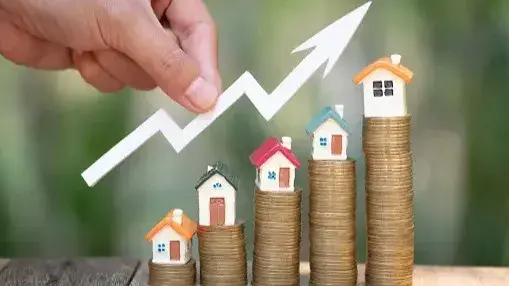
British house prices experienced a second consecutive monthly increase in November, according to data released by major mortgage lender Halifax on Thursday. This development contributes to the emerging trend suggesting that the year-long decline in house prices is stabilising.
Halifax, a part of Lloyds Banking Group, reported a 0.5 per cent rise in house prices in November on a seasonally adjusted basis, following a 1.2 per cent increase in October. This positive momentum comes after an uninterrupted six-month period of declines. The average house price stood at £283,615 ($356,447), marking a 1.0 per cent decrease compared to the previous year but reflecting a 1.7 per cent improvement from the trough witnessed in September.
Rival mortgage lender Nationwide had reported last week that house prices, according to its measure, rose for a third consecutive month in November, with a 2 per cent decrease compared to the previous year.
Halifax's director, Kim Kinnaird, commented on the resilience seen in house prices throughout 2023, attributing it to a shortage of available properties rather than a substantial strengthening of buyer demand. However, Kinnaird noted a slight uptick in activity based on recent figures for mortgage approvals.
Advertisement
Capital Economics, a consultancy, anticipates a further 1.5 per cent decline in house prices for 2024 but suggests that the decline may be smaller. Economist Imogen Pattison from Capital Economics highlighted the possibility that house prices might have already bottomed out, especially with the peak in mortgage rates behind us.
The surge in British house prices during and after the COVID-19 pandemic, driven by increased demand for more living space, temporary tax incentives, and record-low interest rates, saw a remarkable 27 per cent rise between February 2020 and the peak in September 2022, according to official statistics.
Advertisement
However, over the past year, house prices experienced a downturn due to a significant increase in mortgage costs. The Bank of England raised interest rates from 0.1 per cent in December 2021 to a 15-year high of 5.25 per cent by August 2022 in response to the highest inflation in over 40 years.
(With Reuters inputs.)