
From Bottled Water to Dinner Plate: Microplastics, Nanoplastics, and the Invisible Plastic We Consume
From bottled water to fresh vegetables, micro- and nanoplastics are entering our food, soil and bodies, raising concerns over long-term health risks and highlighting the urgent need for responsible plastic use and stronger policy action.
- Opinion News
- 4 min read

;'%3e%3cpath%20d='m8,15.99c4.41,0,7.99-3.58,7.99-7.99S12.41,0,8,0,0,3.59,0,8s3.58,7.99,7.99,7.99Z'%20style='stroke:%23fff;%20stroke-miterlimit:10;%20stroke-width:.02px;'/%3e%3cpath%20d='m3.08,3.37l3.82,5.11-3.84,4.15h.87l3.37-3.64,2.72,3.64h2.94l-4.04-5.39,3.58-3.87h-.86l-3.1,3.35-2.5-3.35h-2.94Zm1.27.64h1.35l5.97,7.99h-1.35l-5.97-7.99Z'%20style='fill:%23fff;'/%3e%3c/g%3e%3c/svg%3e)


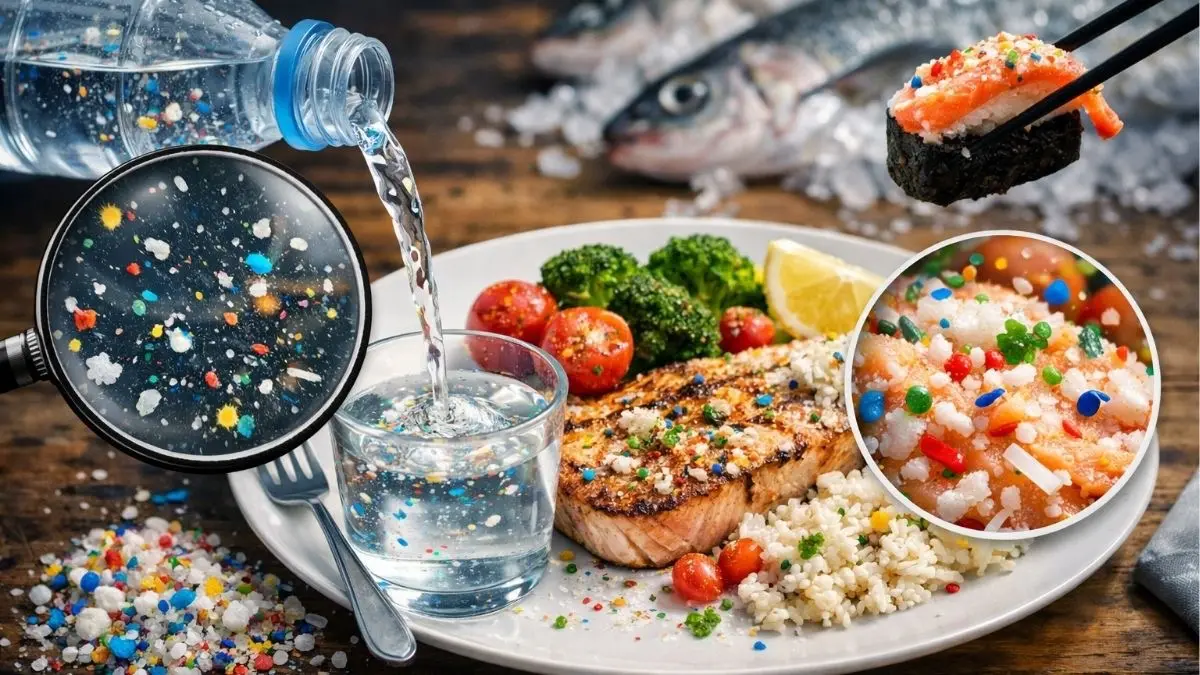
New Delhi: You twist open a bottle of water and take a sip. In your mind, it feels clean, sealed, pure. Later, you wash fresh vegetables that just got delivered and prepare dinner, confident you’re serving something wholesome to your family. But what if both that bottled water and those vegetables share something invisible - microscopic fragments of plastic, too small to see and too persistent to disappear!
Plastic pollution is no longer just about littered beaches and floating debris and social media campaigns against them. Scientists are now detecting microplastics and even smaller nanoplastics in water, soil, and every food item and they cross the gut-blood barrier so easily that microplastic is one of the major concerns for reproductive and cardiovascular irregularities at present (Wang et al., 2024). The concern is shifting from “plastic in the ocean” to something more personal: plastic in our bodies, in the air we breathe and off course the water we drink (Mason et al., 2018).
Microplastics are tiny plastic fragments smaller than 5 millimeters, formed when larger plastic products such as bottles, bags, packaging materials, and synthetic fabrics gradually break down. Nanoplastics are even smaller - thousands of times thinner than a human hair. Because of their extremely small size, they may move more easily through water, soil, and potentially living tissues (Ivlena, 2021). Recent investigations have detected significant quantities of micro and nanoplastic particles in bottled drinking water; PET bottles we see everywhere. These particles can originate from the bottle material, caps, bottling processes, and friction during transportation. Heat exposure, such as storing bottles in cars or direct sunlight, may accelerate plastic breakdown.
Once discarded, plastic fragments enter landfills, rivers, and eventually soil. Agricultural fields receive plastic particles through plastic mulch films, contaminated irrigation water, compost residues, and airborne fibers from urban areas. Over time, larger fragments degrade further into nanoplastics, increasing mobility within soil systems (Kochanek et al., 2025).
Advertisement
Scientific studies suggest that extremely small plastic particles - particularly nanoplastics - may interact with plant roots (Vleeming et al., 2025). Laboratory evidence indicates that tiny particles can attach to root surfaces and, under certain conditions, move into plant tissues. Plastics in soil may also alter water retention, soil structure, and beneficial microbial communities.
Microplastics and particularly nanoplastics raise toxicological concerns due to their small size, high surface reactivity, and potential for biological translocation. Nanoplastics reportedly cross epithelial barriers and enter systemic circulation, where experimental studies have shown induction of oxidative stress, inflammatory signaling, mitochondrial dysfunction, and disruption of cellular homeostasis in vitro and in vivo models (Mishra et al., 2025). Furthermore, these particles can adsorb and transport co-contaminants such as heavy metals and persistent organic pollutants, potentially enhancing their bioavailability and toxicity.
Advertisement
Although human exposure levels and dose-response relationships remain incompletely characterized, the possibility of chronic low-dose exposure and bioaccumulation underscores the need for comprehensive risk assessment and long-term epidemiological evaluation. Plastic once symbolized convenience and safety. Today, its durability has revealed unintended environmental consequences. Micro and nanoplastics demonstrate that materials we discard, do not disappear-they fragment, circulate and re-enter natural systems.
However, addressing this issue requires both individual responsibility and strong community policy action. At an individual level, choosing reusable bottles; viz. glass, steel or ceramic ones, reducing single-use plastics, avoiding heat exposure of plastic containers, and supporting sustainable products can significantly reduce plastic release. At the policy level, governments can strengthen plastic waste regulations, invest in advanced water filtration systems, incentivize biodegradable agricultural materials, and fund long-term research on micro- and nanoplastic health impacts.
Protecting soil and safeguarding water are interconnected goals. The future of clean water and healthy food may depend not only on purification systems and fertilizers, but on how responsibly we use and dispose of plastic today.