
Not Fading, Adapting: What The Pahalgam Attack Reveals About Kashmir's Evolving Terror Threat
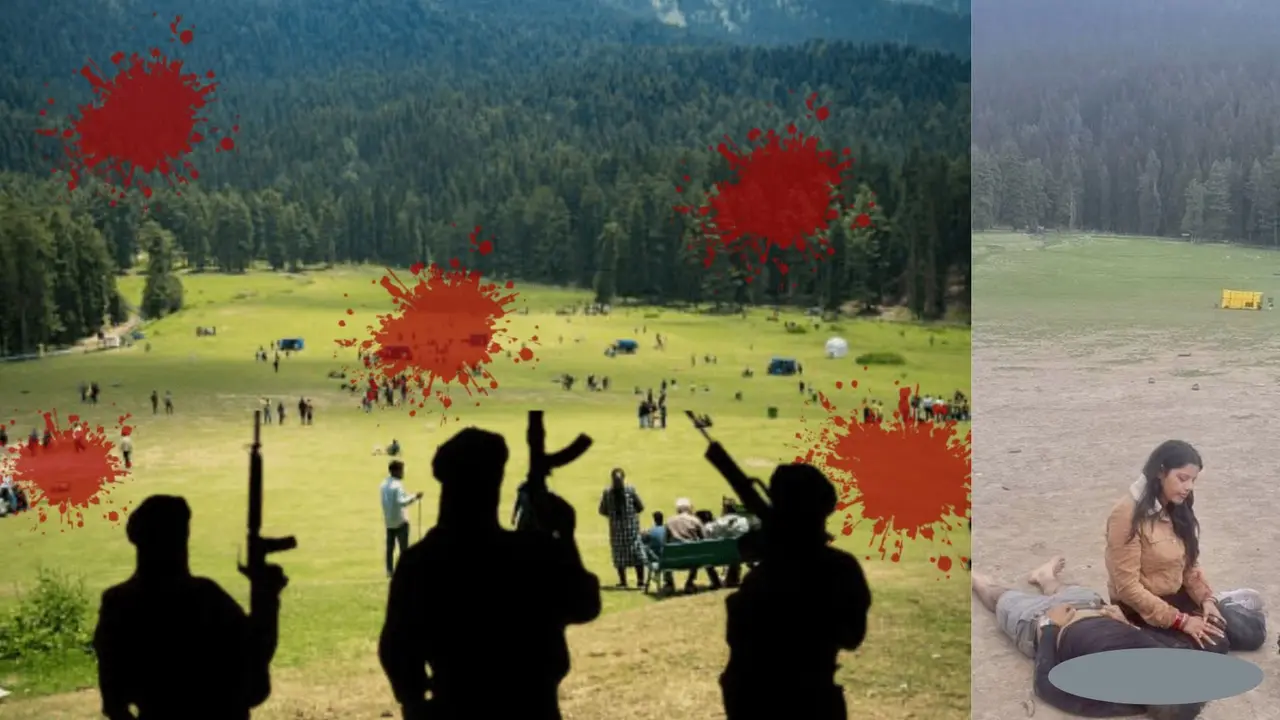
Nothing about the Pahalgam attack was improvised. The attackers entered the Baisaran Valley through surrounding forests, armed with AK-47s and M4 carbines. They chose a meadow accessible only by foot or horseback. Investigators concluded early that this was a coordinated operation, not a spontaneous one.
- Opinion News
- 5 min read

;'%3e%3cpath%20d='m8,15.99c4.41,0,7.99-3.58,7.99-7.99S12.41,0,8,0,0,3.59,0,8s3.58,7.99,7.99,7.99Z'%20style='stroke:%23fff;%20stroke-miterlimit:10;%20stroke-width:.02px;'/%3e%3cpath%20d='m3.08,3.37l3.82,5.11-3.84,4.15h.87l3.37-3.64,2.72,3.64h2.94l-4.04-5.39,3.58-3.87h-.86l-3.1,3.35-2.5-3.35h-2.94Zm1.27.64h1.35l5.97,7.99h-1.35l-5.97-7.99Z'%20style='fill:%23fff;'/%3e%3c/g%3e%3c/svg%3e)


For years, officials pointed to declining attack numbers as evidence that militancy in Kashmir was being brought under control. Tourism was booming. Elections had been held. The language coming out of the government was cautiously optimistic.
Then, on April 22, 2025, armed men walked into the Baisaran valley meadow near Pahalgam and killed 26 people. The victims were tourists. They were asked their religion before they were shot. And with that, whatever comfort the declining-numbers had offered was gone.
This was not a residual act of a weakening insurgency. It was a signal — carefully planned, strategically timed, and executed with military-grade weapons — that the threat in Kashmir has not diminished. It has reorganised.
The Mechanics Of A Calculated Strike
Nothing about the Pahalgam attack was improvised. The attackers entered the Baisaran Valley through surrounding forests, armed with AK-47s and M4 carbines — weapons that do not appear in the hands of amateur cells. They chose a meadow accessible only by foot or horseback, during peak tourist season, when it would be full of people with no means of protection and no quick route to safety.
Advertisement
Investigators concluded early that this was a coordinated operation, not a spontaneous one. The terrain had been studied. The timing was deliberate. And the target — a beloved tourist destination synonymous with Kashmir's return to normalcy — was chosen for precisely what it represented.
That is the grim logic of this kind of attack. You don't strike the hardest target. You strike the one whose destruction will be felt most widely, most deeply, and for the longest time.
Advertisement
Old Violence, New Branding
The group that initially claimed responsibility was The Resistance Front — often referred to as TRF. The name sounds local and secular. That is by design. TRF was formed in 2019 using cadres from Lashkar-e-Taiba and Hizbul Mujahideen, in the immediate aftermath of the abrogation of Jammu and Kashmir's special status — created specifically to project a Kashmiri identity while keeping the operational machinery of Pakistan-based terror groups intact beneath the surface.
The strategy is straightforward: give an old threat a new name, and you buy time before the international community catches up. TRF claimed responsibility for the Pahalgam attack, then retracted the claim days later, citing a supposed "cyber intrusion." The retraction fooled no one with access to the intelligence picture, but it served a purpose — muddying attribution at the moment India was building its diplomatic case against Pakistan.
That case eventually prevailed. On July 17, 2025, the United States formally designated TRF as both a Foreign Terrorist Organization and a Specially Designated Global Terrorist, describing it explicitly as a front and proxy for Lashkar-e-Taiba. India's government called it "a timely and important step" reflecting deepened counter-terrorism cooperation between the two countries. The designation carries real consequences — asset freezes, criminal liability for anyone providing material support, and legal tools to disrupt TRF's global financing network.
What ‘Fewer Attacks’ Actually Means
There is a dangerous misreading embedded in the "terrorism is declining" narrative that Pahalgam has now exposed. The metric that gets tracked — number of incidents — can fall while the underlying threat grows more sophisticated and more lethal. What the data shows is that attacks have become less frequent. What it does not show is that the capacity to carry them out has weakened.
If anything, the opposite appears to be true. The Pahalgam attack required reconnaissance, cross-border logistics, military-grade weapons, and the operational discipline to execute a coordinated strike in a heavily monitored region. That does not describe a movement running out of steam. It describes one that has traded frequency for impact — fewer strikes, but each one calculated to cause maximum damage.
The cross-border infrastructure that makes such attacks possible — training, financing, safe houses, ideological networks — remains functional. Groups like TRF exist precisely to ensure that even when the parent organization faces international pressure, the pipeline does not dry up.
The targets, and what they mean
The most documented and disturbing aspect of the Pahalgam attack is what the attackers did before they opened fire: they asked each person their religion. Those identified as Hindu were killed. This was not indiscriminate violence. It was systematic, religiously motivated killing — designed not only to spread fear but to ignite communal tension across India far beyond the valley.
Tourism in Kashmir is not just an economic sector. It is a political statement — a visible sign that people from across India feel safe enough to visit. By targeting tourists in this way, the attackers were doing two things simultaneously: undermining the government's narrative of normalcy, and attempting to fracture Hindu-Muslim relations in a country where those fractures carry enormous consequences.
After Pahalgam
India's response to the attack eventually escalated into something the region had not seen in decades. On May 7, India launched Operation Sindoor — precision strikes on terrorist infrastructure across the border. Pakistan responded with drone and missile strikes. After days of exchanges between two nuclear-armed neighbours, a ceasefire was agreed on May 10, 2025.
The military chapter may have closed. The deeper problem has not. An ecosystem built around proxy groups, plausible deniability and cross-border safe havens does not get dismantled by a single military operation or a single US designation — however significant either may be.
What Pahalgam demands is not just a stronger security response in tourist zones. It demands an honest accounting of the gap between the narrative of normalcy and the reality on the ground — before the next attack makes that gap impossible to ignore.