
Why Christianity and Hinduism Must Work Together to Deal with Islamic Radicalism in India
Acknowledging the existence of Islamic radicalism is not an attack on Islam or on ordinary Muslims, but a recognition that extremist interpretations of Islam have fuelled terrorism, sectarian violence, persecution and social instability across multiple continents.
- Opinion News
- 6 min read

;'%3e%3cpath%20d='m8,15.99c4.41,0,7.99-3.58,7.99-7.99S12.41,0,8,0,0,3.59,0,8s3.58,7.99,7.99,7.99Z'%20style='stroke:%23fff;%20stroke-miterlimit:10;%20stroke-width:.02px;'/%3e%3cpath%20d='m3.08,3.37l3.82,5.11-3.84,4.15h.87l3.37-3.64,2.72,3.64h2.94l-4.04-5.39,3.58-3.87h-.86l-3.1,3.35-2.5-3.35h-2.94Zm1.27.64h1.35l5.97,7.99h-1.35l-5.97-7.99Z'%20style='fill:%23fff;'/%3e%3c/g%3e%3c/svg%3e)


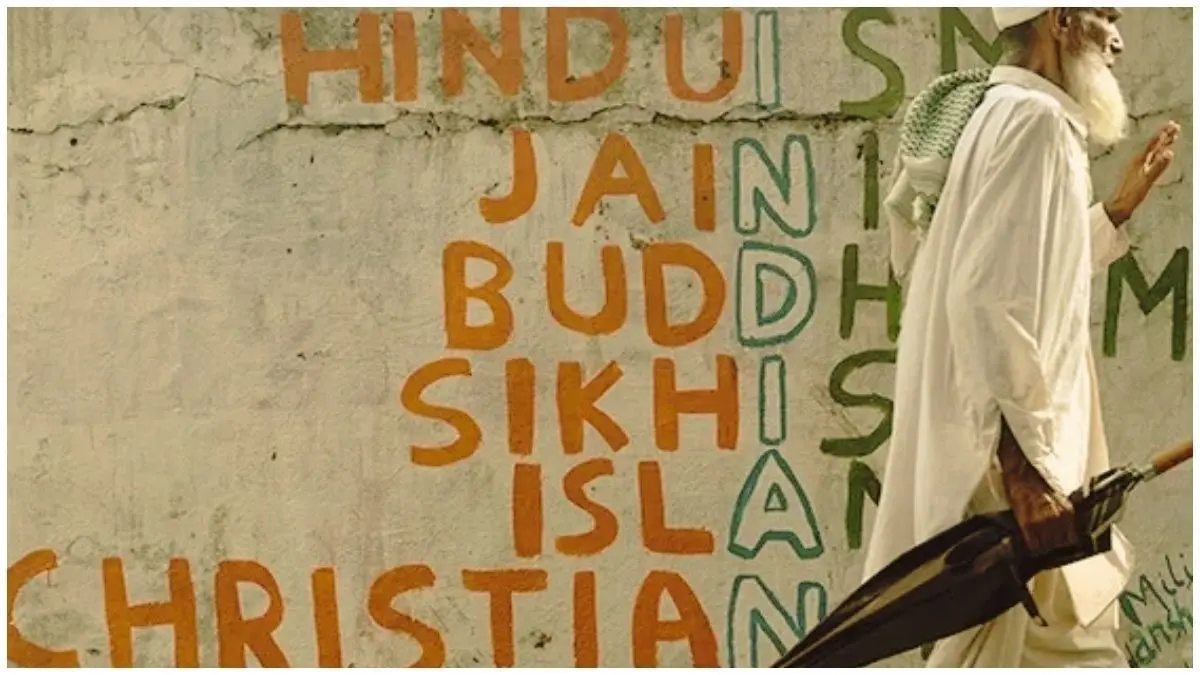
India is home to one of the world’s oldest civilisations and one of the most diverse religious landscapes. Hindus, Christians, Sikhs, Buddhists, Jains, Parsis and Muslims have all contributed to the country’s social and cultural fabric. Yet in the twenty-first century, one challenge has emerged that threatens not only India but societies across the globe: Islamic radicalism.
This is a subject that many avoid discussing openly for fear of being labelled intolerant. However, acknowledging the existence of Islamic radicalism is not an attack on Islam or on ordinary Muslims. It is a recognition that extremist interpretations of Islam have fuelled terrorism, sectarian violence, persecution and social instability across multiple continents. The victims of Islamic radicalism have included Christians, Hindus, Jews, Yazidis, Buddhists, Sikhs and countless Muslims themselves.
For this reason, Christianity and Hinduism must find common ground in confronting radical Islamist ideologies while simultaneously protecting religious freedom, constitutional values and social harmony.
The global Christian experience offers an important perspective. Across many parts of the world, Christians are among the primary victims of Islamist extremism. According to international monitoring organisations, hundreds of millions of Christians face varying degrees of persecution and discrimination. In countries such as Nigeria, Pakistan, Somalia, Afghanistan and parts of the Middle East, Christian communities have experienced church bombings, kidnappings, forced conversions, mob violence and targeted killings.
Advertisement
The atrocities committed by ISIS against Christians in Iraq and Syria shocked the world. Ancient Christian communities that had existed for nearly two thousand years were uprooted. Churches were destroyed, families were displaced and entire regions were emptied of their historic Christian populations.
Similarly, in Nigeria, Islamist groups such as Boko Haram and Islamic State West Africa Province have repeatedly targeted churches and Christian villages. In Pakistan, blasphemy laws have often been weaponised against religious minorities. In many parts of the world, Christians understand firsthand the dangers posed by radical ideologies that reject pluralism and religious coexistence.
Advertisement
Hindus are not unfamiliar with this challenge either. India has endured decades of terrorism linked to radical Islamist groups. From the 1993 Mumbai bombings to the 2008 Mumbai attacks, from Kashmir’s prolonged insurgency to numerous terror plots disrupted by security agencies, India has repeatedly faced the consequences of extremist violence.
The exodus of Kashmiri Hindus from the Valley remains one of independent India’s most painful chapters. Thousands of families were forced to leave their ancestral homes amid threats, killings and intimidation. The lesson from Kashmir is clear: when religious extremism gains ground, pluralism becomes the first casualty.
Yet despite sharing a common concern regarding Islamist extremism, relations between Hindus and Christians in India have often been marked by mistrust. Historical grievances, allegations of aggressive proselytisation, political narratives and social tensions have frequently overshadowed areas of common interest. This is a strategic mistake.
Hindus and Christians may differ profoundly in theology, philosophy and religious practice, but they share several foundational values. Both traditions recognise the dignity of the individual. Both have rich spiritual traditions. Both support family structures, community life and moral responsibility. Most importantly, both have generally demonstrated the ability to coexist within pluralistic societies.
Unlike radical ideologies that seek religious supremacy through coercion or violence, Hinduism and Christianity possess long histories of engagement with diverse cultures and civilisations. Their coexistence in India spans centuries. The challenge before both communities is to move beyond suspicion and focus on shared national interests.
Such cooperation does not require theological compromise. Christians do not need to become Hindu, and Hindus do not need to become Christian. Mutual respect does not require agreement on doctrine. What it requires is recognition of a common threat posed by extremist ideologies that reject democracy, religious freedom and constitutional order.
This cooperation can take several forms.
First, Hindu and Christian leaders must jointly condemn all forms of religious extremism and violence. Silence often creates the perception of indifference. A united moral voice carries greater credibility and influence.
Second, both communities should support efforts to strengthen national security and counter-terrorism capabilities. The protection of innocent lives is not a political issue but a moral obligation.
Third, educational institutions affiliated with both traditions can promote constitutional patriotism, critical thinking and interfaith dialogue. Young people must learn to distinguish between peaceful religious belief and extremist ideology.
Fourth, Hindu and Christian organisations should collaborate on social welfare initiatives. Poverty, unemployment and social alienation often create conditions that extremists exploit. By working together in education, healthcare and community development, both communities can strengthen social resilience.
Fifth, there must be a clear distinction between ordinary Muslims and radical Islamists. India’s Muslim population is diverse and overwhelmingly law-abiding. Millions of Indian Muslims contribute positively to society and reject extremism. Any effort to combat radicalism must avoid collective blame or communal hostility. The objective is not conflict with Muslims but resistance to extremist ideologies.
Indeed, many Muslims themselves are victims of Islamist radicalism and should be partners in this effort. The struggle is ultimately between pluralism and extremism, not between religions.
India’s constitutional framework provides the ideal foundation for such cooperation. The Constitution guarantees freedom of religion, equality before the law and protection of minority rights. These principles are compatible with both Hindu and Christian values and stand in direct opposition to radical ideologies that seek religious domination.
History shows that divided societies are vulnerable societies. Extremists thrive when communities are isolated from one another. They gain strength when suspicion replaces dialogue and when shared interests are ignored.
Conversely, societies become stronger when communities work together to defend common values.
The future of India will not be secured by religious confrontation but by civilisational confidence. Hindus and Christians need not agree on every issue. They need not erase their differences. But they can recognise that the preservation of democracy, religious liberty, national security and social harmony serves the interests of both communities.
Across the world, Christians have confronted the realities of Islamist extremism. India’s Hindus have experienced similar challenges in their own context. The time has come to move beyond old suspicions and build a partnership rooted in mutual respect, constitutional values and national interest.
If Christianity and Hinduism can work together while maintaining their distinct identities, they can help strengthen India’s pluralistic character and ensure that extremism, regardless of its source, never prevails over the ideals of freedom, coexistence and human dignity.