
Why the Fall of Iran’s Islamic Republic Would Shake the Middle East Region
The collapse of Iran's Islamic Republic would be a massive geopolitical shift, impacting the Middle East and beyond as Iran's ideology claims it's a defensive power, but it's actually aggressive, exporting revolution and sponsoring militias.
- Opinion News
- 5 min read

;'%3e%3cpath%20d='m8,15.99c4.41,0,7.99-3.58,7.99-7.99S12.41,0,8,0,0,3.59,0,8s3.58,7.99,7.99,7.99Z'%20style='stroke:%23fff;%20stroke-miterlimit:10;%20stroke-width:.02px;'/%3e%3cpath%20d='m3.08,3.37l3.82,5.11-3.84,4.15h.87l3.37-3.64,2.72,3.64h2.94l-4.04-5.39,3.58-3.87h-.86l-3.1,3.35-2.5-3.35h-2.94Zm1.27.64h1.35l5.97,7.99h-1.35l-5.97-7.99Z'%20style='fill:%23fff;'/%3e%3c/g%3e%3c/svg%3e)


History rarely announces its turning points politely. They arrive with currency crashes, street funerals, whispered fear turning into shouted rage - and suddenly, what once seemed immovable begins to crack. The collapse of the Islamic Republic of Iran, should it occur, would not be a local event or a regional footnote. It would be one of the most consequential geopolitical shifts of the modern Middle East, with aftershocks from Gaza to Ankara, from Beirut to Baku.
At the heart of the Islamic Republic’s ideology lies a dangerous myth: that Iran is a defensive power, a victim of Western and Israeli aggression, reluctantly drawn into regional conflicts. This claim is repeated endlessly by apologists and diplomats, but it collapses under even modest scrutiny. The export of revolution is not a fringe policy; it is a constitutional principle. It is embedded in the founding statutes of the Islamic Revolutionary Corps Guards and sanctified by the clerical state since 1979. To pretend otherwise is intellectual dishonesty.
Iran may not have launched a conventional tank invasion across borders in recent decades, but modern warfare is not limited to armies crossing frontiers. Sponsorship of armed militias, provision of weapons, training, intelligence, and ideological direction are acts of war by other means. By that standard, the Islamic Republic has been one of the most aggressive states in the region.
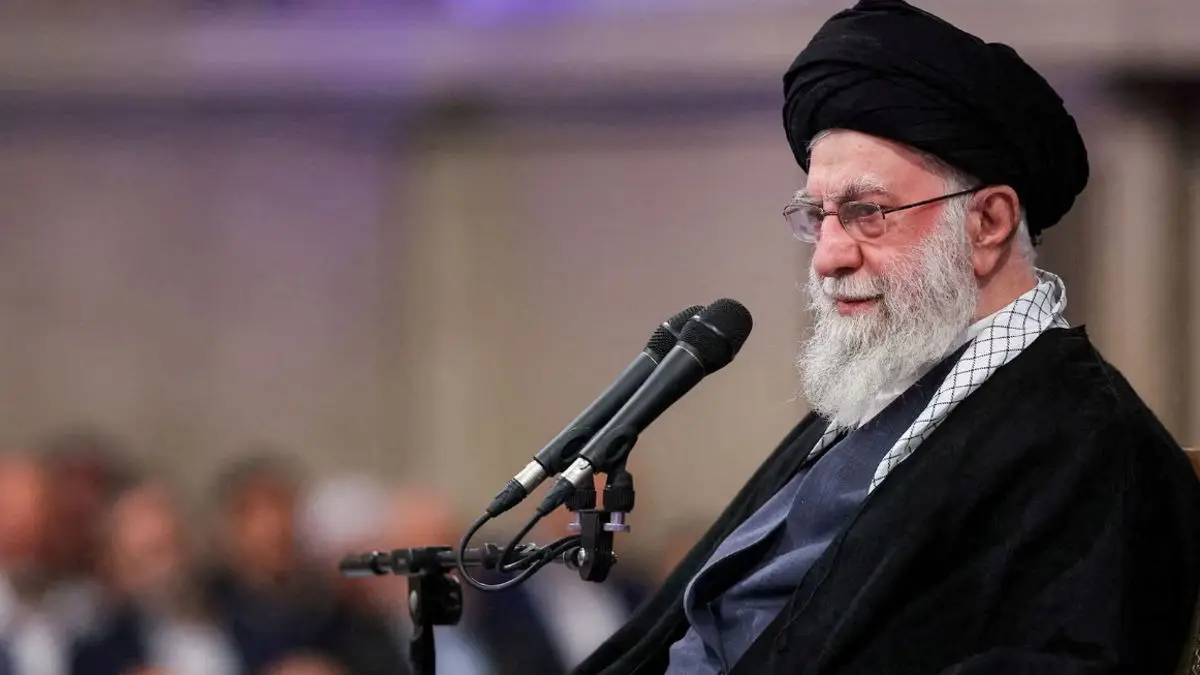
Consider the record. Tehran created, armed, and bankrolls Hezbollah, transforming it from a militia into a state within a state in Lebanon. It has co-opted the Houthis, turning a local insurgency into a regional missile threat targeting shipping lanes and neighbouring states. It has poured money, weapons, and ideological guidance into Hamas in Gaza and the West Bank, and entrenched proxy militias like the Hashd al-Shaabi across Iraq. These are not acts of defense. They are strategic offensives designed to encircle rivals, destabilise neighbours, and project power without accountability. When Iranian officials complain about Israeli airstrikes or targeted assassinations, they omit one inconvenient fact: the Islamic Republic declared ideological war first. Its leadership, including Supreme Leader Ali Khamenei, has repeatedly called for Israel’s elimination. States that openly advocate the destruction of another country do not get to claim moral high ground when conflict follows.
Advertisement
The fall of the Islamic Republic would therefore mean more than a change of flags in Tehran. It would immediately choke the lifelines that sustain Iran’s proxy empire. No more steady flows of missiles to Hezbollah. No more cash pipelines to Hamas. No more sophisticated drones and training camps for the Houthis. Unless external patrons like Turkey or Qatar rush to fill the vacuum, many of these groups would face strategic paralysis. Their ability to threaten neighbours and civilians alike would diminish overnight.That alone would alter the security architecture of the Middle East.
But the reverberations would not stop at Iran’s borders. Successful mass resistance against a clerical dictatorship would send a powerful message to other authoritarian systems that rely on fear, economic mismanagement, and religious nationalism to survive.
Advertisement
Take Turkey. President Recep Tayyip Erdogan has spent years hollowing out democratic institutions, jailing journalists, silencing judges, and imprisoning political opponents. Like Khamenei, Erdogan cloaks personal power in religious virtue. Like Tehran’s rulers, he presides over an economy battered by inflation, currency collapse, and cronyism. Turks have watched their savings evaporate while the ruling elite grows richer.
When Erdogan’s political enforcers arrested Kurdish leader Selahattin Demirtaş and Istanbul mayor Ekrem Imamoglu, the streets largely remained quiet. Fear works - until it doesn’t. Pride, once wounded deeply enough, can overcome repression. If Iranians, facing bullets and gallows, can rise up against corruption and dictatorship as their economy implodes, Turks may begin to ask a dangerous question of their own rulers: why not us?
Authoritarian regimes learn from one another. So do populations.
A weakened or fallen Islamic Republic would also cast a harsh light on Azerbaijan. President Ilham Aliyev presides over a state rich in oil and gas, yet astonishingly poor in accountability. Billions extracted from the Caspian Sea have not translated into broad prosperity. Corruption and embezzlement have hollowed out institutions so thoroughly that per capita income in landlocked Armenia - without oil, without gas, and under blockade by both Azerbaijan and Turkey - now exceeds that of energy-rich Azerbaijan. This is not an economic mystery. It is the predictable outcome of kleptocracy.
Dictatorships survive by convincing citizens that alternatives are impossible, that resistance is futile, that suffering is normal. The Iranian regime has relied on this narrative for decades, enforced by morality police, revolutionary courts, and the ever-present threat of the noose. But when people lose everything - jobs, savings, dignity, hope - fear becomes a weaker currency.
That is why the prospect of the Islamic Republic’s collapse matters. Not because it guarantees democracy or stability - history offers no such assurances - but because it would shatter the myth of inevitability. It would prove that even regimes built on ideology, repression, and exported violence can fall when the social contract collapses.
The Middle East has paid dearly for Tehran’s obsession with revolution beyond its borders. From Beirut’s ruins to Gaza’s graves, from Iraqi militias to Yemeni starvation, the costs are measured in lives, not slogans. Ending that system would not bring instant peace, but it would remove one of the region’s most consistent engines of chaos.
Dictators fear contagion more than condemnation. If Tehran falls, others will feel the tremors. And for rulers who have confused power with permanence, that should be terrifying.
History does not forgive arrogance forever. It only waits for the moment when people stop being afraid.