
6 New Experiments on Life Sciences and Biotechnology Done on ISS
India conducted six experiments on the ISS with astronaut Shubhanshu Shukla, focusing on life sciences and biotechnology. The projects, including growing algae and seeds in space, highlight India's self-reliance and commitment to future space exploration.
- Science News
- 2 min read

;'%3e%3cpath%20d='m8,15.99c4.41,0,7.99-3.58,7.99-7.99S12.41,0,8,0,0,3.59,0,8s3.58,7.99,7.99,7.99Z'%20style='stroke:%23fff;%20stroke-miterlimit:10;%20stroke-width:.02px;'/%3e%3cpath%20d='m3.08,3.37l3.82,5.11-3.84,4.15h.87l3.37-3.64,2.72,3.64h2.94l-4.04-5.39,3.58-3.87h-.86l-3.1,3.35-2.5-3.35h-2.94Zm1.27.64h1.35l5.97,7.99h-1.35l-5.97-7.99Z'%20style='fill:%23fff;'/%3e%3c/g%3e%3c/svg%3e)


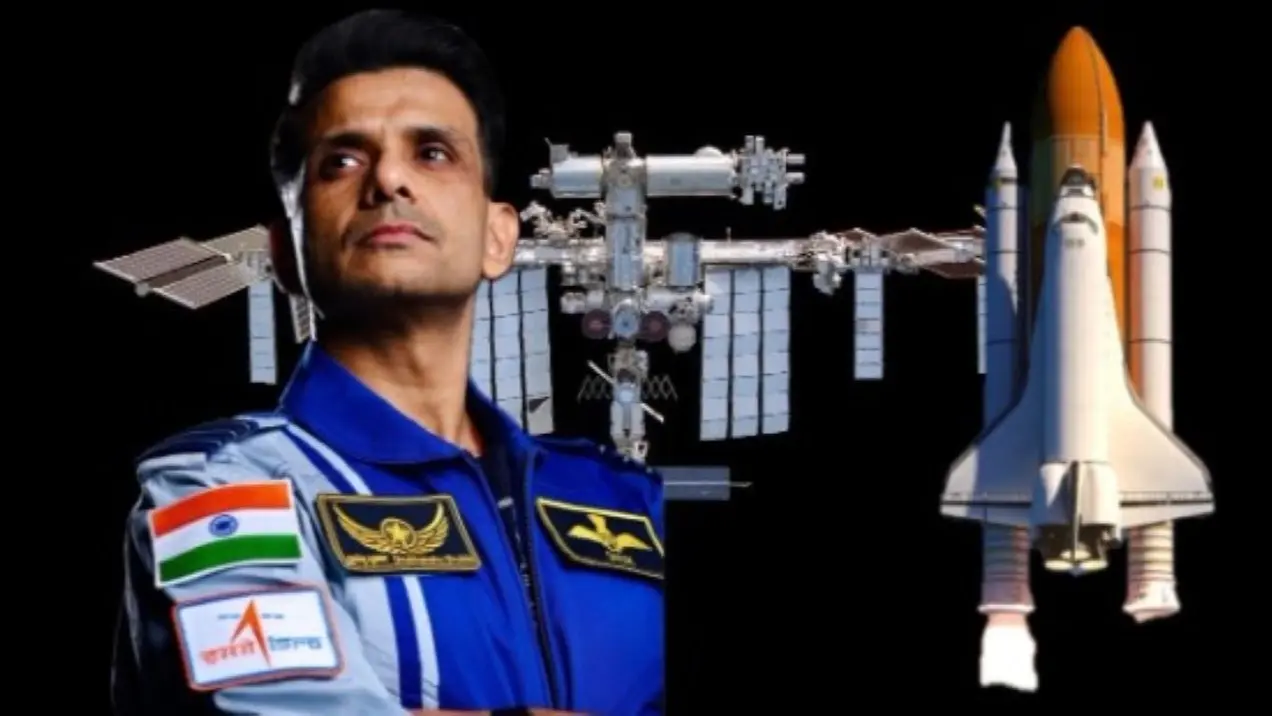
New Delhi: Speaking in Parliament, Union Minister Dr. Jitendra Singh said that India conducted six experiments on the International Space Station (ISS) related to life sciences and biotechnology, focusing on the sustainability of human life in space.
These experiments are part of the broader BioE3 Biotechnology Policy launched in 2024 by Prime Minister Narendra Modi.
These groundbreaking experiments, developed and built in India, were done by Indian astronaut Group Captain Shubhanshu Shukla, who is the first Indian to conduct space biology research on the ISS.
The experiments fall into six main categories:
Advertisement
Life Sciences & Biogenesis: Investigating the effects of space on living organisms.
Cognitive Effects: Studying how electronic gadgets affect the mind in space.
Advertisement
Edible Algae: Researching how nutrient-rich algae can be grown for food during long-duration missions.
Plant Growth: Attempting to grow rice and moong seeds in zero gravity.
Cyanobacteria: Observing the growth of cyanobacteria in the harsh space environment for use in life support systems.
Key Experiments:
One of the main experiments is investigating how microgravity and space radiation affect the growth of edible microalgae, a potential food source for future missions. The study will analyse the growth and molecular changes in different algal species compared to Earth-based conditions. Other research includes studies on muscle regeneration in microgravity, the survival of tardigrades (water bears) in space, and the growth of cyanobacteria for sustainable life support systems.
India's Message to the World:
According to Dr. Jitendra Singh, these experiments send a clear message to the international community.
Indigenous Innovation: All experiments were developed entirely in India, demonstrating the country's growing self-reliance and technological strength in space research.
Whole-of-Government Approach: The initiative showcases a collaborative effort across various government bodies, highlighting a unified strategy for achieving scientific milestones.
Commitment to Future Missions: The focus on life support and human sustainability shows India's long-term commitment to future space exploration, including crewed missions.