
Earth Could Have 25-Hour Days in the Future Due to Moon's Drift
The study highlights that, around 1.4 billion years ago, when the Moon was much closer to Earth, days were just over 18 hours long.
- Science News
- 2 min read

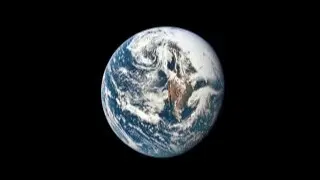
Scientists have discovered that the length of a day on Earth could eventually stretch to 25 hours due to the Moon gradually drifting away from the planet. According to recent research, the Moon is receding from Earth at a rate of about 3.8 centimeters per year. This ongoing process means that, in approximately 200 million years, a day on Earth could last 25 hours.
The study highlights that, around 1.4 billion years ago, when the Moon was much closer to Earth, days were just over 18 hours long. As the Moon continues to move further away, the length of an Earth day has progressively increased. Stephen Meyers, a professor of geoscience at the University of Wisconsin-Madison and co-author of the study, explained the phenomenon using a familiar analogy: “As the Moon moves away, the Earth is like a spinning figure skater who slows down as they stretch their arms out.”
A look at the science behind the process
The process behind this change is driven by tidal forces. “The tidal drag on the Earth slows its rotation down and the Moon gains that energy as angular momentum,” said David Waltham, a professor of geophysics at Royal Holloway, University of London.
Currently, the Moon orbits Earth at an average distance of about 384,400 kilometers (238,855 miles) and takes approximately 27.3 days to complete one revolution. As it continues to drift away, the Earth’s rotation will continue to slow, leading to longer days in the distant future.
Advertisement
The study of this phenomenon, known as astrochronology, helps scientists develop geological time scales that extend back billions of years, offering a glimpse into Earth's ancient past and its future.