
Geminids Meteor Showers 2025: When, Where, and How to Watch the Brightest Meteor Shower of the Year
Skywatchers can enjoy the Geminids meteor shower peaking from December 13 to 14, offering 120-150 meteors per hour under ideal conditions. Best viewing is post-midnight, especially between 1 am and 4 am. Visible worldwide, especially in the Northern Hemisphere, observers should seek dark areas. The shower is caused by debris from the asteroid 3200 Phaethon.
- Science News
- 3 min read

;'%3e%3cpath%20d='m8,15.99c4.41,0,7.99-3.58,7.99-7.99S12.41,0,8,0,0,3.59,0,8s3.58,7.99,7.99,7.99Z'%20style='stroke:%23fff;%20stroke-miterlimit:10;%20stroke-width:.02px;'/%3e%3cpath%20d='m3.08,3.37l3.82,5.11-3.84,4.15h.87l3.37-3.64,2.72,3.64h2.94l-4.04-5.39,3.58-3.87h-.86l-3.1,3.35-2.5-3.35h-2.94Zm1.27.64h1.35l5.97,7.99h-1.35l-5.97-7.99Z'%20style='fill:%23fff;'/%3e%3c/g%3e%3c/svg%3e)


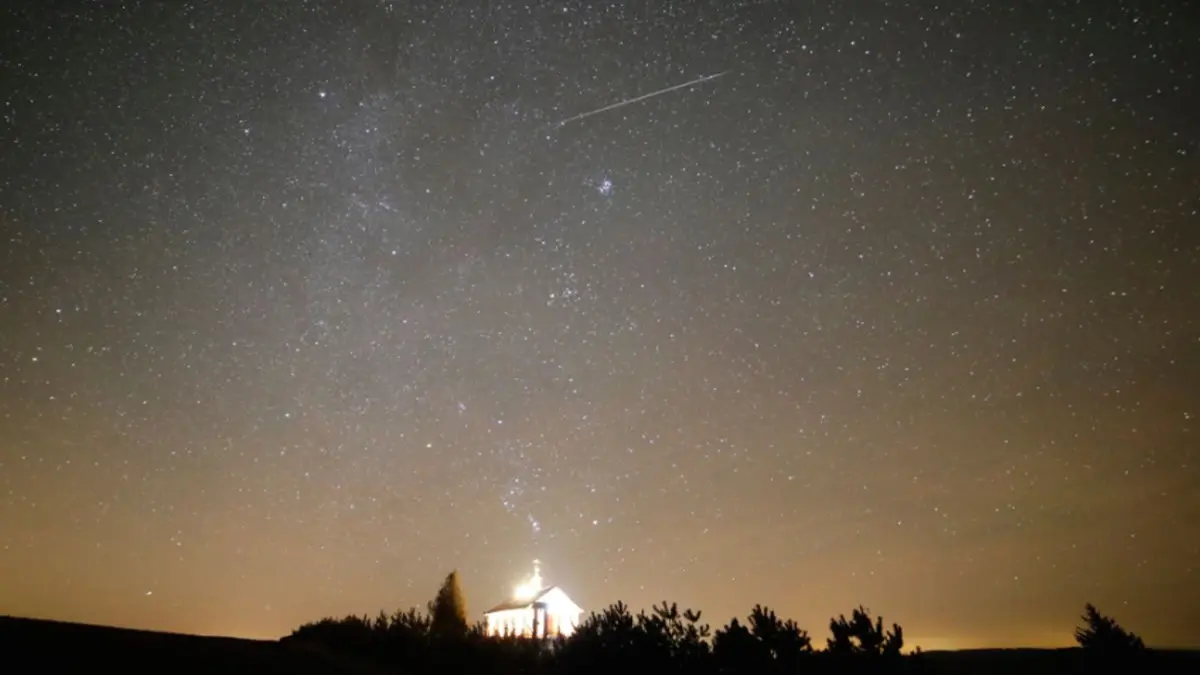
New Delhi: The Geminids meteor shower, regarded as the brightest and most dependable meteor shower of the year, is set to peak this weekend, offering skywatchers a chance to witness a spectacular celestial display.
Astronomers say the Geminids will reach peak activity on the night of December 13 and continue into the early hours of December 14, with favourable conditions expected across much of the Northern Hemisphere, including India.
When Is the Geminids Meteor Shower 2025?
The Geminids meteor shower is active every year in December, but its peak in 2025 is expected between Saturday night, December 13, and Sunday morning, December 14. Experts say the best viewing window will be after midnight, with maximum meteor activity likely between 1 am and 4 am local time, when the Earth passes through the densest part of the debris stream and the constellation Gemini rises higher in the sky.
Although the shower remains visible for several days before and after the peak, meteor rates are expected to be significantly lower outside this period.
Advertisement
Where to Watch the Geminid Meteor Shower in India and Worldwide
The Geminids will be visible across India and in many parts of the world, depending on local weather conditions. Astronomers recommend observing the meteor shower from open areas away from artificial lighting, as light pollution can significantly reduce visibility. Rural locations, hilltops, coastal areas, and open fields are considered ideal viewing spots.
Observers in the Northern Hemisphere are expected to have better viewing conditions than those in the Southern Hemisphere, though bright meteors may still be visible worldwide.
Advertisement
How to Get the Best View of the Geminids
Astronomers say the Geminids can be observed without telescopes or binoculars, as the meteors are visible to the naked eye. For better viewing, observers are advised to choose locations away from city lights and light pollution.
Experts recommend reaching the viewing spot well before peak hours to allow eyes to adjust to darkness. Looking at a wide, unobstructed portion of the sky rather than focusing on one direction- increases the likelihood of spotting meteors.
Clear weather conditions will be critical, and viewers are advised to remain patient, as meteor activity can occur in brief bursts followed by lulls. While the meteors appear to radiate from the Gemini constellation, they can be seen anywhere in the sky, making it unnecessary to look in one fixed direction.
What causes the Geminids meteor shower?
Unlike most meteor showers that originate from comets, the Geminids are caused by debris from the asteroid 3200 Phaethon. As Earth passes through this debris trail each December, tiny particles burn up in the atmosphere, producing bright flashes commonly known as shooting stars.
Weather conditions will play a crucial role in viewing success, with clear skies offering the best chances. Astronomers say even casual observers may spot dozens of meteors per hour during peak activity if skies remain clear.
Why the Geminids Are Considered Special
Astronomers say the Geminids stand out due to their high meteor rates and bright fireballs, even under less-than-perfect viewing conditions. Under dark skies, observers may spot over 100 meteors per hour during peak activity.
Weather conditions, however, will remain the deciding factor for visibility this weekend.