
Large River Systems Found on Mars for the First Time Reveal New Clues to Life
Scientists have created the most detailed map of Mars’ ancient river systems, pinpointing 16 major basins that may have once created habitats where life could have developed, guiding future missions in the search for past habitability.
- Science News
- 3 min read

;'%3e%3cpath%20d='m8,15.99c4.41,0,7.99-3.58,7.99-7.99S12.41,0,8,0,0,3.59,0,8s3.58,7.99,7.99,7.99Z'%20style='stroke:%23fff;%20stroke-miterlimit:10;%20stroke-width:.02px;'/%3e%3cpath%20d='m3.08,3.37l3.82,5.11-3.84,4.15h.87l3.37-3.64,2.72,3.64h2.94l-4.04-5.39,3.58-3.87h-.86l-3.1,3.35-2.5-3.35h-2.94Zm1.27.64h1.35l5.97,7.99h-1.35l-5.97-7.99Z'%20style='fill:%23fff;'/%3e%3c/g%3e%3c/svg%3e)


The University of Texas at Austin has created the most detailed map yet of ancient river systems on Mars, offering fresh clues about where water once flowed and where life may have had the best chance to develop on the planet.
In a new study published in PNAS, researchers outlined 16 major river basins across Mars. It marks the first time scientists have charted the Red Planet’s large-scale drainage networks so comprehensively. The work points to specific regions that could guide future missions searching for signs of past habitability.
Billions of years in the past, Mars experienced rainfall that carved out valleys and channels, directing water into deep canyons and possibly into massive oceans. On Earth, similar environments support diverse ecosystems, like those found in the Amazon basin. Scientists suggest that Mars’ ancient drainage systems could have played a comparable role, creating conditions suitable for early microbial life.
The mapping project was led by Timothy A. Goudge, an assistant professor at the UT Jackson School of Geosciences, along with postdoctoral researcher Abdallah S. Zaki. By combining earlier datasets of Martian rivers, lakes, and valley networks, the team reconstructed the planet’s full drainage layout.
Advertisement
“We’ve long known that Mars had rivers,” Goudge said. “What we didn’t understand was how extensively those rivers were connected in large drainage systems on a global scale.”
Their analysis revealed 19 major clusters of valleys, streams, lakes, canyons, and sediment deposits. Sixteen of these formed watersheds exceeding 1,00,000 square kilometers, comparable in scale to major river basins on Earth.
Advertisement
Zaki, who led the study, described their approach as straightforward: “We simply mapped the features and connected them.”
This expanded view of Mars’ ancient waterways brings scientists one step closer to identifying where life may once have thrived, and where the next generation of exploration should look.
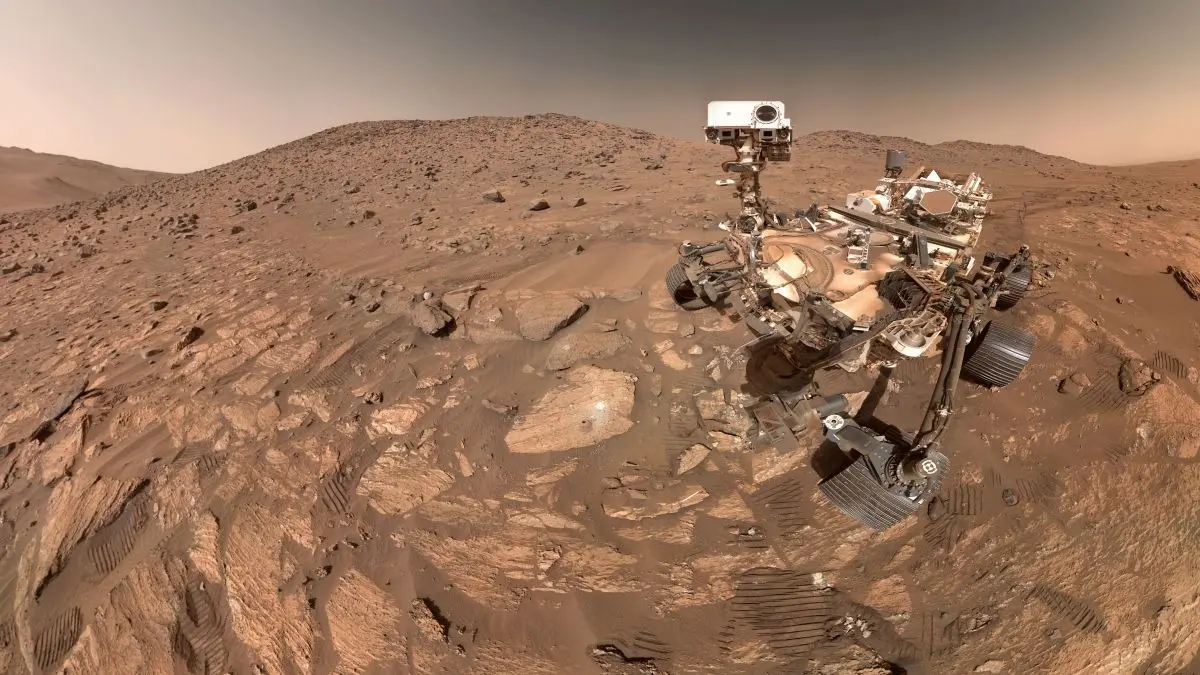
Scientists have earlier also detected what they believe to be lightning on Mars by eavesdropping on the whirling wind recorded by NASA’s Perseverance rover.
The crackling of electrical discharges was captured by a microphone on the rover, a French-led team reported Wednesday. The researchers documented 55 instances of what they call “mini lightning” over two Martian years, primarily during dust storms and dust devils. Almost all occurred on the windiest Martian sols, or days, during dust storms and dust devils.
“It opens a completely new field of investigation for Mars science,” Chide said, citing the possible chemical effects from electrical discharges. “It’s like finding a missing piece of the puzzle.”
The evidence is strong and persuasive, but it’s based on a single instrument that was meant to record the rover zapping rocks with lasers, not lightning blasts, said Cardiff University’s Daniel Mitchard, who was not involved in the study. What’s more, he noted in an article accompanying the study in the journal Nature, the electrical discharges were heard—not seen.