
NASA To Decode ‘Ghost Signals’ In The Sky, Launches Mission Named 'SEED': What We Know
NASA launches mission named Sporadic-E ElectroDynamics (SEED) to decode 'Ghost Signals' in the sky.
- Science News
- 2 min read

;'%3e%3cpath%20d='m8,15.99c4.41,0,7.99-3.58,7.99-7.99S12.41,0,8,0,0,3.59,0,8s3.58,7.99,7.99,7.99Z'%20style='stroke:%23fff;%20stroke-miterlimit:10;%20stroke-width:.02px;'/%3e%3cpath%20d='m3.08,3.37l3.82,5.11-3.84,4.15h.87l3.37-3.64,2.72,3.64h2.94l-4.04-5.39,3.58-3.87h-.86l-3.1,3.35-2.5-3.35h-2.94Zm1.27.64h1.35l5.97,7.99h-1.35l-5.97-7.99Z'%20style='fill:%23fff;'/%3e%3c/g%3e%3c/svg%3e)


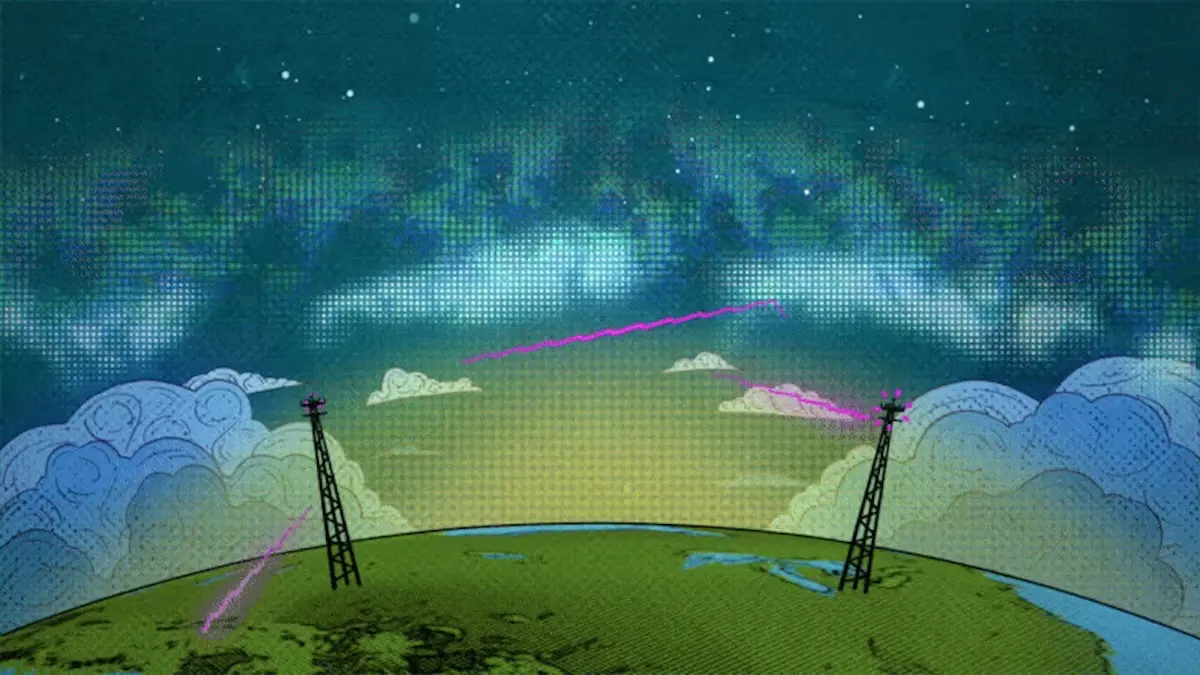
Washington: NASA has launched rockets under a new mission named ‘SEED’ from a remote island in the Pacific Ocean in a bid to better understand strange cloud-like formations in the sky that can disrupt important communication systems. These invisible clouds, known as Sporadic-E layers, form in the lower part of the ionosphere, a region filled with charged particles high above Earth’s surface.
The mission, named Sporadic-E ElectroDynamics (SEED), during a three-week window starting June 13. The uncrewed suborbital rockets carrying scientific instruments for mission SEED were launched from Kwajalein Atoll in the Marshall Islands.
Sporadic-E layers have long puzzled scientists because of their sudden appearance, movement, and disappearance. These layers can reflect radio signals to Earth before they reach higher parts of the ionosphere. This reflection causes several problems.

For example, air traffic controllers and marine radio users might hear signals from faraway places and mistake them for local ones. Military radar systems can also be misled, detecting “ghost” targets or receiving scrambled signals.
“These layers aren’t visible to the naked eye. We can only see them using radar,” explained Aroh Barjatya, the principal investigator of the SEED mission. “Some of these layers look patchy and puffy on radar screens, while others appear widespread, like a cloud-covered sky. We call these the ‘blanketing Sporadic-E layers’," he added.
Advertisement
Understanding and predicting these layers is important because of their impact on communication and radar systems, especially in sectors like aviation, maritime, and defence.
But how do these mysterious layers form?
The ionosphere stretches from about 60 to 1,000 kilometres above Earth and is filled with ions, and charged particles. Some of these ions come from meteors, which burn up as they enter Earth’s atmosphere. The process leaves behind ionised particles of iron, magnesium, calcium, sodium, and potassium, often called “heavy metals.”
Advertisement
These particles are heavier than the usual ions in the ionosphere and tend to drift downward, especially below 140 kilometres. Sometimes, they gather in dense clusters, forming the Sporadic-E layers.
While scientists have a fairly good idea of how these layers form in midlatitude regions, their behaviour near Earth’s equator is still not well understood. That’s why Kwajalein Atoll, located close to the magnetic equator, has been chosen as the launch site for the SEED mission.
ALSO READ: Twice in 3 Days: Shubhanshu Shukla’s Axiom-4 Mission Delayed Again, This Time Due to Gas Leak