
Bacteria can make humans reach Moon and Mars in eco-friendly way; new study claims
Bacteria has been used to produce a new type of bio fuel that can launch rockets with the least amount of carbon emissions, claim Berkeley experts.
- Science News
- 2 min read

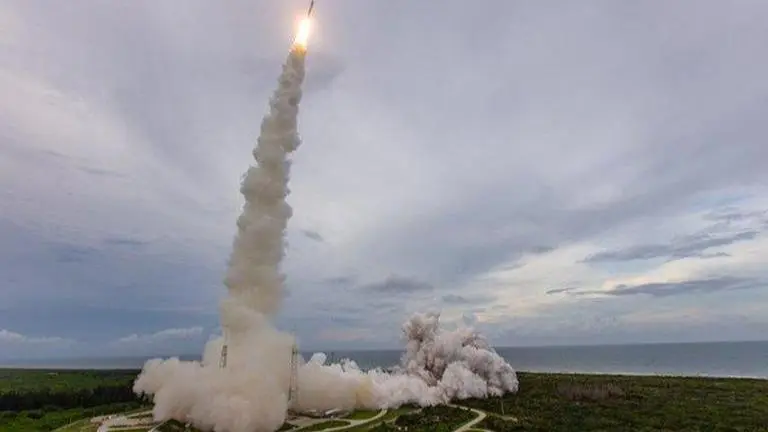
A group of experts led by Lawrence Berkeley National Laboratory (Berkeley Lab) is developing a new type of fuel using a species of bacteria. According to the team, this fuel produced by plant-eating bacteria has an energy density greater than the most advanced heavy-duty fuels used today, including the rocket fuels used by NASA.
Moreover, burning this new class of fuel releases relatively lesser amount of greenhouse gases, something which could eliminate environmental concerns during future launches, including those to the Moon and Mars.
Berkley experts promise green launches
Scientists have been concerned about the carbon emissions during rocket launches, however, the team at Berkeley claims that their new product could offer eco-friendly solutions regarding the same. "As these fuels would be produced from bacteria fed with plant matter – which is made from carbon dioxide pulled from the atmosphere – burning them in engines will significantly reduce the amount of added greenhouse gas relative to any fuel generated from petroleum", Jay Keasling, project leader and CEO of the Department of Energy’s Joint BioEnergy Institute, said in an official release.
The 'green fuel' production is based on an antifungal molecule produced by Streptomyces bacteria. Another advantage this biofuel offers is that its molecular structure packs tightly together in a small volume, increasing the mass – and therefore the total energy of fuel fits in any given tank. This characteristic would be no lesser than a dream-come-true for space agencies who are trying to reduce launch mass and costs but with higher energy output.
Advertisement
It is worth noting, however, that this experiment is currently at its initial stages and the researchers have a long way to go before proving the potential of the fuel. Currently, rockets use propellants made from liquid oxygen and liquid hydrogen and this combination releases a huge amount of carbon into the atmosphere.
To tackle this problem, the European Space Agency (ESA) recently announced a new project to replace "grey" hydrogen with "green hydrogen" and reduce the overall dependency on conventional fuels. Read more about ESA's ambitious project here.