
COVID-19 recovery may offer around 19% protection against Omicron, finds UK study
Study provides evidence of very substantial extent to which Omicron can evade prior immunity by both infection or vaccination, UK researchers said
- Science News
- 4 min read

;'%3e%3cpath%20d='m8,15.99c4.41,0,7.99-3.58,7.99-7.99S12.41,0,8,0,0,3.59,0,8s3.58,7.99,7.99,7.99Z'%20style='stroke:%23fff;%20stroke-miterlimit:10;%20stroke-width:.02px;'/%3e%3cpath%20d='m3.08,3.37l3.82,5.11-3.84,4.15h.87l3.37-3.64,2.72,3.64h2.94l-4.04-5.39,3.58-3.87h-.86l-3.1,3.35-2.5-3.35h-2.94Zm1.27.64h1.35l5.97,7.99h-1.35l-5.97-7.99Z'%20style='fill:%23fff;'/%3e%3c/g%3e%3c/svg%3e)


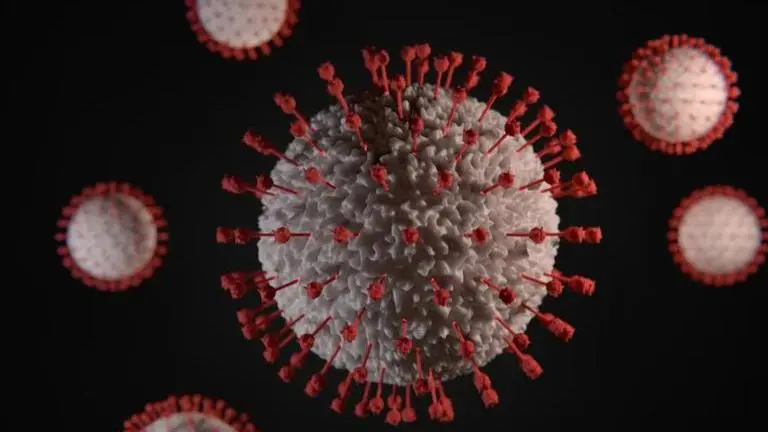
There is currently no evidence that the new B.1.1.529 Omicron variant is any less severe than the delta variant, and the chances of reinfection is more than five times higher than the highly virulent Delta strain, found a new study conducted by Imperial College London based on the UK Health Security Agency and National Health Service. According to the UK Health Security Agency’s (UKHSA) latest Variant Technical Briefing of the total 5,153 individuals that were identified with an Omicron infection between 1 November and 11 December 2021 in the UK, at least 305 were linked to a previously confirmed infection.
Antibodies developed in the previous infection may be as low as 19%
Some of these cases had the positive test in an interval of just 90 days or more. “The data so far suggests an increase in overall reinfection rates, alongside an increase in first infections,” the UKHSA said in a statement. There were just 24 hospitalisations from the suspected omicron variant. While the “hospitalisation data remains very limited at this time” as per the researchers, the study is yet to be peer-reviewed as the global cases are set to rise from the B.1.1.529. It is stated in the study that the risk of the COVID-19 infection from the Omicron variant is 5.4 times greater as compared with Delta and the protection from the antibodies developed in the previous infection may be as low as 19%.
“This study provides further evidence of the very substantial extent to which Omicron can evade prior immunity given by both infection or vaccination. This level of immune evasion means that Omicron poses a major, imminent threat to public health,” Ferguson, medical advisor to the British government, said in the blog post.
At this time, due to the limited data, the deaths are found to be low but the health experts have warned that as the cases increase, the fatalities may also mount. The healthcare system is at risk of getting overwhelmed, according to the study. Dr. Jenny Harries, the UKHSA Chief Executive, said, “Tests are similarly able to detect COVID-19 in individuals who have been exposed to Omicron as in those exposed to previous variants. This is very encouraging.” She added, “As we all work to limit the high levels of transmission of this variant over the Christmas period, we are urging people to test regularly, particularly before attending social gatherings.”
Harries also encouraged people to get their booster shot, stressing that as always, the booster vaccine “remains the best protection against infection. Please come forward to receive your booster as soon as possible.”
Advertisement
Hospitalisations lag a few weeks behind infections: Chief Medical Adviser at UKHSA
Susan Hopkins, a Chief Medical Adviser at UKHSA has warned that the hospitalizations always lag a few weeks behind infections, therefore it isn’t surprising that the countries may start witnessing admissions to hospitals with the Omicron variant as the cases mount. She also stressed that the Omicron continues to grow rapidly in all regions of England, and has taken over as the dominant strain as measured by confirmed cases and S gene target failure (SGTF). Furthermore, the studies of contacts depict that the Omicron is transmitting more effectively than Delta. The UKHSA had predicted at least a month ago that with the speed the Omicron continues to grow the variant will become the dominant strain, accounting for more than 50% of all COVID-19 infections in the UK by mid-December.
Omicron became the dominant COVID-19 variant in Scotland, and England's R number spiked to 1.0 and 1.2.UK. Prime Minister Boris Johnson told Sky News that Omicron is a "very serious threat", adding that the UK is seeing a "very serious wave coming through”. Cases in Scotland are doubling every two to three days, warned the First Minister Nicola Sturgeon at a briefing as the country recorded 4,336 COVID cases of which 696 are Omicron.