
Updated 7 November 2022 at 18:06 IST
CV Raman's 134th birthday: Remembering India's first Nobel Prize-winning physicist
CV Raman was born on November 7, 1888, in Tamil Nadu's Tiruchirappalli and was awarded the Nobel Prize for Physics in 1930 for the Raman Effect.
- Science News
- 2 min read

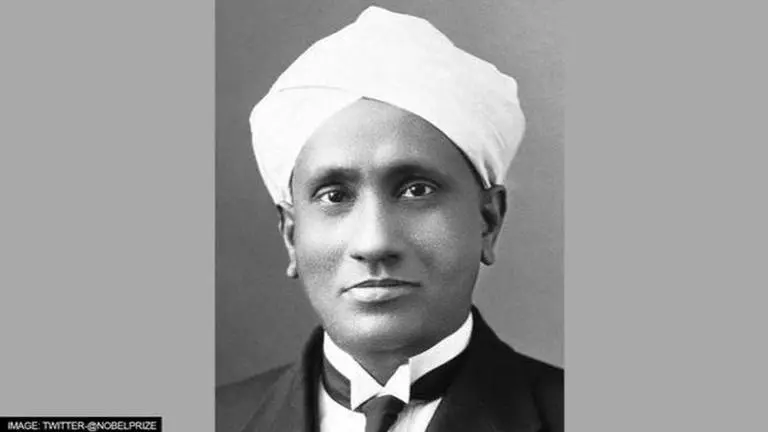
India, on November 7, is celebrating the 134th birthday of CV Raman, one of the brilliant Indian physicists who won a Nobel Prize in Physics. He won the prestigious award for his discovery of the phenomenon which he named the 'Raman Effect' or the Raman scattering' and etched his name as the first Indian and Asian on the Nobel list of Physicists. Let us take a look at the highlights of his career which made him one of the most prominent Indian scientists.
About CV Raman
Remembering C V Raman, the first Indian to win a Nobel Prize in Physics.
— Ministry of Culture (@MinOfCultureGoI) November 7, 2022
His groundbreaking discovery, known as the 'Raman effect', earned him the award in 1930.
Today, we remember him on his 134th birth anniversary.
#MoCRemembers pic.twitter.com/OmcvRCysOe
Named Chandrashekhar Venkata Raman, he was born on November 7, 1888, in Tamil Nadu's Tiruchirappalli. Second, among eight siblings, Raman was born into the house of a teacher and stood out among his fellow students. He was a brilliant student since the start as he managed to graduate from the Presidency College at the University of Madras in 1904 at the age of just 16. He was awarded a gold medal in B.A. Physics and later went on to complete his M.A. degree in 1907, also with the highest distinction.
After completing his education, Raman accepted the newly endowed Palit Chair of Physics at Calcutta University in 1917 after serving ten years as a government officer in the Indian Finance Department. Around 15 years later, he became a Professor at the Indian Institute of Science (IISC) Bengaluru where he worked till 1948 before assuming the position of Director of the Raman Institute of Research he established.
In the years that followed, Raman published several studies, the most notable of which was the discovery of a radiation effect named after him in 1928. Called the 'Raman Effect', it is the change in the wavelength of light that occurs when a light beam is deflected by molecules. It is this phenomenon through which he was able to explain why the ocean looks blue and the discovery won him the Nobel Prize in 1930. Notably, CV Raman's nephew Subrahmanyan Chandrasekhar also won a Nobel Prize for Physics in 1983 for his discoveries on the birth and death of stars and the formation of black holes.
Advertisement
Published By : Harsh Vardhan
Published On: 7 November 2022 at 18:07 IST