
Halley's comet reaches Aphelion, halfway to next sighting
Halley’s Comet reached Aphelion, the furthest point from the Sun in its 75-year orbit on December 9th, serving as a midpoint between its last sighting in 1986.
- Science News
- 2 min read

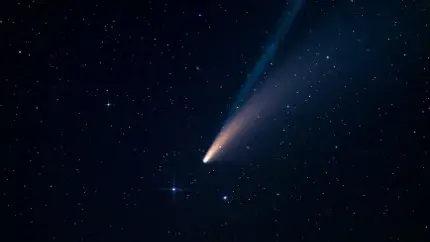
Halley’s Comet reached Aphelion, the furthest point from the Sun in its 75-year orbit on December 9th, serving as a midpoint between its last sighting in 1986 and the expected return in 2061. Currently, the comet is beyond observation by both amateur and professional telescopes, and there are no plans by NASA to observe it with Hubble or the James Webb Space Telescope (JWST), reported BNN.
What is a Halley's comet?
Halley's Comet is arguably the most famous in history. Being a "periodic" comet, it is brought back to Earth's vicinity approximately every 75 years, allowing it to be visible twice in a person's lifetime. Last observed in 1986, its next projected return is in 2061.
Named officially as 1P/Halley, the comet is dedicated to English astronomer Edmond Halley. He examined reports of a comet approaching Earth in 1531, 1607, and 1682, according to Space.com Concluding that these three comets were the same, recurring over time, he predicted its return in 1758. Halley's calculations demonstrated that at least some comets orbit the sun.
Halley's Comet's Historical Significance
Recognized for its periodicity by Sir Edmond Halley in 1696, the comet has a rich history. Historical records, including Chinese observations dating back to 467 BC, associate its appearances with significant events and figures. For instance, Mark Twain was born during the comet’s appearance in 1835 and accurately predicted his death to coincide with its next appearance, which indeed occurred in 1910. Another notable event took place in 1066 when the comet's appearance was widely observed worldwide and interpreted as an omen preceding the death of King Harold II at the Battle of Hastings, according to BNN.
Advertisement
Halley’s Comet and Meteor Showers
Linked to two annual meteor showers, the Eta Aquariids and the Orionids, Halley's Comet offers a celestial spectacle for observers on Earth, even when the comet itself is not visible.
Halley Comet's Anticipation for 2061
While the 1986 apparition was disappointing, anticipation exists for its bright return in 2061 when it may be visible to northern hemisphere observers. Until then, the comet will gradually move closer, re-entering the field of view of observers on Earth in the coming decade. Separated by about a human lifetime, the return dates of the comet serve as a cosmic thread woven into the blanket of countless generations of humanity. The viewing circumstances differ with each return. In 2061, a splendid spectacle with Halley’s Comet at its brightest will be witnessed by our descendants.