
Updated 3 July 2022 at 16:39 IST
James Webb Space Telescope locks in on comets as new target to study early universe
The James Webb Space Telescope will be used to study three types of comets to understand how these space rocks work and unveil secrets of the early universe.
- Science News
- 2 min read

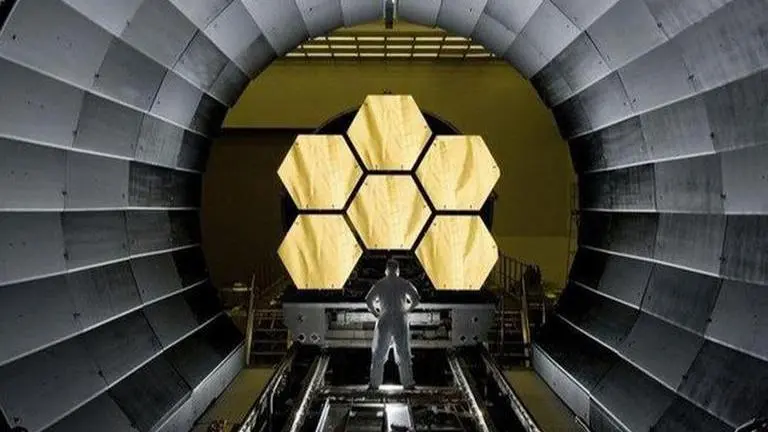
The James Webb Space Telescope has found its new target, and it is the comets that race through the universe with an illuminated tail. Astronomers consider comets a key to understanding the early universe because these clumps of rock, dust and ice, have not changed much in our solar system's 4.6-billion-year history and thus, are the most primitive bodies that are out there. They also say that comets can offer new insights into what the solar system was like billions of years ago.
Get your game plan ready for the reveal of Webb's first images on July 12! 🙌
— NASA Webb Telescope (@NASAWebb) July 1, 2022
Find out how you can watch our broadcast, view the spectacular images, and participate in this historic event to #UnfoldTheUniverse: https://t.co/LNpF9aAIBT pic.twitter.com/MrWELG21s1
Comets and Webb's forthcoming study
While comets still remain a mystery, astronomers know a little about two comets namely-- Read and Borrelly-- whereas the third one, named “target-of-opportunity", is unknown as of now and is expected to be discovered soon after Webb's operational debut. Webb will study these three comets under the Guaranteed Time Observations (GTO) program of the solar system.
"We want to study comets with Webb because of the telescope’s very powerful capabilities in the near- and mid-infrared", Webb interdisciplinary scientist Heidi Hammel said in a statement. "What makes those wavelengths of light particularly powerful for cometary studies is that they allow us to study the chemical makeup of this dust and gas that’s come off of the comet’s nucleus and figure out what it is". The telescope's capabilities will be tested on the comets' gas and dust, which emit and absorb infrared wavelengths of light and would be broken down to determine the chemicals present in them.
As for the targets of Webb, the comet Read orbits within the asteroid belt, between Mars and Jupiter. During the study with Webb, astronomers will try to detect the gas and particularly water around this comet, something which has never been done with a main-belt space rock. The comet Borrelly, on the other hand, is classified as a Jupiter-family comet and the mission team would map its individual types of gas and study the composition of the comet’s dust to understand how a comet works.
Advertisement
Published By : Harsh Vardhan
Published On: 3 July 2022 at 16:39 IST