
Updated 6 July 2022 at 20:00 IST
James Webb Space Telescope to peer through dust of neighbouring system 63 light-years away
James Webb Space Telescope will be used to study the Beta Pictoris which has at least two planets, and the first comets discovered outside our solar system.
- Science News
- 2 min read

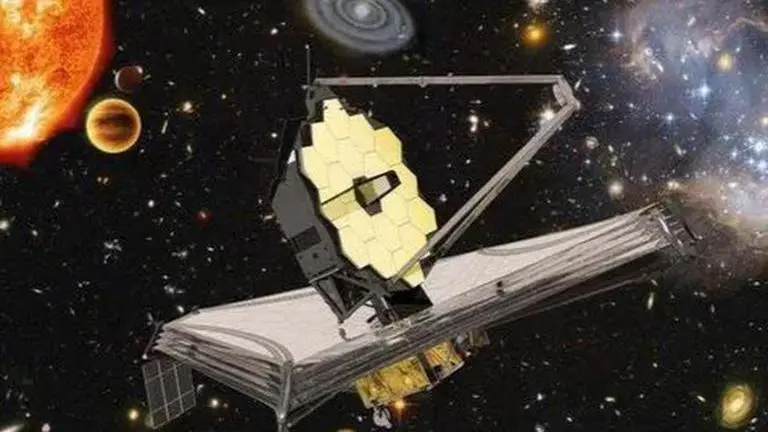
Scientists operating the James Webb Space Telescope will have a lot on their plate after the observatory starts its operations in a few weeks. Among its many targets for the first year, the planetary system named Beta Pictoris will be the one Webb would peer through. Located about 63 light-years away, it is believed to have at least two planets, and the first comets discovered outside our solar system.
Why the Beta Pictoris?
NASA says that this planetary system, apart from the planets and comets, has a jumble of smaller, rocky bodies, and a dusty disk. Since Webb's infrared capabilities would be great to peer through thick clouds of dust, scientists are planning to gain a better understanding of the structures and properties of the dust to better interpret what is happening in the system. Notably, the Beta Pictoris has been regularly studied in radio, infrared, and visible light since the 1980s. However, Webb's observations will provide the highest-resolution images and most accurate data ever.
🗓️ Mark your calendars for Tuesday, July 12 at 10:30am ET (14:30 UTC) as we release the first images from @NASAWebb.
— NASA (@NASA) July 1, 2022
Join an event, virtually or in your community, and celebrate with us as we #UnfoldTheUniverse: https://t.co/ix80dN3PHe pic.twitter.com/RhiMRk25mm
According to NASA, Beta Pictoris is a target of several planned Webb observing programmes, one of which includes studying the light reaching the telescope to determine which elements are present in that system. Interestingly, scientists already know that a lot of activity is happening in the system's ring of dust including the collisions and breaking up of pebbles and boulders into further smaller pieces.
"We know there are two massive planets around Beta Pictoris, and farther out there is a belt of small bodies that are colliding and fragmenting", Chris Stark, one of the programme leaders said in a statement. "But what’s in between? How similar is this system to our solar system? Can dust and water ice from the outer belt eventually make its way into the inner region of the system? Those are details we can help tease out with Webb".
Advertisement
Another subject of great interest for the scientists in Beta Pictoris is the presence of a cloud of carbon monoxide at the edge of the disk. Since the cloud is asymmetric and has an irregular, blobby side, experts believe that collisions released dust and gas from larger, icy bodies to form this cloud.
Published By : Harsh Vardhan
Published On: 6 July 2022 at 19:59 IST