
Updated 10 November 2022 at 17:38 IST
NASA's new mission to aid landings on Mars successfully launches into orbit | WATCH
The United Launch Alliance launched two crucial payloads aboard its Atlas V rocket at 3:19 pm IST from the Vandenberg Space Force Base.
- Science News
- 3 min read

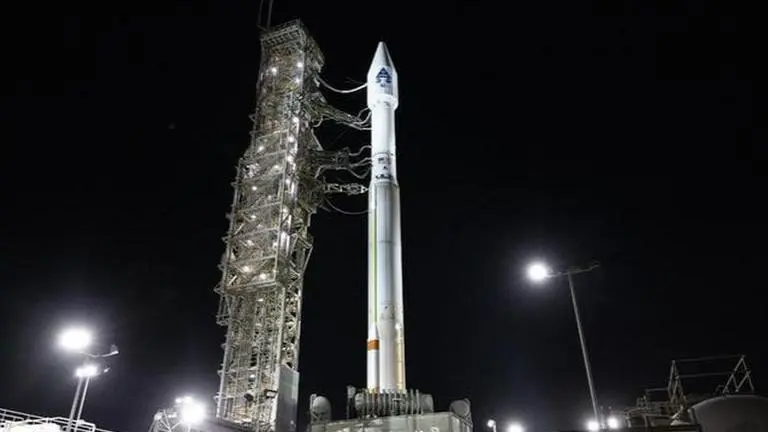
The United Launch Alliance launched NASA's two crucial payloads aboard its Atlas V rocket at 3:19 pm IST from the Vandenberg Space Force Base in California. The payloads are the Joint Polar Satellite System-2 (JPSS-2) developed by the US National Oceanic and Atmospheric Administration (NOAA) and the LOFTID mission. Watch the launch live below.
3, 2, 1, liftoff! https://t.co/q3SCF7ciOf pic.twitter.com/gnxRJxVBA1
— NOAA (@NOAA) November 10, 2022
This mission would mark Atlas V's 23rd launch for NASA as it has previously launched five missions to Mars along with those to the Sun, the Moon, Jupiter, the Asteroid Bennu and Pluto.
About the payloads
The JPSS-2 will become part of NOAA's weather satellite constellation once it reaches orbit. It will circle the planet by passing through the poles 14 times every 24 hours and will collect data on surface temperatures, cloud densities and aerosols in order to improve weather forecasts and predictions.
The second payload, on the other hand, is an important one. Short for Low-Earth Orbit Flight Test of an Inflatable Decelerator, LOFTID, it is an inflatable heat shield that could one day help in the development of the technology to aid landings on Mars. After its launch, LOFTID will separate from the rocket's fairing and inflate. It will then re-enter the Earth's atmosphere demonstrating its ability to safely descend through the atmosphere carrying large payloads – such as crewed spacecraft, robotic explorers, and rocket components and protect them from atmospheric heat.
Advertisement
Constructed from advanced materials with high-temperature limits, gives the advantage of being packed to a very small size and then deployed to a scale larger than the rocket’s fairing, NASA says. Read more.
Post-launch activities
The NOAA, in its latest update, revealed that the JPSS-2 satellite successfully separated from the Atlas V rocket’s second stage and will be renamed NOAA-21 when it reaches its final "afternoon" orbit, approximately one week after launch. The satellite will join its predecessors, Suomi NPP and NOAA-20, and instruments will start collecting data one month after the launch.
“After rigorous tests to ensure the instruments are performing as intended, the data will then be released to the public and used in NOAA’s operational forecasts and warnings," the NOAA said in its update. “JPSS-2 is designed to operate for seven years, with the potential to operate for several more."
Advertisement
We have splashdown! #LOFTID has splashed down in the Pacific Ocean off the coast of Hawaii. Once the aeroshell’s location is determined, the recovery boat will head towards the aeroshell and then the ejectable data recorder for attempted retrieval: https://t.co/pCClyvYDBR pic.twitter.com/A1h868UGP9
— NASA Technology (@NASA_Technology) November 10, 2022
As for the LOFTID mission, it has splashed down in the pacific ocean off the coast of Hawaii after separating from the Centaur upper stage of the Atlas V rocket. NASA said it will share details about the inflatable heat shield’s health after recovering it from the ocean.
Published By : Harsh Vardhan
Published On: 10 November 2022 at 14:56 IST