
Man who lived 1000 years ago had fatal constipation due to ‘grasshopper diet’
Scientists at University of Nebraska-Lincoln found that the man starved in the last two to three months of his life and consumed grasshoppers for protein.
- Science News
- 3 min read

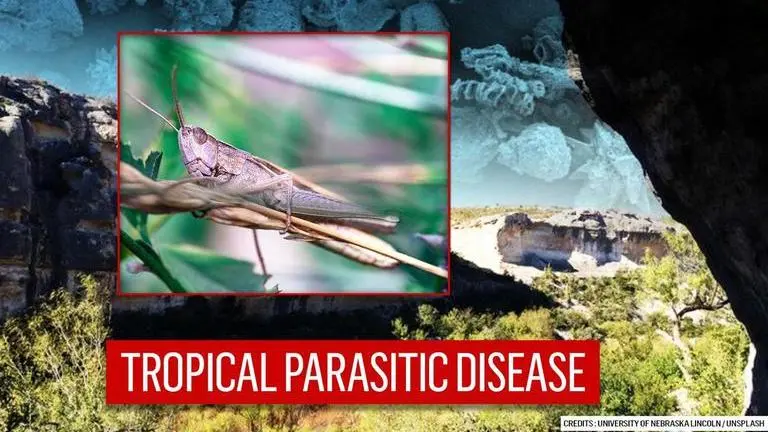
In an unusual discovery, the US researchers found that a mummified man from Texas that lived almost 1000 years ago had consumed the grasshoppers to cure the tropical disease that swelled his colon about six times the normal diameter. The man, the resident of Rio Grande, suffered a fatal case of constipation as a result of it.
According to a study published in the journal Live Science, scientists from the University of Nebraska-Lincoln found that the deceased man starved in the last two to three months of his life that he spent in the Lower Pecos Canyonlands of modern-day Texas. He, however, only fed on grasshoppers after his family plucked the extraneous bits like the legs from the insect’s body.
“They were taking off the legs,” said Karl Reinhard, a professor in the School of Natural Resources at the University of Nebraska–Lincoln. “So they were giving him mostly the fluid-rich body — the squishable part of the grasshopper,” he added. Further, Reinhard explained in a release that the grasshoppers were high in protein as well as moisture as he suffered from the ailment that bulked semi-digested food up to his spine.
“It would have been easier for him to eat in the early stages of his megacolon experience,” researcher Reinhard said.
The observations were documented under “The Handbook of Mummy Studies” conducted by Karl Reinhard's team. Several such research were also documented in the journal Memórias do Instituto Oswaldo Cruz, which included analysis of two other mummies.
Advertisement

[The arid area where the man was buried caused his body to become naturally mummified. Credit: Live Science journal]

[Microscopy of minuscule plant remnants, pollen, and animal remains found in the cave. Credit: University of nebraska-Lincoln]
Advertisement
Damaged gastrointestinal system
The man, identified as Guy Skiles reported health complications due to Chagas disease, caused by a parasite called Trypanosoma cruzi, that had damaged his gastrointestinal system. His condition, “megacolon”, disrupted his food digestion, making him so malnourished that he apparently was unable to walk. His mummy was preserved well due to arid conditions in 1937 in a rock shelter near the junction of the Rio Grande and Pecos Rivers in South Texas, according to the scientists. It was also briefly preserved at the museum until 1968 after it was loaned to the Institute of Texan Cultures for research purposes.
Several scientists conducted a study on the mummified Texan man across the 1970s and 1980s; and in 1986, and published findings in the journal Plains Anthropologist. Reinhard and the team examined the remains under the electron microscope and keenly observed his damaged phytoliths that led to the finding of his grasshopper diet.