
Updated 28 February 2022 at 18:09 IST
NASA aims to snap 1st image of Jupiter-like planet using Nancy Grace Roman Space Telescope
NASA is constructing a new observatory, Nancy Grace Roman Space Telescope, through which it aims to photograph worlds and dusty disks around nearby stars.
- Science News
- 2 min read

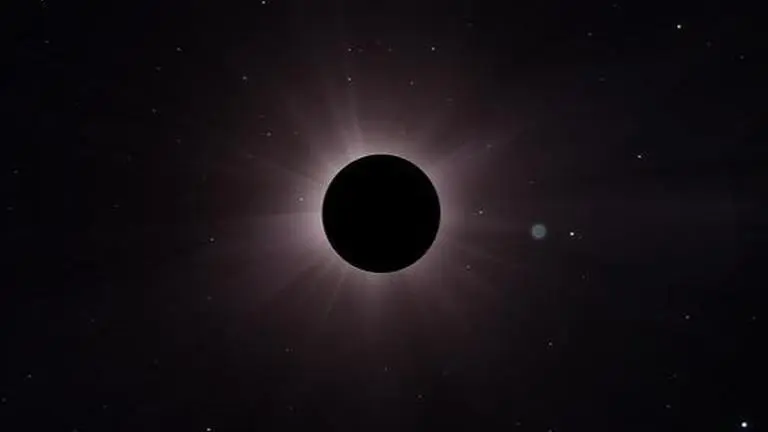
NASA is constructing a new observatory named the Nancy Grace Roman Space Telescope, through which it aims to photograph worlds and dusty disks around nearby stars. While the telescope is expected to get launched later this decade, NASA has already set a target to be observed with this telescope that works on direct imaging technologies. According to the agency, Roman would provide photographs with detail up to a thousand times better than those possible using other observatories.
The planet hunter...Roman will use its Coronagraph Instrument to search for exoplanets that are older, dimmer, colder, and hidden by their star's light! This advantage from space could allow Roman to see Jupiter-like words! https://t.co/6E3MVbKsrB
— Nancy Grace Roman Space Telescope (@NASARoman) February 25, 2022
Snapping the first Jupiter-like world
The upcoming telescope's first target is the exoplanet Upsilon Andromedae d, which is a gas giant slightly bigger than Jupiter. Observations have revealed that the planet is in the habitable zone around its star and is located about 44 light-years away. "What’s really exciting is that Roman may be able to help us explore hazes and clouds in Upsilon Andromedae d’s atmosphere and may even be able to act as a planetary thermometer by putting constraints on the planet’s internal temperature!", said Prabal Saxena, an assistant research scientist at the University of Maryland and NASA's Goddard Space Flight Center.
It is worth noting that unlike the James Webb Space Telescope, which observes the universe in infrared light, the Roman telescope would use visible light. NASA said that the telescope would image the planets using its Coronagraph Instrument, which is a system of masks, prisms, detectors, and even self-flexing mirrors. This instrument would help it block out the glare from distant stars and reveal the planets orbiting those stars. NASA says that this mission also has an aim to demonstrate that direct imaging technologies can perform even better in space than ground-based telescopes.
Talking about findings Earth-like planets, Vanessa Bailey, an astronomer and instrument technologist for the Roman Coronagraph said, "To image Earth-like planets, we’ll need 10,000 times better performance than today’s instruments to provide". "The Coronagraph Instrument will perform several hundred times better than current instruments, so we will be able to see Jupiter-like planets that are more than 100 million times fainter than their host stars", she added as per NASA's statement.
Advertisement
Image: NASA
Published By : Harsh Vardhan
Published On: 28 February 2022 at 18:08 IST