
NASA's Artemis 1 nears final test; Watch Orion splash down in Pacific Ocean LIVE on Dec 11
NASA's Artemis 1 mission is on its final day and will end with the Orion spacecraft’s splashdown in the Pacific Ocean on December 11.
- Science News
- 3 min read

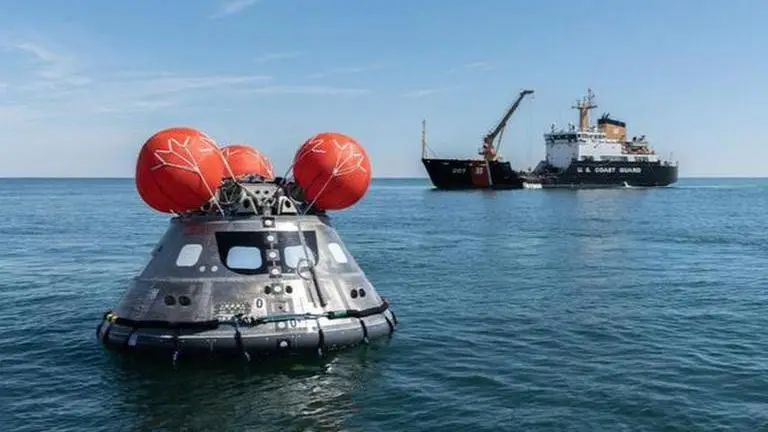
The Artemis 1 mission is on its final day and will end with the Orion spacecraft’s splashdown in the Pacific Ocean on December 11. While the spacecraft has performed satisfactorily in the last 25 days, NASA says its final and biggest test is to bear the unforgiving re-entry when it enters the Earth’s atmosphere before a splashdown near Island Guadalupe, about 240 km west of Mexico’s Baja Peninsula. The location was shifted further south in the Pacific Ocean due to unfavourable weather conditions near the coast of California.
Where to watch Orion's splashdown live
The live streaming for Artemis 1's conclusion will begin on NASA's official YouTube channel at 9:30 pm IST and the splashdown is scheduled for 11:09 pm.
Orion nears its biggest test
Since all other systems of Orion worked better than expected (except for a few power glitches), a safe re-entry is the biggest barrier before labelling Artemis 1 a success. Orion is not carrying any astronauts but three mannequins which are equipped with sensors to measure the effects of spaceflight and outer space radiation that both male and female travellers will experience during crewed missions.
Mission Time: 25 days, 0 hrs, 30 min
— Orion Spacecraft (@NASA_Orion) December 11, 2022
Orion is 69,333 mi from Earth, 247,884 mi from the Moon, cruising at 4,908 mph.
P: 53174, 49190, -11161
V: -3643, -3232, -608
O: 341º, 13º, 276º
What's this? https://t.co/voR4yGy2mg #TrackArtemis pic.twitter.com/WWt1WPrRir
Although the effects of spaceflight and radiation will be studied after the recovery of the mannequins, it is important that Orion is recovered in one piece. This is the most important part of the mission because Orion will have to slow down from a speed of over 41,000 km per hour to under 500 km per hour in a matter of minutes using its parachutes. The re-entry is also meant to test the spacecraft's heatshield (measuring five metres or 16.5 feet) which will experience temperatures up to 2,760°C.
Advertisement
NASA is confident that the spacecraft will make it through as Orion's thermal protection system (TPS) at NASA’s Ames Research Center in California has performed more than 1,000 tests. According to NASA's plan, Orion will first separate from the European Service Module (ESM) which powered it during its lunar journey and will perform a skip entry manouvre (just like a rock skips over water's surface) before entering the Earth's atmosphere. This will ensure a smooth re-entry and reduce the g-forces that astronauts will experience in future missions.
"Engineers will perform several additional flight test objectives after Orion splashes down in the water and before powering down the spacecraft," NASA said in an update. Meanwhile, the recovery teams, that will recover hardware jettisoned during Orion's landing, including the forward bay cover and three main parachutes have arrived at the spot.