
Updated 8 September 2022 at 12:51 IST
Scientists discover evidence of world's 1st successful human limb amputation in Indonesia
Researchers have found convincing evidence that the first successful human limb amputation took place some 31,000 years ago, according to a recent study.
- Science News
- 3 min read

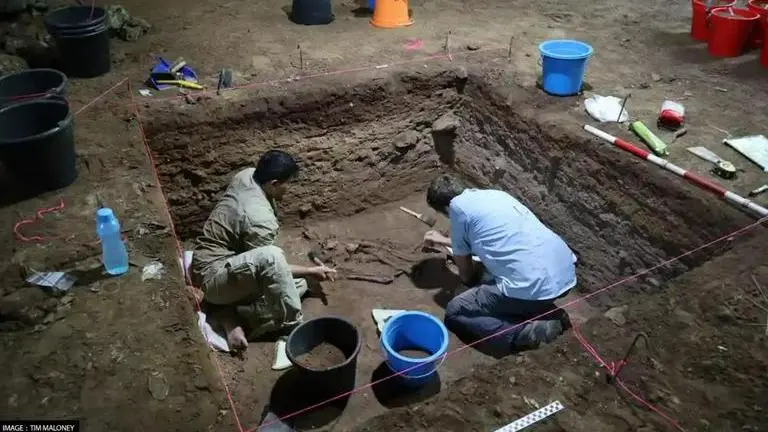
Researchers have found convincing evidence that the first successful human limb amputation took place some 31,000 years ago, according to a recent study. As per a report that was published in Nature on September 7, a human skeleton from the Stone Age was discovered buried in the Liang Tebo limestone cave in East Kalimantan, Borneo, Indonesia. It demonstrates that the left foot had been amputated and the patient had healed.
Tim Maloney, an archaeologist at Griffith University in Australia and the lead author of the study, told reporters during a press conference on September 7 that the skeleton was discovered in 2020 after archaeologists returned to the location where some of the earliest rock art had previously been discovered. They were looking for archaeological deposits that may overlap with this early rock art.

According to Maloney, the researchers "slowly and methodically" examined the skeleton, clearing away the dirt from the burial site and taking photos and laser scans of it. It was "very evident" after the skeleton was unearthed that the left foot was "completely missing" and that the lower or distal third of their left leg had been amputated. According to Maloney, a paleopathologist agreed that the bones supported numerous clinical examples of intentional amputation.
Amputations need extensive technical competence, knowledge of human anatomy & surgical hygiene
The researchers said the finding was significant because amputations need extensive technical competence as well as knowledge of human anatomy and surgical hygiene. In addition, the study found that prior to contemporary clinical advancements like antiseptics, the majority of patients who underwent amputation surgery passed away from blood loss, shock, or a subsequent infection.
Advertisement
According to researchers, the remains belonged to a young person who underwent the procedure but survived and lived for a further six to nine years. In addition, the study found that to avoid deadly blood loss and infection, the individual performing the amputation needed to have a thorough understanding of limb structure, muscles, and blood arteries.

(The 31,000-year-old skeleton found in an Indonesian Borneo cave in East Kalimantan; Image: AP)
Advertisement
Since animal attacks and other accidents frequently result in crushing fractures, the researchers came to the conclusion that they were improbable causes of the amputation. The skeleton provided "quite a wonderful pathological record of this individual and their burial," according to Maloney, and provided a wealth of information about the Borneo population during the time of the Late Pleistocene, which is referred to as between 1,26,000 and 11,700 years ago.
Image: Tim Maloney
Published By : Aparna Shandilya
Published On: 8 September 2022 at 12:51 IST