
Scientists discover 'Supermountains' that contributed to Earth's biggest evolutionary boom
In a recent study, certain Australian scientists have claimed to track the formation of the two mountain ranges on Earth also known as "super mountains".
- Science News
- 2 min read

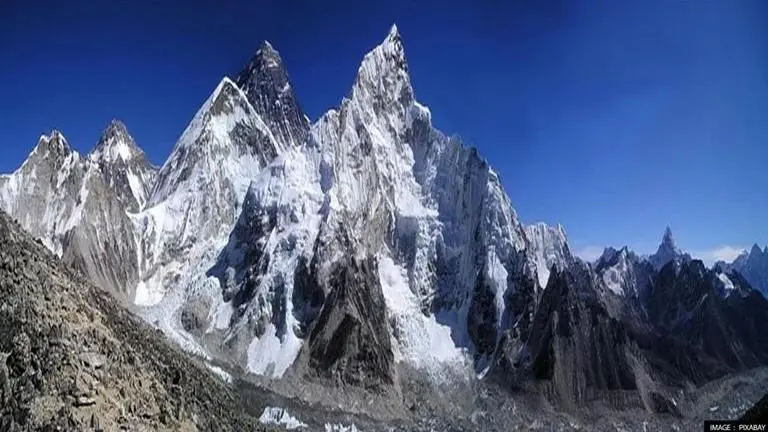
In a recently published research, certain Australian scientists have claimed to track the formation of the two mountain ranges also known as "super mountains" throughout the planet's history. The ranges identified as "super mountains" by geologists are said to be nearly three or four times the size of the Himalayas stretching far and wide and dividing the ancient supercontinents into two parts. The research which has been published in the February 15 issue of the journal ' Earth and Planetary Science Letters', the researchers have claimed that the formation and destruction of these two huge ranges may have contributed to the biggest evolutionary boom in the planet's history
Carried out by Ziyi Zhu, a PhD student at the Australian National University who is also the author of the research along with her co-authors Ian H. Campbell, Charlotte M. Allen, Jochen J. Brocks, Bei Chen said, "There's nothing like these two super mountains today. It's not just their height — if you can imagine the 1,500 miles (2,400 km) the long Himalayas repeated three or four times, you get an idea of the scale."
As presented in the research, the scientist used low-lu zircons for documenting the formation of the super mountains through time while Luna and Gondwana were the two periods of super mountain formation. Meanwhile, these two periods were also the time when some major advances in evolution took place including the 'Boring Billion' period which marked the formation of a few other mountains and evolutionary tranquillity.
Contribution of super mountains formation to environment
As written in Ziyi Zhu's study, the formation of the mountain ranges may have resulted in high rates of erosion and sedimentation which would have increased the supply of bio limiting nutrients such as phosphorus to the oceans, potentially increasing primary productivity and flow of energy through ecosystems. These rapid super mountain erosions may have increased atmospheric O2 and nutrient levels, it mentioned.
Notably, as the study suggests, while the first super mountains were called the 'Nuna Supermountain' it coincidently resembled the appearance of eukaryotes, the organisms behind the rise of plants and animals on the planet. Furthermore, the second one was called 'Transgondwanan Supermountain' which dates back to 650 and 500 million years ago.