
Scientists discover time cells in human brain that enable mental time travel
A team of researchers at the French National Centre for Scientific Research have isolated “time cells” in the brain that enables humans to recall memories.
- Science News
- 2 min read

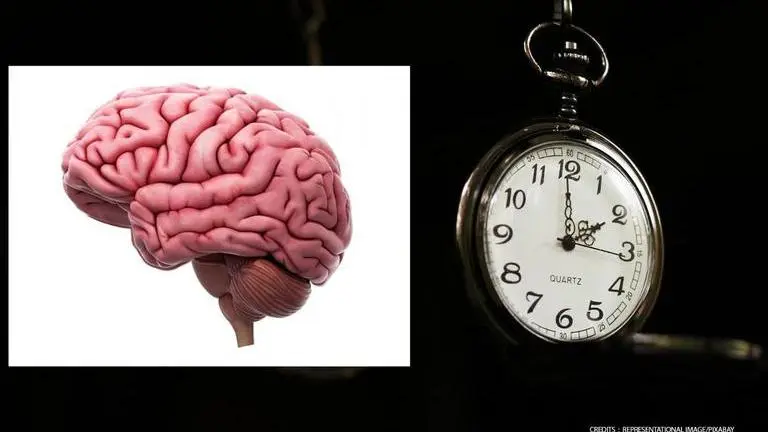
A team of researchers at the French National Centre for Scientific Research have isolated “time cells” in the brain that enables humans to recall and record memories from the past. Led by Leila Reddy, the neuroscientists shed light on the temporal organisations in the human brain and identified the part of the brain responsible for recollecting past events in sequential order. The study was published on July 5 in the Journal of Neuroscience.
For this purpose, the team carefully monitored the brain activity of human patients as they completed tasks that required sequential memory. In the aftermath, they concluded that representation of time happened in Hippocampus. The results “suggest a robust representation of time in the human hippocampus,” a structure embedded deep in the brain, according to a study. Later, Dr Reddy told Vice that the study reveals “a representation of an internal or inherent flow of time, that was not driven by something going on in the external world.”
“The hippocampus is important for judging the temporal order of events (among other things), and damage to the hippocampus can result in an impairment of memory for temporal order (for example remembering the order of a list of items),” Reddy said. “It's therefore important to understand how temporal information is represented in the brain, so as to be able to design interventions or treatments (patients with conditions that affect the memory of processing of time) to reduce these deficits in memory.”
Hippocampal 'time cells'
Previous experiments conducted on rodents have hinted that hippocampal neurons, or “time cells,” are central to the experience and recollection of time. However, the extent of similarity between human and rodent functioning has remained largely remained unclear. Reddy and her colleagues also attempted to solve the mystery.
For this, they designed two task-based experiments that aimed to record single neurons in the human brain. The team’s findings support compelling evidence for hippocampal time cells in rodent trials and demonstrate that human brains also use this area of the brain to process sequential order and store episodic memories.
Advertisement
Image: Represenatational Image/ Pixabay