
Updated 11 April 2022 at 17:20 IST
Scientists reveal why Moon's far side is more cratered than it's near side; Read to know
The Moon shows us only one side of its surface- called the near side of the lunar surface- as it is tidally locked to the Earth.
- Science News
- 3 min read

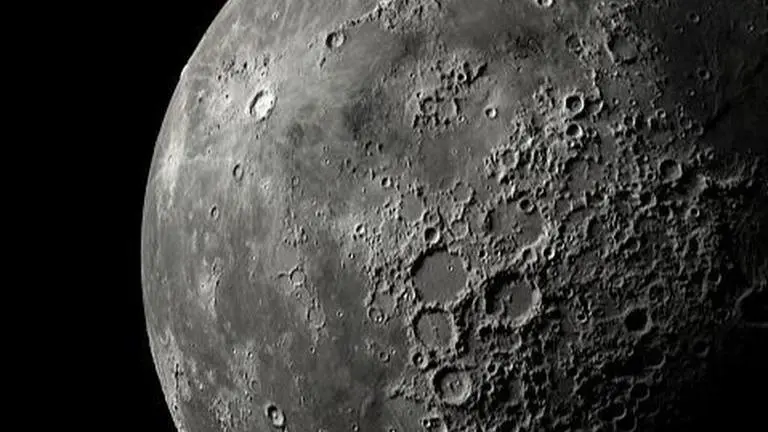
Astronomers now might finally know why the far side of the Moon is much more cratered than its near side. For the unversed, we can only see one side of the Moon- the near side- as the natural satellite is tidally locked to the Earth. The cause for this duality on the lunar surface has been a mystery for decades and scientists believe they might have an answer now.
The dichotomy between the Moon's far and the near side
Through simulations and models, the astronomers have concluded that, unlike the far side, the near side of the Moon is covered in what is called the Lunar Maria. It is basically vast plains of volcanic basalt that appear as dark patches on the lunar surface when looked at from the Earth. The models even supported the theory that a massive impact on the lunar surface resurfaced the near side in lava flows, thus reflecting distinct geological compositions on either side.
In addition to this, existing theories also suggest that a sea of magma once covered the near side, however, what caused this volcanic activity is still disputed. When this side cooled, it made the rocky surface into a smooth landscape and created dark blemishes visible to this day. According to the study published in Science Advances, a massive crater named the South Pole–Aitken basin (SPA) at the lunar south pole might have answers for this. The experts have found that the basin was created by one of the largest and oldest collisions around 4.3 billion years ago.
What's more, is that scientists think that the impact created such heat that this warmed the upper mantle on the near side and led to a concentration of heat-producing elements like thorium, potassium, rare earth elements, and phosphorus. Surprisingly, these elements have also been found in the rock samples brought to Earth under NASA's Apollo programs. Planetary scientist Matt Jones from Brown University said as per Science Alert, "What we show is that under any plausible conditions at the time that SPA formed, it ends up concentrating these heat-producing elements on the nearside". "We expect that this contributed to the mantle melting that produced the lava flows we see on the surface", he added.
Advertisement
Finally, the scientists concluded that the difference in the two lunar surfaces was due to two reasons. The first is the upper mantle in the southern hemisphere heating and flowing toward the northern hemisphere and the second is the upper mantle on the far side remaining too cool to similarly distribute the mantle. "And the South Pole–Aitken impact is one of the most significant events in lunar history. This work brings those two things together, and I think our results are really exciting", Jones said.
Image: Unsplash
Published By : Harsh Vardhan
Published On: 11 April 2022 at 17:20 IST