
Updated 5 May 2022 at 20:28 IST
Venus lost water due to THIS reason; NASA's new mission will explore why Earth didn't
Venus, according to NASA, once had water to support life but it dried out due to unsolidified reasons. Read to know more about the mission.
- Science News
- 3 min read

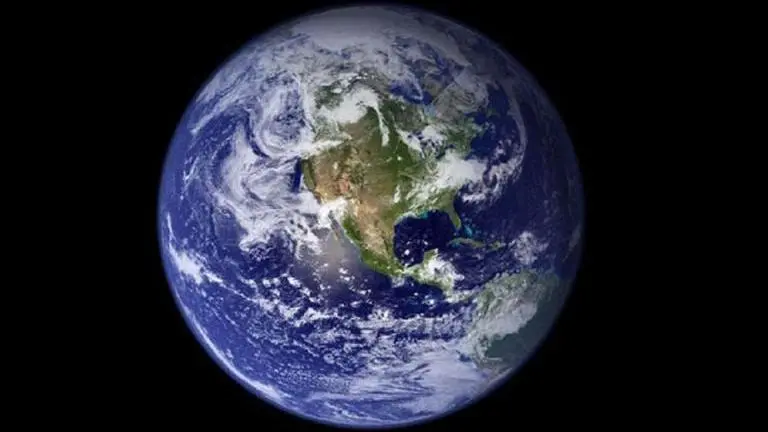
Earth, as we know it, is the only planet in our solar system which has oceans where life originated from, according to scientific data. NASA says that Earth’s sister planet Venus, which is also the hottest in our solar system, too was much wetter than it is today but, has dried out for unknown reasons. In order to find out if our planet has a similar fate, NASA is launching a new mission named 'Endurance' on May 9.
Endurance mission objective
Before understanding the purpose of the mission Endurance, we first have to understand its driving force. According to NASA, our planet Earth has a global electric potential, which is an extremely crucial component since it is what makes this planet habitable. And to find out why Venus or Mars can not support life while the Earth can, NASA is launching this mission. "It’s one of the most fundamental questions in all of science: Why are we here? And it’s what Endurance is after", Glyn Collinson from NASA’s Goddard Space Flight Center said in a statement.
The agency explained that the rocket launched under the Endurance mission will attempt to measure the global electric potential, or how much Earth’s electric field “tugs” at electrically charged particles in the Earth's atmosphere. The agency also says that this electric potential is too weak to be easily measured but it is the weakness why life is possible on this planet.
For materialising this mission, Collison and his team are travelling to the northernmost launch range in the world in Norway from where the rocket will be launched through Earth’s magnetic north pole.
Advertisement
How did Venus lose its water and what about the Earth?
Venus might have lost all its water due to a strong global electric potential. NASA says that the Venus Express spacecraft launched by the European Space Agency discovered a clue over the same in 2016. The probe found an electric potential of 10 volts surrounding the planet. For comparison, Earth's estimated electric potential is just 0.3 volts, some 25 times weaker than Venus.
The agency explained that such a high electric potential made Venus like a giant vacuum cleaner that caused ingredients of water, such as positively charged oxygen ions, to split from hydrogen and siphon off into space when intense sunlight hit them. Scientists reckon that this process over time might have drained all the water from the planet.
Advertisement
NASA revealed that the Endurance rocket will measure electrons escaping from Earth’s atmosphere, something which is happening for billions of years. So far, several attempts to measure Earth's electric potential have been made but none succeeded because it is weaker than a watch battery. If the mission is successful, scientists will be able to answer why is Earth's water still here if our planet also has an ionosphere just like Venus.
Published By : Harsh Vardhan
Published On: 5 May 2022 at 20:28 IST