
Updated 26 May 2022 at 17:15 IST
Virtual telescope photographs brightest pic of approaching asteroid; Watch live flyby here
The Virtual Telescope shared the image of the asteroid 1989 JA at its maximum brightness when it was about 4.5 million km from the Earth.
- Science News
- 2 min read

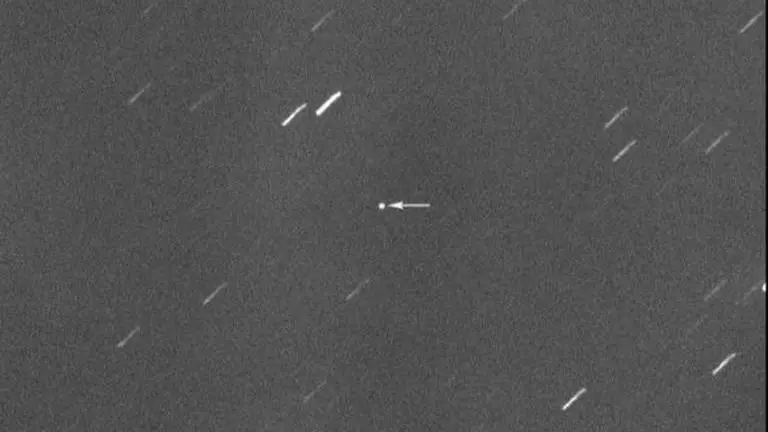
The asteroid (7335) 1989 JA is nearing its flyby of Earth which is estimated to occur on May 27. According to NASA's Jet Propulsion Laboratory, the asteroid is expected to make its closest approach at 7:56 pm (IST) and will be the biggest space rock to skim our planet in 2022 so far. Recently, the Virtual Telescope shared a picture of the hurtling asteroid when it was at its maximum brightest.
Asteroid #1989JA is right now at its maximum brightness, but still safely approaching. We captured it.
— Virtual Telescope (@VirtualTelescop) May 25, 2022
‼️👇🔭👇‼️
See it live from Chile and Australia, join @VirtualTelescop and @TelescopeLiveHQ here: https://t.co/jBtmGu4ytq pic.twitter.com/M4mxh1G5Pu
How to watch the asteroid 1989 JA's closest approach?
The Virtual Telescope will air the asteroid 1989 JA's closest approach on its official YouTube channel. The live streaming will begin at 4:30 am (IST) on May 27 and interested viewers can watch the event through the link above courtesy of Republic.
About the asteroid 1989 JA
With an estimated diameter of 1.8 kilometers, the asteroid is the biggest one to make its closest approach to Earth this year. The space rock has been classified as a "potentially hazardous" one but it will pass from a safe distance of four million kilometres, which is about ten times the distance between the Earth and the Moon. This asteroid was discovered in 1989 by astronomer Eleanor Helin from the California-based Palomar Observatory.
In the recent image shared by the Virtual Telescope, 1989 JA was at about 4.5 million km from the Earth. Earlier this week, the Keldysh Institute of Applied Mathematics of Russia’s Academy of Sciences revealed that the asteroid is travelling at a staggering speed of nearly 76,000 kilometres per hour. Scientists say that it belongs to the Apollo class of asteroids and will return no earlier than June 23, 2055.
Advertisement
During its next flyby, asteroid 1989 JA will be at a distance 70 greater than the distance between the Earth and the Moon. Currently, this asteroid is one of the 29,000 space rocks which is being constantly monitored by scientists. The image shared below by the Virtual Telescope was captured on May 18 when the asteroid was 10.7 million kilometres from Earth. In a recent tweet, the Virtual Telescope has asked space enthusiasts to stay tuned before the asteroid's closest approach.
Published By : Harsh Vardhan
Published On: 26 May 2022 at 17:14 IST