
Updated 16 August 2022 at 23:42 IST
Virtual Telescope's webcast to show Saturn shine bright during 'opposition' on August 17
Saturn, which is currently undergoing its 'opposition' phase, is illuminated more than usual. Watch the planet shine at its brightest during a live webcast.
- Science News
- 2 min read

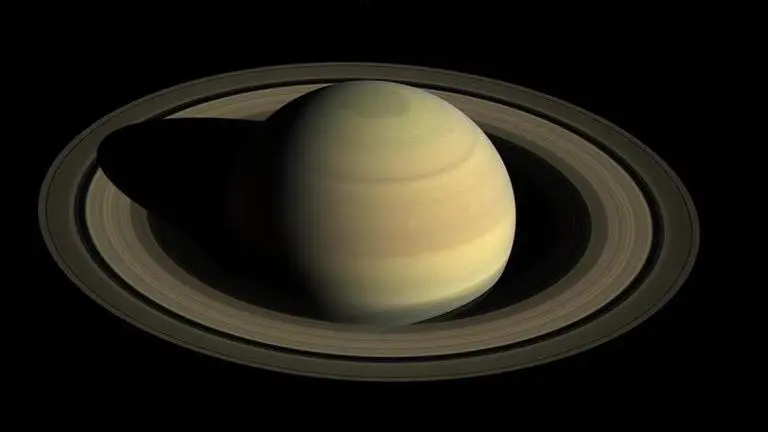
Ringed planet Saturn is still shining at its brightest since August 14 owing to the phenomenon called 'opposition'. During opposition, Saturn is directly opposite to the sun in its orbit, which makes it easier to spot at this time of the year. What's worth noting, however, is that the planet is also at its closest distance from Earth. According to NASA, Saturn is orbiting the sun from roughly 1.32 billion kilometres away as opposed to its general position which is approximately 1.4 billion kilometres away.
How to watch Saturn during 'opposition'
Because of the weather, the #Saturn live feed has been rescheduled for Aug. 16, starting at 22:30 UTC.
— Virtual Telescope (@VirtualTelescop) August 16, 2022
Details here:https://t.co/fdfu1jffMR pic.twitter.com/Rd2izg11rd
If the weather is not permitting a look at the ringed planet, you can tune in to the live webcast organised by the Virtual Telescope Project. Initially planned for August 16, the virtual stargazing was rescheduled by the Virtual Telescope after the weather played the villain. The webcast is scheduled to begin in the early hours of August 17, at 4 am IST, and can you can see Saturn shine at its brightest during this rare phenomenon. You can watch the webcast using the link below.
According to NASA's astronomical guide, Saturn was closest to Earth on August 14 and is currently rising around sunset and setting around sunrise. And since the planet is directly opposite the sun, it would be much more illuminated than usual. NASA also pointed out that with Earth passing between Saturn and the sun, the ringed planet's icy rings will brighten in the hours around the opposition.
"As the lunar cycle progresses, Saturn and the background of stars will appear to shift westward each evening as Earth moves around the sun," NASA said in its skywatching guide.
Advertisement
Apart from Saturn, the month of August is also suitable to spot Earth's neighbouring planets, Mars and Venus after sunset and before sunrise, respectively. According to NASA, Venus will appear slightly above the horizon which can be spotted before sunrise starting August 17 whereas Mars will rise above the east-northeastern horizon and appear below the Moon after midnight starting August 19.
After appearing for almost the entire month, the Moon will finally become invisible when the new Moon phase begins on August 27. During this phase, the Moon passes between the Earth and the Sun and is not visible to the observers on ground.
Advertisement
Published By : Harsh Vardhan
Published On: 16 August 2022 at 23:42 IST