
Updated 31 July 2021 at 00:38 IST
Cupping at Tokyo Olympics: All you need to about mysterious dark splotches on athletes
Cupping is known to have many benefits. Research has shown that this therapy can help with pain management, herpes zoster, and acne.
- SportFit
- 3 min read

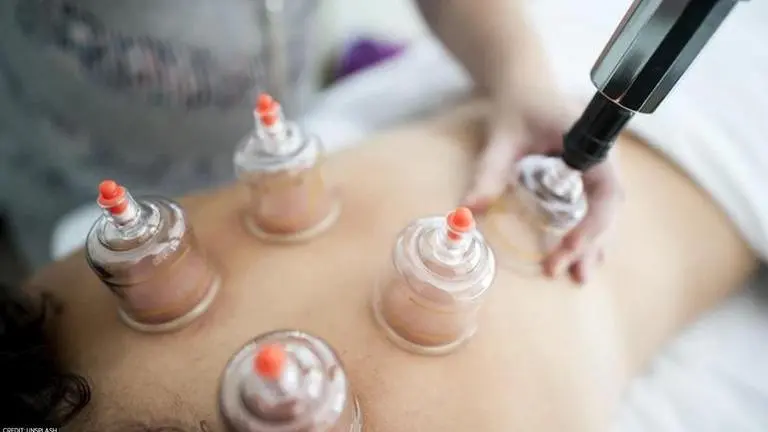
A number of sportspeople at the Tokyo Olympics 2020 this year were seen with dark patches on their body. Team Australia’s swimmer Kyle Chalmers even shared some photographs on Instagram that revealed the splotches on his body. The same were also spotted on Japanese swimmer Akira Namba’s back.
In the 2016 Rio Olympics, similar dark spots were reportedly seen on gold medalist Michael Phelp’s back. These marks are a result of a traditional therapy called cupping.
Cupping has its roots back in Middle Eastern and Asian cultures
This therapy, believed to have roots in Middle Eastern and Asian cultures, involves the application of heated cups to create local suction on the skin.
Seen at the practice sessions of American Swimmer Michael Andrew and long-distance runner Galen Rupp in Tokyo—bands wrapped around the upper portion of the legs. It's done for a practice called Blood Flow Restriction (BFR), which cuts off blood flow to specific muscles periodically. It is believed to stimulate those muscles in a way that tricks the brain to enhance both strength gain and recovery. It involves placing warm suction cups on the skin to create a vacuum — leaving dark round splotches on the skin.
Advertisement
Cupping helps but no medical evidence
The process is believed by some to increase blood circulation, relieving muscle tension, and promoting cell repair, despite there being no medical evidence that cupping has any benefit for athletes.
Incidentally, the technique that is making its presence felt in Tokyo, began in Japan. Most of these bands are used from a popular line of products called Kaatsu, which were first envisioned by Japanese powerlifter Yoshiaki Sato in 1966.
Advertisement
Types of cupping and benefits
Cupping is of two types — dry and wet. In both cases, the therapist puts a flammable substance such as alcohol, herbs, or paper in a cup and sets it on fire, according to webmd.com. Once the fire goes out, the cup is then put upside down on the skin just for a few minutes. A modern version, however, uses a rubber pump instead of fire to create a vacuum in the cup. After this, an antibiotic ointment and bandage are used to prevent infection. One is expected to regain normal skin within 10 days.
Cupping is known to have many benefits. Research has shown that this therapy can help with pain management, herpes zoster (reactivation of chickenpox virus in the body), and acne. According to the National Health Portal of India, cupping mobilizes blood flow to promote healing or cure diseases. It lists the following health issues where cupping can be used:
- To clean the skin from waste matters
- To stop excessive menses and epistaxis
- To correct liver disorders
- To treat problems such as spleen disorders, malaria piles, inflammation of testes and uterus, scabies, and boils.
Published By : Deepan Chattopadhyay
Published On: 31 July 2021 at 00:38 IST