
Legal structure against misinformation, deepfakes after elections: Ashwini Vaishnaw
Digital platforms have escalated efforts to robust election integrity over the past weeks as elections approach
- Tech News
- 4 min read

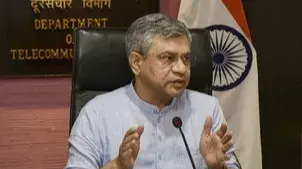
Law against deepfakes: The Union Government has sought technical and business process solutions from digital platforms for removing misinformation that can cause likely damage to society and democracy, according to Union Minister Ashwini Vaishnaw has said.
A deliberated legal structure against deepfakes and misinformation will only be decided on post elections conclude, he added.
As elections approach India, digital platforms have increased efforts for maintaining integrity during this time over the weeks. The government has also issued elaborate directives to clear its stance on no tolerance for deepfakes and misinformation online, on social media and other platforms.
"...Misinformation in a vibrant and diverse democracy like ours, can really be very harmful. It can be harmful for society, for democracy, for the electoral process, and it can really impact our future and harmony of the society in a big way.
"...So, we have been very categorical in our discussions with the platforms...they have taken many steps, they are continuously taking many steps, and immediately after the elections are over, we will certainly be coming up with very well thought-through legal structure...," the Minister said in a recent interview to PTI.
When asked if the implementation will be routed through the Digital India Act, which is proposed in succession to the outdated IT Act of 2000, the IT and Communications Minister said, “Either part of that or a separate law can also be thought of,” pertaining to deepfakes and misinformation.
The government last week had issued an advisory for mandating the approval of government before testing generative artificial intelligence (GenAI) and large language models (LLMs), directed towards social media and other platforms.
Aimed at averting the hosting of unlawful content, the advisory comes at the heels of Google’s AI tool Gemini giving an objectionable response to a question on Prime Minister Narendra Modi, which invited condemnation from several stakeholders.
Nations around the globe have become more wary of risks posed by AI bias, as well as misinformation meted digitally and untruthful knowledge, amid international experts alerting of AI-generated deceptions negatively impacting the electoral processes.
The World Economic Forum (WEF) earlier in the year had cautioned on AI-aggravated misinformation and disinformation posing exponential risk globally, especially as elections are around the corner in significant countries including the US, UK and India.
2024 has been dubbed as a bumper year of elections, with close to half of the global population heading to polls. Polls are scheduled this year in close to 60 nations and regions.
Advertisement
BigTech companies in the leagues of Meta, Amazon, Google, Microsoft, OpenAI and Anthropic have collaborated for a pledge to avoid harmful and deceptive AI content which obstructs smooth election proceedings across the globe.
"The platforms must start taking responsibility for what they publish. They are doing that in a great way, they have their own policies. Many of those policies are today leading to either taking down something or they have their own algorithms,” the Minister said.
Advertisement
"So, the platforms have been very clearly told that they must come out with technical as well as business process solutions, by which the deepfakes and misinformation can be prevented from getting onto the platform," Vaishnaw added.
On criticism of the new regulations and rules leading to government overreach and censorship, Vaishnaw said the digital framework is instead created after rigorous consultation with stakeholders, and meant to empower people and make the internet safe.
"It is making sure that platforms, which have such a big impact on our lives today, are under an obligation to protect our privacy. They have the obligation today because of this legal framework to make sure that users are protected,” he said.
"So, it is actually empowering our citizens and people, and making sure that personal information is protected. That is the attempt to this legal framework," he said, in context to the wide consultation before the Digital Personal Data Protection legislation and the Telecommunications Bill were drafted.
(With PTI Inputs)