
Starlink India Prices Officially Announced As Website Goes Live Ahead of Launch
Partnerships with Jio and Airtel, announced earlier this year, will be key to Starlink’s India strategy.
- Tech News
- 2 min read

;'%3e%3cpath%20d='m8,15.99c4.41,0,7.99-3.58,7.99-7.99S12.41,0,8,0,0,3.59,0,8s3.58,7.99,7.99,7.99Z'%20style='stroke:%23fff;%20stroke-miterlimit:10;%20stroke-width:.02px;'/%3e%3cpath%20d='m3.08,3.37l3.82,5.11-3.84,4.15h.87l3.37-3.64,2.72,3.64h2.94l-4.04-5.39,3.58-3.87h-.86l-3.1,3.35-2.5-3.35h-2.94Zm1.27.64h1.35l5.97,7.99h-1.35l-5.97-7.99Z'%20style='fill:%23fff;'/%3e%3c/g%3e%3c/svg%3e)


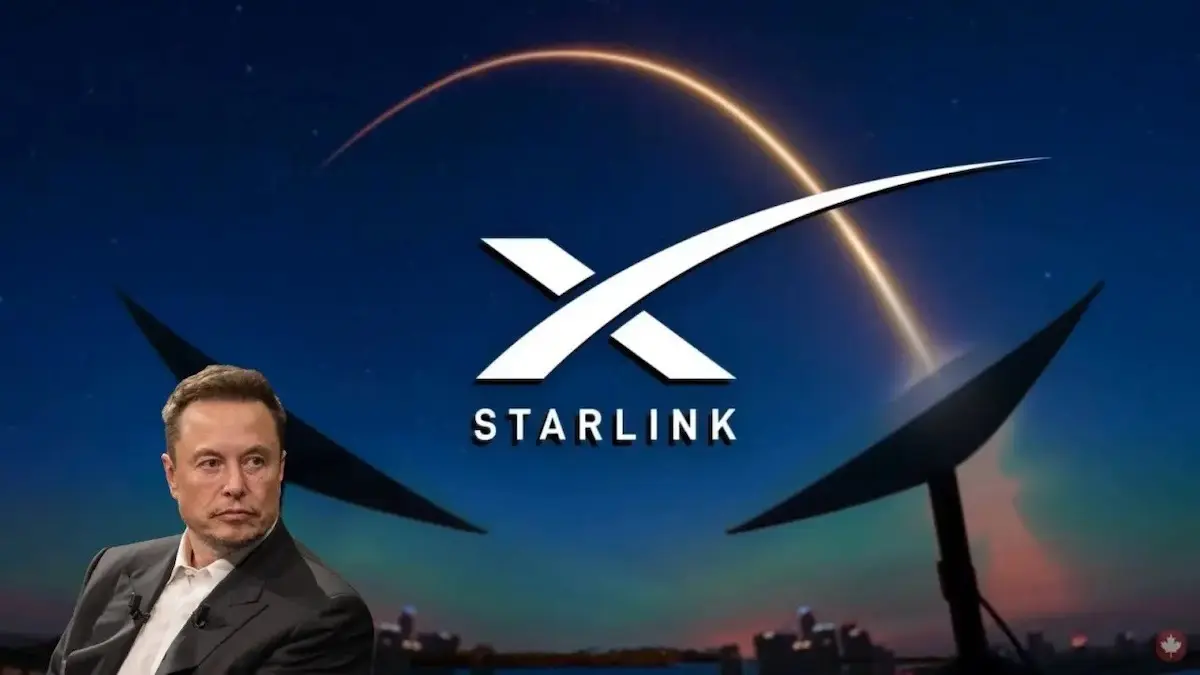
Starlink has officially revealed what its satellite internet service will cost in India, as the company prepares for a commercial rollout backed by distribution tie-ups with Reliance Jio and Bharti Airtel. The India website is now live, outlining subscription charges, hardware costs and service terms for early adopters in urban fringes and remote regions.
The official Starlink India website shows that individual users will be charged ₹8,600 per month for unlimited internet, including the cost of the gear, which is ₹34,000. Customers will be eligible for a 30-day trial, after which they can decide if they want to continue the subscription. Enterprise subscription prices, however, have not been listed yet.
Partnerships with Jio and Airtel, announced earlier this year, will be key to Starlink’s India strategy, giving it access to retail footprints, installation networks and enterprise relationships that operators already maintain. Hardware kits are likely to be sold and serviced through telco channels, while Starlink’s constellation handles the backhaul, targeting areas where terrestrial networks are weak or non-existent. According to reports, the company has set up gateway earth stations in India in Chandigarh, Hyderabad, Kolkata, Lucknow, Mumbai, and Noida.
With this pricing, Starlink is positioning itself as a premium connectivity option rather than a direct rival to mass-market mobile data or fibre broadband. However, in a recent interview, SpaceX owner Elon Musk said Starlink does not intend to compete with terrestrial internet systems and will be useful primarily for people living in remote locations, such as deep forests, barren lands, or mountains, where conventional internet is barely feasible. In those markets, the higher effective cost per Mbps (megabits per second) may be offset by the ability to get stable 20–200Mbps-class connectivity with relatively quick self-installation.
Advertisement
For Android and iPhone users in cities with dense 4G/5G and fibre coverage, Starlink is less about replacing existing broadband and more about adding a backup or niche link. For example, farms, work sites, homestays or small offices on the outskirts of coverage. That positions Starlink as a complementary layer in India’s connectivity stack rather than a mainstream mobile alternative, at least in the initial phase of its launch.