
Updated 13 January 2023 at 14:51 IST
Twitter files: Did US hurl false 'Russian bots narrative' despite pushback?
In 2018, hashtag "ReleaseTheMemo" started circulating on Twitter, as pro-MAGA support base pushed for declassification of Nunes memorandum.
- Tech News
- 5 min read

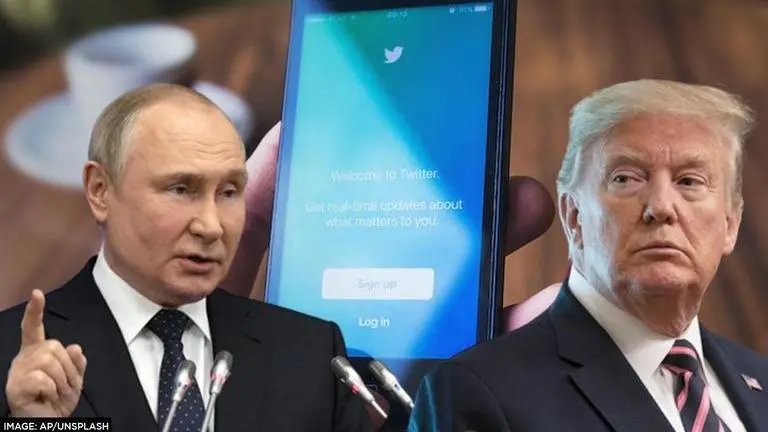
In 2017, as he testified at the United States Senate Intelligence Committee, the former FBI agent Clint Watts made wide-ranging claims that the Russians employed the "armies of Twitter bots" appearing to be Midwestern swing-voter Republicans for spreading fake news related to the US elections. Speaking at the panel, Watts accused Russia of playing a role in interfering with United States' democracy using Twitter bots.
"Social media campaign and the GRU hacking operations coincided with a series of contacts between Trump Campaign officials and individuals with ties to the Russian government," the 2016 Special Counsel Robert S. Mueller III report on the investigation into Russian collusion handed to the US Justice Department revealed. Russian government interfered in the US 2016 presidential election via its robust cyber response to influence the Trump Campaign.
The Internet Research Agency (IRA), based in St Petersberg, carried out the Russian interference operations, as identified in the probe, by organising a massive social media campaign aimed at provoking and amplifying the political and social discord in the United States and undermining the electoral system. The agency was found to have been funded by a Russian oligarch, the shadowy mercenary group Wagner's chief Yevgeniy Prigozhin and the companies he controlled.
Russians spread electoral propaganda linked with Trump's campaign, on Twitter, Facebook, YouTube, and Instagram, and disparaged the then Trump's rival Hillary Clinton, Mueller's report claimed. Russian intelligence service known as the Main Intelligence Directorate of the General Staff of the Russian Army (GRU) carried out covert social media operations such as cyber intrusions, hacking, and release of hacked materials damaging to the then-Clinton Campaign, it revealed.
Advertisement
In a sprawling indictment, the US Justice Department had charged 13 Russians and 3 firms in connection to subverting the 2016 election and supporting the Trump campaign. The charges were brought against the Russian by Special Counsel Robert Mueller, probing the Russian meddling.
Twitter, in 2018, admitted that more than 50,000 Russia-linked accounts were used to post automated content online linked to US elections that had reached an estimated 677,775 Americans. Of those, 3,800 accounts were traced back to the Russian state operatives, Twitter had claimed, adding that the Russian-backed material from these accounts was connected to the Internet Research Agency (IRA).
Advertisement
Twitter, at the time, had described the Russian-backed tweets as “troll farm” that was propelled by the Russian government.
In 2018, the hashtag "ReleaseTheMemo" started circulating on Twitter, as the pro-MAGA support base pushed for the declassification of a memorandum compiled by then-Congressman Devin Nunes, that would go on to expose the FBI investigation discrepancies into the Trump-Russian collusion.
Democrats slammed the hashtag stating that it was fuelled by Russian "bots" on Twitter. As Tesla and SpaceX CEO Elon Musk took over the microblogging site, he made mind-boggling claims in filing with the US Securities and Exchange Commission (SEC) that Twitter, in fact, had been concealing the actual number of bots or spam accounts on its platform. Rule 10b-5 of the SEC required the plaintiffs to show the manipulation or deception (through misrepresentation and/or omission), among other rules committed by an entity.
2016 elections not influenced by Russian 'bots' and 'trolls'
On Thursday, Journalist Matt Taibbi took to his Twitter handle to expose section 14 of the Twitter Files sharing a trove of emails and memos that debunked the Russian bots meddling and exposed the "Russiagate lies". Taibbi tweeted that the Democrats peddled Russian bots hoax even as Twitter clarified in the emails that there was no evidence that verifies the connection between the 2016 US elections and Kremlin.
1.THREAD: Twitter Files #14
— Matt Taibbi (@mtaibbi) January 12, 2023
THE RUSSIAGATE LIES
One: The Fake Tale of Russian Bots and the #ReleaseTheMemo Hashtag
"At a crucial moment in a years-long furor, Democrats denounced a report about flaws in the Trump-Russia investigation," Taibbi wrote, adding that the 2016 elections were not influenced by the so-called Russian 'bots' and 'trolls.'
"He went on to add that Twitter officials "were aghast, finding no evidence of Russian influence."
Sharing emails from Twitter, Taibbi noted that the Twitter executives informed Rep. Adam Schiff, D-Calif., and Sen. Dianne Feinstein, D-Calif., that the social media platform "has not identified any significant activity connected to Russia with respect to Tweets posting original content to this [#ReleaseTheMemo] hashtag."
https://t.co/0PUOm212iv a crucial moment in a years-long furor, Democrats denounced a report about flaws in the Trump-Russia investigation, saying it was boosted by Russian “bots” and “trolls.”
— Matt Taibbi (@mtaibbi) January 12, 2023
3.Twitter officials were aghast, finding no evidence of Russian influence:
— Matt Taibbi (@mtaibbi) January 12, 2023
“We are feeding congressional trolls.”
“Not any…significant activity connected to Russia.”
“Putting the cart before the horse assuming this is propaganda/bots.” pic.twitter.com/r8O21QacME
"Twitter warned politicians and media they not only lacked evidence but had evidence the accounts weren’t Russian – and were roundly ignored," Taibbi wrote in series of tweets.
"On January 18th, 2018, Republican Devin Nunes submitted a classified memo to the House Intel Committee detailing abuses by the FBI in obtaining FISA surveillance authority against Trump-connected figures, including the crucial role played by the infamous 'Steele Dossier,'" he stressed.
3.Twitter officials were aghast, finding no evidence of Russian influence:
— Matt Taibbi (@mtaibbi) January 12, 2023
“We are feeding congressional trolls.”
“Not any…significant activity connected to Russia.”
“Putting the cart before the horse assuming this is propaganda/bots.” pic.twitter.com/r8O21QacME
"The Nunes assertions would virtually all be verified in a report by Justice Department Inspector General Michael Horowitz in December 2019," Taibbi continued. "Nonetheless, national media in January and early February of 2018 denounced the Nunes report in oddly identical language, calling it a 'joke'."
He asserted that Democrat lawmakers contributed to one of the "greatest outbreaks of mass delusion in US history" as they had spread the Russian collusion hoax and discredited the Nunes’ memorandum.
6.The Nunes assertions would virtually all be verified in a report by Justice Department Inspector General Michael Horowitz in December 2019. pic.twitter.com/uLFHwbsiJe
— Matt Taibbi (@mtaibbi) January 12, 2023
Published By : Zaini Majeed
Published On: 13 January 2023 at 14:51 IST