
WhatsApp Introduces Parent-Managed Accounts to Give Families More Control Over Pre-Teen Messaging
Parent-Managed Accounts are essentially secondary WhatsApp profiles controlled by a parent’s primary account.
- Tech News
- 3 min read

;'%3e%3cpath%20d='m8,15.99c4.41,0,7.99-3.58,7.99-7.99S12.41,0,8,0,0,3.59,0,8s3.58,7.99,7.99,7.99Z'%20style='stroke:%23fff;%20stroke-miterlimit:10;%20stroke-width:.02px;'/%3e%3cpath%20d='m3.08,3.37l3.82,5.11-3.84,4.15h.87l3.37-3.64,2.72,3.64h2.94l-4.04-5.39,3.58-3.87h-.86l-3.1,3.35-2.5-3.35h-2.94Zm1.27.64h1.35l5.97,7.99h-1.35l-5.97-7.99Z'%20style='fill:%23fff;'/%3e%3c/g%3e%3c/svg%3e)


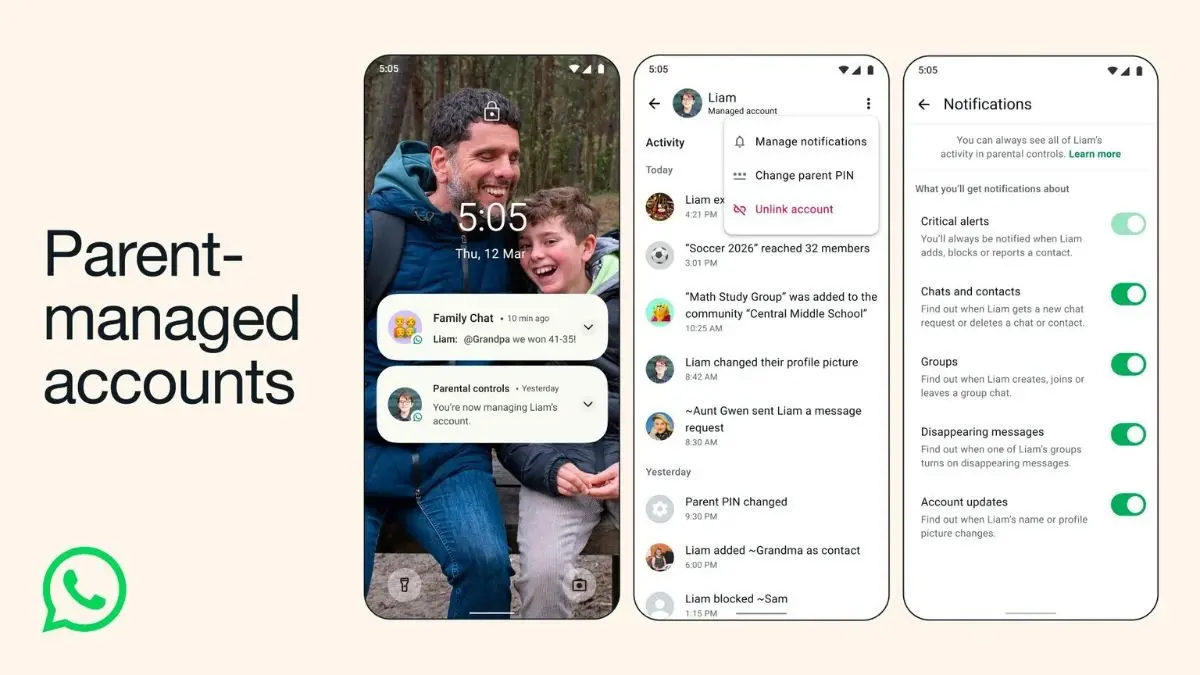
WhatsApp has announced a new feature called Parent-Managed Accounts, aimed at giving parents greater oversight of how younger users communicate on the messaging platform. The feature is designed for pre-teens, users under 13, who have started using smartphones but still require parental supervision.
The new system links a child’s WhatsApp account to a parent or guardian’s device, allowing families to manage privacy settings, contact permissions, and group participation while preserving the app’s end-to-end encryption.
What Parent-Managed Accounts Are
Parent-Managed Accounts are essentially secondary WhatsApp profiles controlled by a parent’s primary account. The accounts are designed to give younger users access to messaging and calling while limiting features that could expose them to unwanted contacts or content.
The parent and child accounts are connected during setup, and key settings are controlled through the parent’s device. A PIN or similar security layer is required to make changes, ensuring children cannot alter restrictions on their own.
Advertisement
The idea reflects a growing concern among families about children using messaging platforms without adequate safeguards.
How the Controls Work
Parents can use the feature to manage several aspects of the child’s WhatsApp experience:
Advertisement
- Limit who can message the child, typically restricting conversations to saved contacts only
- Control which groups the child can join
- Review requests from unknown contacts before they reach the child
- Adjust privacy settings from the parent’s phone
These controls aim to reduce the chances of unwanted interactions with strangers or exposure to inappropriate content.
Privacy Still Protected
Despite the added supervision tools, WhatsApp says its end-to-end encryption will remain unchanged, meaning parents will not be able to read the content of messages or listen to calls. Instead, the controls focus on activity management and account settings, rather than monitoring conversations themselves.
This approach is meant to strike a balance between safety and privacy, allowing parents to guide younger users without turning the platform into a surveillance tool.
Some Features Will Be Disabled
Child accounts will also have a more limited version of WhatsApp. Certain features may be removed or restricted to reduce exposure to public or unmoderated content.
For example, the Updates tab, Channels, and broadcast content may be disabled, and some advanced messaging features will not be available on these accounts.
Why WhatsApp Is Introducing This Now
Messaging apps are often the first social platforms children use after getting their first smartphone. While WhatsApp already offers privacy settings, it historically lacked built-in parental controls, leaving families to manage usage manually.
The new parent-managed system attempts to address that gap by giving families structured tools for safe messaging.
What Happens When Children Grow Up
The linked account can eventually be converted into a regular WhatsApp account once the child reaches the platform’s minimum age requirement or the parent removes the restrictions. The feature is expected to roll out gradually across regions as WhatsApp refines the system and gathers feedback from families.