
KT1 asteroid as big as Eiffel Tower will safely pass by Earth on June 1: NASA
The National Aeronautics and Space Administration (NASA) has warned that an asteroid, as big as the Paris Eiffel Tower, could past through Earth on June 1.
- Science News
- 2 min read

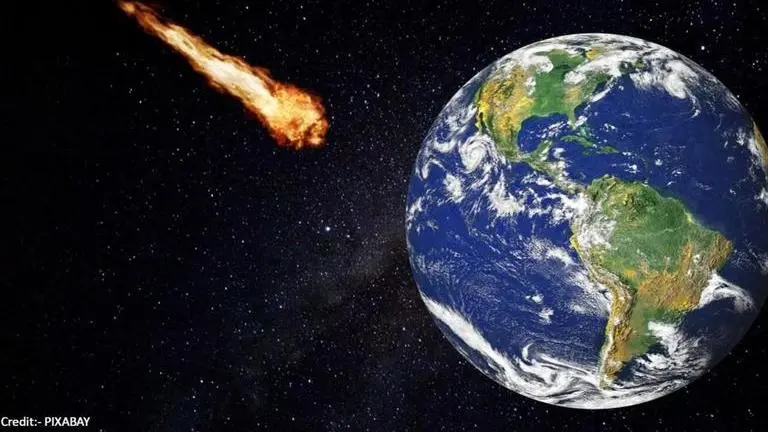
The National Aeronautics and Space Administration (NASA) has warned that an asteroid, as big as the Paris Eiffel Tower, could past through Earth on June 1. The asteroid named 2021 KT1 has been classified as "potentially hazardous" by NASA. The US Space agency has stated on its Jet Propulsion Laboratory website that the size of the KT1 asteroid may be about 186 metres.
Asteroid 2021 KT1 to fly past Earth
The asteroid, known as 2021 KT1, is expected to make a close approach to Earth on June 1 at 10.24am EDT. NASA classified the asteroid as a “potentially hazardous object” as it is larger than 492 feet and within 4.6 million miles of Earth. NASA considers any asteroid that comes within 4.6 million miles of earth and larger than 150 metres to be potentially hazardous. The asteroid 2021 KT1 will fly near Earth at 40,000 mph, according to the laboratory, which tracks objects that fly past Earth. As per the US space agency, it is going to pass by Earth safely.
According to NASA Jet Propulsion Laboratory, asteroid is relatively small, inactive, rocky body orbiting the Sun. NASA tracks asteroids and comets that make relatively close approaches to Earth. The Asteroid dashboard displays the date of closest approach, approximate object diameter, relative size and distance from Earth for each encounter.
Last month, a newly discovered asteroid the size of a car passed exceptionally close to Earth. Now named the 2021 GW4 asteroid, it flew about 16,300 miles away from Earth, which is less than one-tenth the distance between the moon and our planet. But according to NASA, the asteroid was too small a size to survive being too close inside Earth's atmosphere. The 2021 GW4 Asteroid raced at Earth at a distance of just 16,700 miles with a speed of 18,700 miles per hour.