
Updated 22 April 2022 at 16:20 IST
Lyrid meteor shower 2022: Where and when to watch the celestial event today? Check here
Lyrid meteor shower will continue till April 29 but will peak on April 22 and stargazers can spot upto 20 meteors every hour.
- Science News
- 2 min read

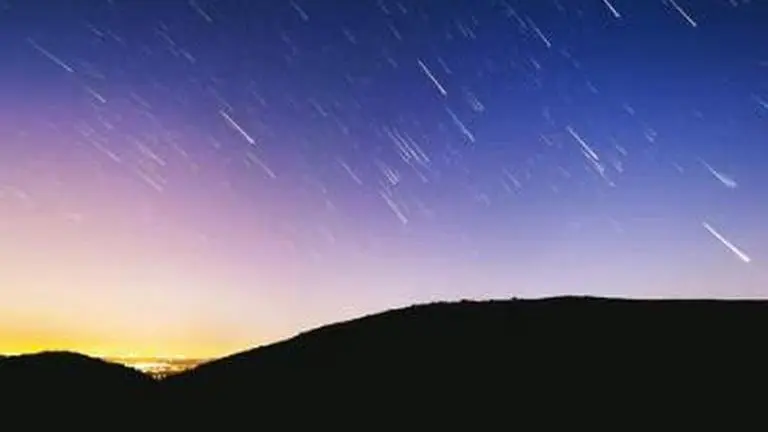
Stargazers will be treated with a new celestial event as the Lyrid meteor shower will light up the sky on Friday night and Saturday morning. Starting on April 15, the meteor shower will continue till April 29 but will peak on April 22 and onlookers can spot upto 20 meteors every hour. It is worth noting, however, that Moon might reduce the visibility of the meteor shower as it will be two-thirds full tonight.
The Lyrid meteor shower: A history
Meteor showers generally occur when the Earth runs into a debris cloud of broken asteroids. Every year, our planet orbits through these clouds of debris which results in the bits and pieces to interact with the Earth's atmosphere. When the debris collides with the atmosphere, they disintegrate and create and fiery and colouful streaks of light in the sky.
As for the Lyrids, they are the remains of comet C/1861 G1 or 'Thatcher', named after its discoverer A. E. Thatcher who first spotted it on April 5, 1861. The Lyrids have been observed for 2,700 years as the first sighting record dates back to 687 BC by the Chinese. While Lyrids are not known to be plentiful, they are fast and bright meteors and can even surprise with as many as 100 meteors per hour. According to astronomers, the Lyrid meteors have an orbital period of 415 years and they would make their return to the inner solar system in 2276.
Where and when to watch the celestial event?
According to NASA, the Lyrids will be best visible during the dark hours in the northern hemisphere, meaning stargazers from India can also spot it. The celestial event is expected to peak after 8 pm (IST) although the visibility would depend on the brightness of the Moon. Light pollution due to artificial light is also a huge factor which can hinder the view. Onlookers are advised to find a dark place free from artificial light to make up for the lunar brightness. NASA also advises to allow 30 minutes for your eyes to adjust to the darkness which would make the sightseeing even more convenient.
Advertisement
Published By : Harsh Vardhan
Published On: 22 April 2022 at 16:20 IST