
US: Scientists begin hunt for dark matter in gold mine located in South Dakota
US experts in a former gold mine in South Dakota have begun hunting evidence of dark matter, which is believed to make up 95% of our universe's mass.
- Science News
- 3 min read

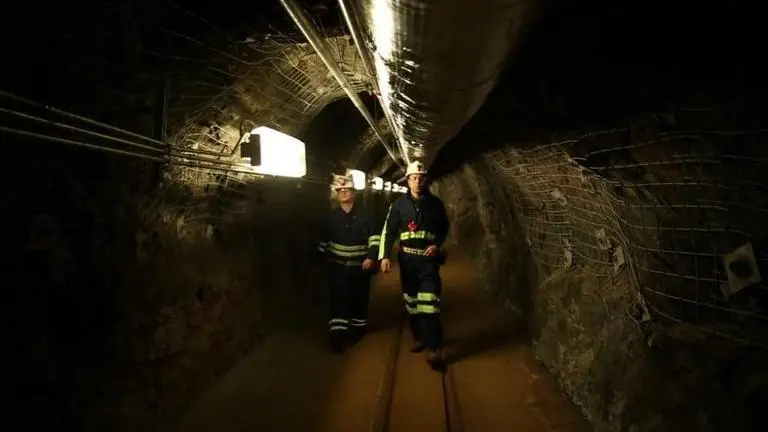
Dark matter, which scientists believe makes up 95% of our universe's mass, has been untraced so far. In order to bring them to light, a team of international scientists has dived into a former gold mine located in South Dakota's Lead city in the US. The mine is equipped with a massive titanium tank filled with a rare liquified gas. Kevin Lesko, a physicist at Lawrence Berkeley National Laboratory says that the basic question scientists are trying to answer is "What is this great place I live in? Right now, 95% of it is a mystery".
How would the team confirm presence of dark matter?
The experts are planning to gather evidence of dark matter using a wall of dirt and rock, a giant tank called cyrostat, a second tank and the purest titanium in the world. Using these elements, they are planning to block nearly all the cosmic rays and particles that pass through us all the time every day. But, since the dark matter particles can penetrate everything in their way, the experts say that one of those particles would enter the inner tank containing liquid xenon and collide with a xenon nucleus. This collision will result in a relatively small flash of light which would be picked up by a device called "the time projection chamber".

(Scientists standing next to the cryostat; Image: AP)
Notably, this experiment was initiated two months ago, and scientists revealed on Thursday that they have found nothing as of now. However, the experts are optimistic and confirmed that the equipment is properly filtering the unwanted particles. "To search for this very rare type of interaction, job number one is to first get rid of all of the ordinary sources of radiation, which would overwhelm the experiment,” University of Maryland physicist Carter Hall said in a statement. Amounting to a total of $60 million, the research was five years in the making and was delayed due to the COVID-19 pandemic.
Advertisement
The hunt for dark matter
The hunt for dark matter has picked up pace as the European Space Agency (ESA) is also planning to launch a mission for its confirmation. To learn more about dark matter and dark energy, which collectively make up the dark universe, ESA is developing 'Euclid' which is targeted for launch in 2023. According to the agency, the telescope will develop a 3D map of the universe by observing billions of galaxies to understand the evolution and role of the dark universe.