
Varda Space chooses SpaceX's Falcon 9 to send its first spacecraft in 2023
With the launch, Varda Space will aim to demonstrate its ability to produce equipment in low-Earth orbit, microgravity to be specific.
- Science News
- 2 min read

;'%3e%3cpath%20d='m8,15.99c4.41,0,7.99-3.58,7.99-7.99S12.41,0,8,0,0,3.59,0,8s3.58,7.99,7.99,7.99Z'%20style='stroke:%23fff;%20stroke-miterlimit:10;%20stroke-width:.02px;'/%3e%3cpath%20d='m3.08,3.37l3.82,5.11-3.84,4.15h.87l3.37-3.64,2.72,3.64h2.94l-4.04-5.39,3.58-3.87h-.86l-3.1,3.35-2.5-3.35h-2.94Zm1.27.64h1.35l5.97,7.99h-1.35l-5.97-7.99Z'%20style='fill:%23fff;'/%3e%3c/g%3e%3c/svg%3e)


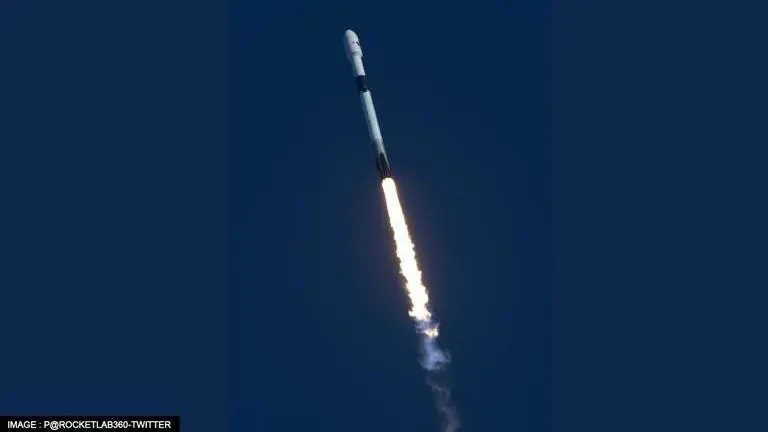
Varda Space, a US-based startup, on October 11, announced to choose Elon Musk's SpaceX to launch its first-ever space vehicles into orbit in early 2023. The company announced signing a 'launch services agreement' with SpaceX, under which it will deploy its vehicles placed on Photon spacecraft via the latter's Falcon 9 rocket.
With the launch, Varda Space will aim to demonstrate its ability to produce equipment in low-Earth orbit, 'microgravity'.
Photon will fly on Falcon 9!🚀
— Everything Rocket Lab (@RocketLab360) October 11, 2021
Varda Space Industries will launch their space vehicles on top of a Falcon 9! The vehicles will be placed on Photon spacecraft, which will provide propulsion, power, data and attitude control during their 3-months in space!
📸: SpaceX - Rocket Lab pic.twitter.com/MDdirQ7bL4
Why is the mission important?
Varda Space's investment in the mission is motivated by its aim to establish a manufacturing station in outer space. According to TechCrunch, the company will be making a microgravity manufacturing module for outer space production and a re-entry capsule to bring the objects produced in space back to Earth.
As for the spacecraft meant for Falcon 9, it will test space manufacturing technologies while being in orbit for three months after its installation. Once it completes its term, the spacecraft will bring back the manufactured objects.
Advertisement
SpaceX chosen for its affordability and reliability
Although both the companies have yet to disclose the terms of their agreement, Delian Asparouhov, co-founder and president of Varda Space, said that they chose SpaceX for their cost-effectiveness and reliability. Space News further reported that the company has been opaque about the materials they will produce in space but hinted that they may range from pharmaceuticals to optical fiber.
While the first spacecraft awaits its launch, the second and third ones are already in the queue for their lift-off in late 2024. As of now, Varda has raised a total of $53 million after its latest round of funding in July 2021, which it will likely channel to its upcoming missions.