
Venom might have contributed to the emergence of new fish species and insects, says study
As per study, venom contributes to the extraordinary diversity of insects and fishes, the two most species-rich groups of invertebrates and vertebrates.
- Science News
- 3 min read

;'%3e%3cpath%20d='m8,15.99c4.41,0,7.99-3.58,7.99-7.99S12.41,0,8,0,0,3.59,0,8s3.58,7.99,7.99,7.99Z'%20style='stroke:%23fff;%20stroke-miterlimit:10;%20stroke-width:.02px;'/%3e%3cpath%20d='m3.08,3.37l3.82,5.11-3.84,4.15h.87l3.37-3.64,2.72,3.64h2.94l-4.04-5.39,3.58-3.87h-.86l-3.1,3.35-2.5-3.35h-2.94Zm1.27.64h1.35l5.97,7.99h-1.35l-5.97-7.99Z'%20style='fill:%23fff;'/%3e%3c/g%3e%3c/svg%3e)


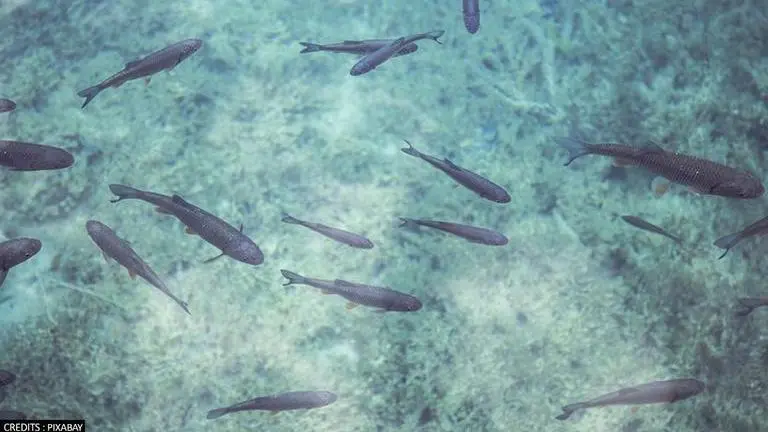
According to a recent study, venom contributes to the extraordinary diversity of insects and fishes, the two most species-rich groups of invertebrates and vertebrates in the animal kingdom. The research findings were published in the journal BMC Ecology and Evolution. The study found that venomous fish and insects diversify around twice as quickly as their non-venomous counterparts. This means that species may be able to take advantage of more opportunities in their environment, which could result in the emergence of new species as their ecology diversifies.
Three-quarters of all invertebrate species on Earth have been identified to date, which amounts to more than 1 million species of insects. Fish make up almost half of all vertebrate species, with 31,269 species. As of today, stingrays, catfish, wasps, and mosquitoes are among the 10 per cent of fish families and 16 per cent of insect families that contain venomous species. Fish venom has evolved independently at least 19-20 times, and insect venom has evolved at least 28 times, according to the study.
In spite of biologists' long exploration of the factors affecting biodiversity, factors affecting the most diverse groups - insects and fishes - have never been fully analyzed until now. It was at this point that a new Swansea-led research project was initiated. Insect and fish species diversity was tested for the first time on a large scale by a team led by Dr Kevin Arbuckle of the Department of Biosciences.
Venom has continued to evolve many times over the evolutionary past of insects and fish, the researchers found. It was also associated with faster rates of diversification, indicating that venom contributed to species diversity during these 'super-radiations', the researchers noted.
Advertisement
"Our results provide evidence that venom has played a part in generating the diversity of insects and fishes, which have the largest number of species amongst invertebrates and vertebrates respectively," stated Dr. Kevin Arbuckle of Swansea University, lead researcher.
Venom is significant, but not the only factor driving the evolution
Dr. Arbuckle added, "Venom is not the only factor driving species richness in these animal groups, but we show that it has played an important but previously unrecognised role in generating the amazing diversity we see today amongst insects and fishes."
"Although tentative, the pattern of timing in the origins of venomous fishes suggests tantalizing clues of what was driving the evolution of their venom. Unlike insects, where venom evolved fairly evenly throughout their history, most origins of fish venom were concentrated in the Late Cretaceous and Eocene periods," he continued.
Dr. Arbuckle further explained, "Mosasaurs - the aquatic behemoths made famous in the Jurassic World series - originated and peaked in diversity in the Late Cretaceous, at a time when other large marine predator groups were declining. Similarly, whales originated and peaked in diversity in the Eocene, when most other large marine predators had gone extinct at the end-Cretaceous mass extinction, which killed off the dinosaurs."
Advertisement
"Both early whales and mosasaurs are thought to have been active predators with similar styles of movement. As a result, we cautiously speculate that most origins of fish venom were linked to similar predation pressures imposed by mosasaurs in the Late Cretaceous and early whales in the Eocene," Dr. Arbuckle concluded.