
Khooni Bhandara, Gwalior Fort, Among 6 MP Heritage Sites Included In Tentative UNESCO List
All you need to know about six heritage sites of Madhya Pradesh that have joined the tentative list of UNESCO World Heritage Sites. Check it out below.
- Travel News
- 3 min read

;'%3e%3cpath%20d='m8,15.99c4.41,0,7.99-3.58,7.99-7.99S12.41,0,8,0,0,3.59,0,8s3.58,7.99,7.99,7.99Z'%20style='stroke:%23fff;%20stroke-miterlimit:10;%20stroke-width:.02px;'/%3e%3cpath%20d='m3.08,3.37l3.82,5.11-3.84,4.15h.87l3.37-3.64,2.72,3.64h2.94l-4.04-5.39,3.58-3.87h-.86l-3.1,3.35-2.5-3.35h-2.94Zm1.27.64h1.35l5.97,7.99h-1.35l-5.97-7.99Z'%20style='fill:%23fff;'/%3e%3c/g%3e%3c/svg%3e)


Madhya Pradesh's six heritage sites have been included in the tentative UNESCO list. The announcement was made by CM Mohan Yadav as he congratulated people for the same. For the unversed, MP already is the home to three UNESCO heritage sites - Sanchi Stupa, Khajuraho Group of Monuments and Bhimbetka Rock Shelters. With six more in the tentative list, the total number will go up to 11 heritage sites from the state of India.
A look at the tentative list of UNESCO heritage sites from Madhya Pradesh
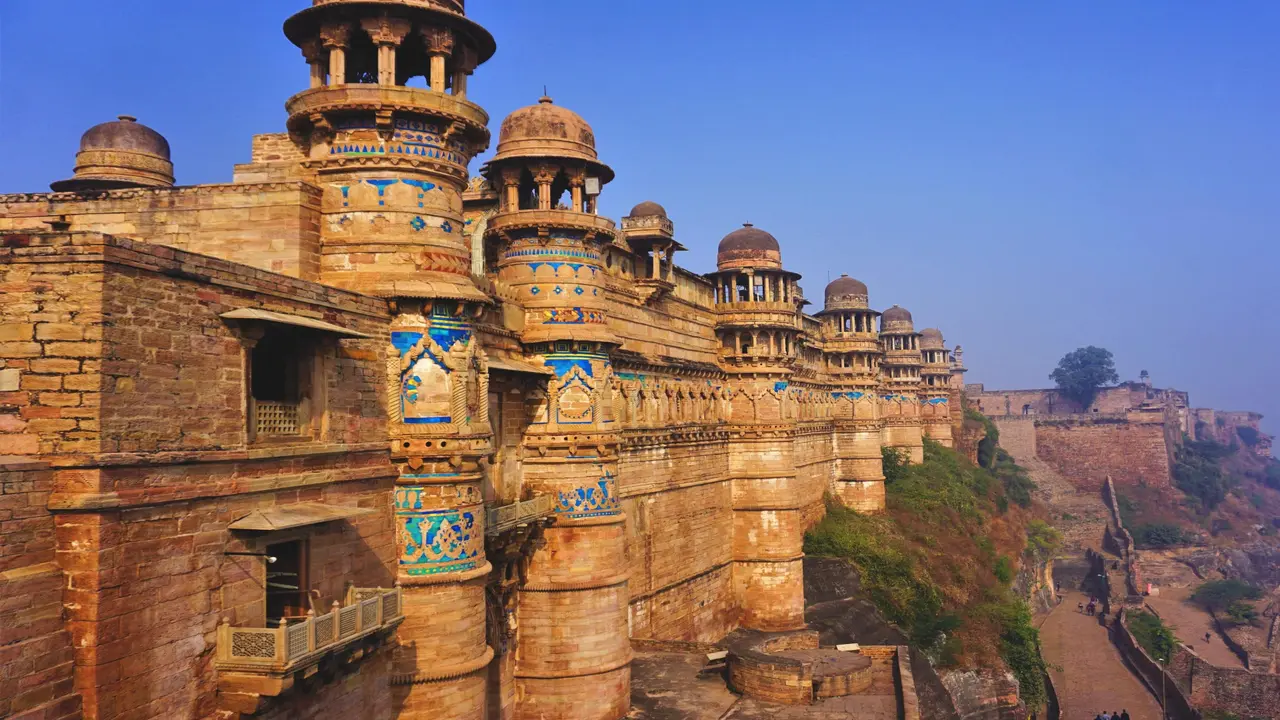
Gwalior Fort: Commonly known as the Gwāliiyar Qila, it is a hill fort near Gwalior. The fort has existed since the 10th century, and the inscriptions and monuments found within what is now the fort campus may have existed as early as the beginning of the 6th century. The modern-day fort, embodying a defensive structure and two palaces was built by the Tomar Rajput ruler Man Singh Tomar.

Historical Group of Dhamnar: The Dhamnar caves are located on a hill near the village of Dhamnar spread across a span of 5.2 hectares. This rock-cut site consists of a total of 51 caves - 14 larger caves and 37 smaller caves. Dhamnar village is in the Mandsaur district, formerly known as Dasapura, located 22 km from the location of the caves.
Bhojeshwar Mahadev Temple: Located in Bhopal, it is a thousand-year-old temple dedicated to Lord Shiva that overlooks the Betwa River. It has architectural grandeur, colossal lingam, and historical significance. Built during the 11th century under the patronage of Raja Bhoj in Bhojpur, the temple represents the zenith of temple architecture during the Paramara period in India.
Advertisement
Rock Art Sites of Chambal Valley: At Daraki-Chattan in the Chambal basin, a cave in the quartzite buttresses of Indragarh hill. The vertical walls of the cave boast more than 500 cupules. On the southern wall of the cave at Daraki-Chattan, small circular cupules show conical depth and are about two million years old.
Khooni Bhandara: Underground water management system comprising eight waterworks built in the historical city of Burhanpur. These Mughal period waterworks of Burhanpur form one of the most significant historic water systems in India.
Advertisement
Gond Memorial of Ramnagar: Formerly known as the Central Provinces of India and covering parts of the present-day states of Madhya Pradesh, Chhattisgarh and Maharashtra, this site was historically called Gondwana, 'the Land of the Gonds' or home of the largest heterogeneous tribe of India, the Gond tribe. Four major kingdoms which ruled over Gondwana included the Garha-Mandla kingdom that reigned between 1300 AD to 1789 AD. The community was primarily involved in hunting, food gathering, pastoral occupations, agriculture, martial assignments, trade and commerce, and herbal medicine, and they were rulers as well.