
‘Supernatural Sign Of Impending Doom’: Ancient Pyramids Used For Human Sacrifices Collapse In Mexico
The collapse has not only highlighted the vulnerabilities of these historic structures but also reignited traditional beliefs among the Purepecha descendants
- Viral News
- 3 min read

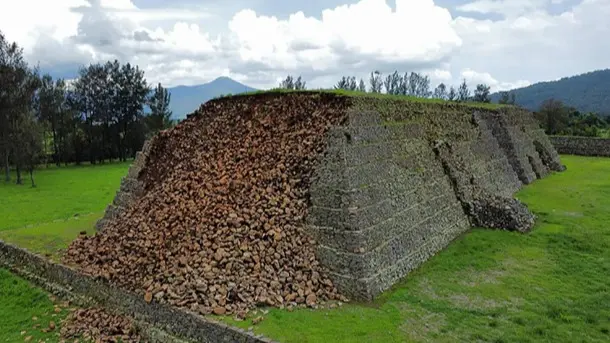
Two ancient pyramids in Mexico, used by the Purepecha tribe for human sacrifices, have partially collapsed following severe storms. The incident, described by some as a "supernatural sign of impending doom," has caused alarm among the descendants of the tribe who fear it may foretell a significant natural disaster.
The New York Post reported that one side of the twin Yacata pyramids, located at the Ihuatzio archaeological site in Michoacan state, was washed away during heavy downpours on July 30. The pyramids were constructed by the ancestors of the Purepecha, a tribe renowned for their fierce resistance against the Aztecs.
Historians believe the Yacata pyramids were central to the Purepecha's religious practices, particularly for sacrifices to their primary deity, Kurikweri. The tribe, who ruled the region for 400 years before the Spanish invasion in 1519, held deep spiritual beliefs tied to these structures.
Tariakuiri Alvarez, a descendant of the Purepecha, expressed concerns about the potential significance of the storm, saying, “For our ancestors, the builders, this was a bad omen that indicated the proximity of an important event. Before the arrival of the conquistadors, something similar happened, which for the Purepecha a worldview of that time was because the gods Nana Kuerhaepiri and K'eri Kurikweri were displeased.”
Advertisement
The collapse occurred in the central part of the southern facade of one of the pyramids, according to a statement released on Wednesday by the Mexican National Institute for Anthropology and History (INAH). The statement explained that the damage was likely caused by a combination of heavy rainfall and pre-existing structural vulnerabilities due to earlier high temperatures and drought.
"On Tuesday night, a collapse occurred in the central part of the southern facade of one of the pyramidal bases of the Ihuatzio Archaeological Zone," the INAH stated. “This happened because of the heavy rainfall in the basin of Lake Purepecha, with an accumulation above the expected average of precipitation.”
Advertisement
The statement also detailed the ongoing efforts to assess and repair the damage, noting that previous restoration techniques had contributed to the structure's current fragility. “Work carried out in the past, using techniques and materials that are not currently in use due to their negative effects, has an impact on the conservation conditions of the pre-Columbian structure.”
As the restoration process continues, experts are focused on both recovering the damaged sections and ensuring the long-term preservation of the ancient pyramids. The collapse has not only highlighted the vulnerabilities of these historic structures but also reignited traditional beliefs among the Purepecha descendants, who view the event as a possible harbinger of future calamities.