
Tariffs Slashed To 18%, $500 Billion Growth Roadmap: US-India Release Framework For Interim Trade Deal | Key Points
India and the US have unveiled an interim trade agreement framework aimed at enhancing market access for Indian exporters, reducing tariffs, and fostering economic cooperation as they pursue a comprehensive Bilateral Trade Agreement (BTA).
- World News
- 5 min read

;'%3e%3cpath%20d='m8,15.99c4.41,0,7.99-3.58,7.99-7.99S12.41,0,8,0,0,3.59,0,8s3.58,7.99,7.99,7.99Z'%20style='stroke:%23fff;%20stroke-miterlimit:10;%20stroke-width:.02px;'/%3e%3cpath%20d='m3.08,3.37l3.82,5.11-3.84,4.15h.87l3.37-3.64,2.72,3.64h2.94l-4.04-5.39,3.58-3.87h-.86l-3.1,3.35-2.5-3.35h-2.94Zm1.27.64h1.35l5.97,7.99h-1.35l-5.97-7.99Z'%20style='fill:%23fff;'/%3e%3c/g%3e%3c/svg%3e)


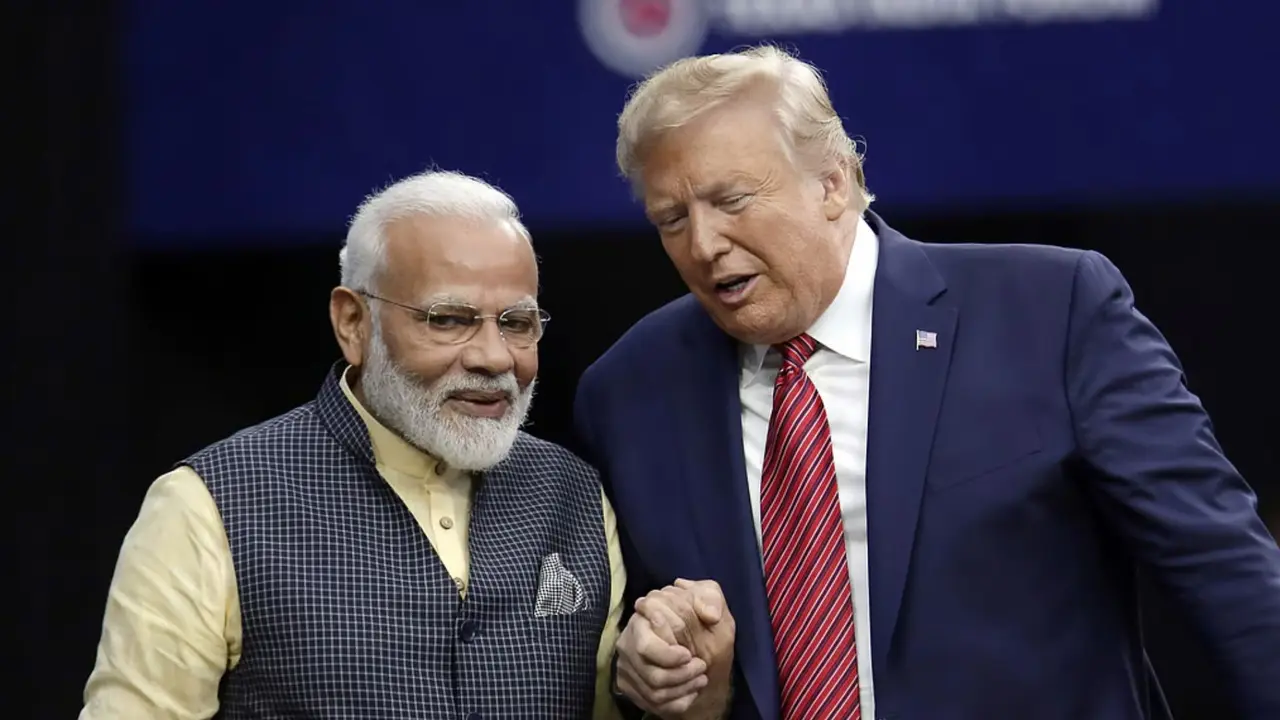
New Delhi: India and the United States on Friday released a framework for an interim trade agreement that is expected to significantly expand market access for Indian exporters, lower tariff barriers and deepen economic cooperation as both countries work toward a comprehensive Bilateral Trade Agreement (BTA). The interim framework, set against ongoing negotiations launched in February 2025, lays out reciprocal commitments on tariffs, regulatory cooperation and strategic trade priorities that promise benefits for Indian industries and businesses.
Market Access and Tariff Measures
Under the interim framework agreed by New Delhi and Washington, India will eliminate or reduce tariffs on a broad range of US industrial and agricultural goods, including dried distillers’ grains, red sorghum, tree nuts, fresh and processed fruits, soybean oil, wine and spirits, among others. In exchange, the United States has agreed to apply an 18% reciprocal tariff on Indian‑origin products a substantial reduction from punitive tariffs that had previously risen to about 50% - improving Indian exporters’ competitiveness in the world’s largest consumer market.
The lowered tariff ceiling is expected to benefit textiles and apparel, leather and footwear, plastics and rubber, organic chemicals, home décor, artisanal products and certain machinery sectors that account for a significant share of India’s merchandise exports to the US. Indian exporters had faced steep barriers in recent months due to earlier punitive duties, and the tariff reset is widely seen as restoring competitiveness and demand for Indian goods.
Boost for Strategic Sectors and Exporters
The framework goes further, offering India preferential tariff‑rate quotas for automotive parts consistent with US national security requirements, and outlining negotiated outcomes for generic pharmaceuticals and pharmaceutical ingredients, depending on ongoing US investigations. The United States also agreed to remove certain Section 232 tariffs on aircraft and aircraft parts tied to steel, aluminum and copper, a concession that would benefit India’s aerospace and components sectors.
Advertisement
Expanding Trade and Strategic Purchases
The interim trade framework also highlights broader economic engagement. India has signalled its intention to purchase USD 500 billion worth of American goods over the next five years, including energy products, aircraft and aircraft parts, precious metals, technology products and coking coal, a move that could strengthen economic ties and balance trade flows between the two countries. Both sides also agreed to increase trade in technology products, including graphics processing units (GPUs) and other equipment used in data centres, and to expand joint cooperation in emerging technology sectors.
Non‑Tariff Barriers and Regulatory Cooperation
Beyond tariff cuts, the interim framework commits both nations to tackle longstanding non‑tariff barriers, an important bottleneck in trade flows. India has agreed to take steps to address barriers affecting US medical devices, information and communication technology goods, and food and agricultural products, while both sides will work to improve compliance through standards and conformity assessments. These measures aim to cut red tape, harmonise technical regulations and create smoother access for businesses on both sides of the trade equation.
Advertisement
The agreement also includes commitments to address barriers to digital trade and establish a pathway for mutually beneficial digital trade rules under the future bilateral agreement, reflecting the growing importance of the digital economy in global commerce.
Economic Growth and Export Opportunities
Indian Commerce and Industry Minister Piyush Goyal welcomed the framework, saying that it will open a USD 30 trillion market for Indian exporters, particularly in sectors such as textiles, leather, plastics, organic chemicals, home décor and artisanal products, while benefiting micro, small and medium enterprises (MSMEs), farmers and fishermen. Goyal noted that improved market access and reduced tariffs will create lakhs of job opportunities, especially for women and youth, and drive export growth across multiple sectors.
Path to Comprehensive Trade Agreement
The interim framework reaffirms both nations’ commitment to finalising a full Bilateral Trade Agreement, with negotiators expected to work toward detailed terms, sector commitments and implementation timelines in the coming months. The US has indicated it will consider India’s requests for further tariff reductions as part of those broader discussions, while both sides aim to strengthen cooperation on economic security, supply chain resilience, investment screening and export controls.
Officials said they plan to promptly implement the interim framework and continue negotiations toward a comprehensive agreement that can deliver long‑term economic gains and strategic stability.
In essence, the interim trade framework provides a boost to Indian manufacturers and exporters, expanding market access, reducing costs and enhancing regulatory cooperation at a time when global economic uncertainties have underscored the value of strong, stable trade ties.